
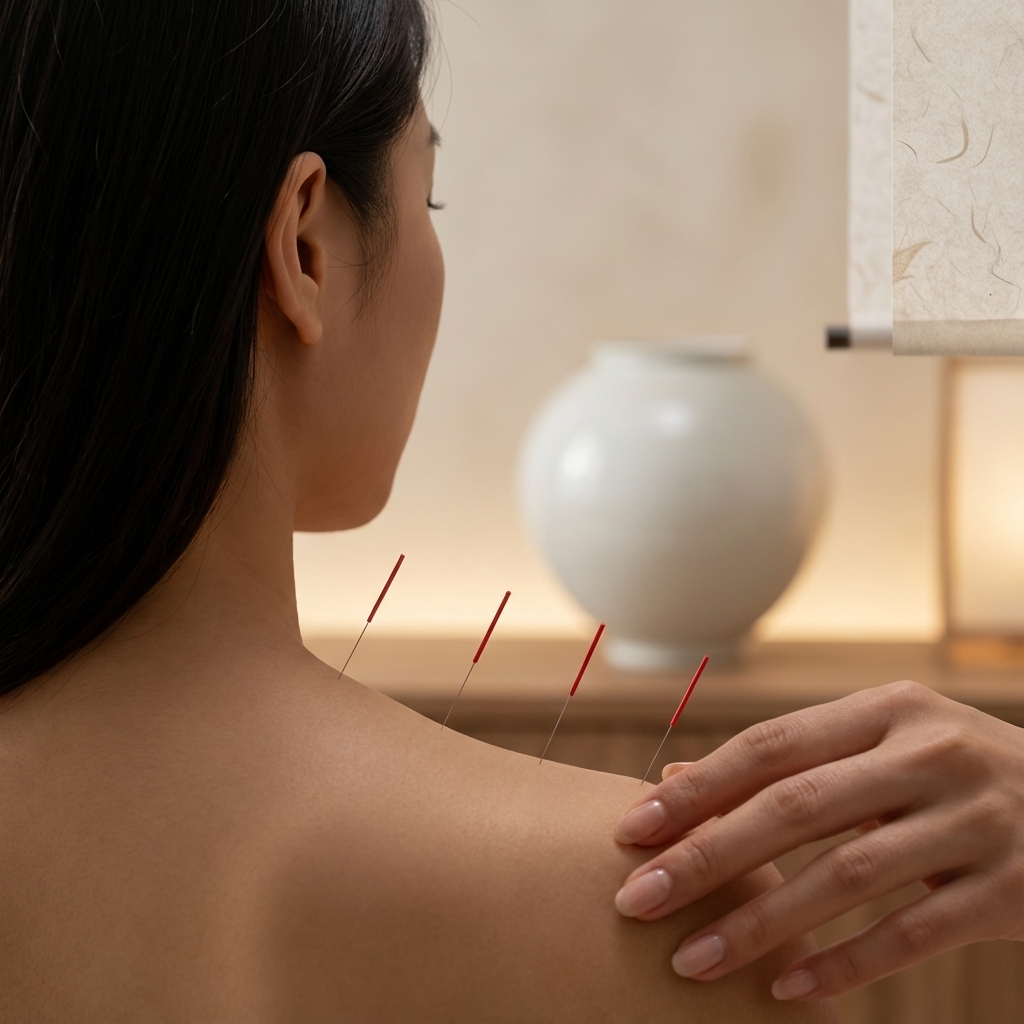
Thoracic Outlet Syndrome
Thoracic Outlet Syndrome
Nerve and blood vessel compression causing numbness and heaviness in the arm, extending to the fingertips when the arm is lifted

# Possibility / Realistic Goals (2)
Q I am a 46-year-old welder. I was told at the hospital that if my symptoms persist, surgery should be considered. Is there really a possibility of improvement without surgery through Korean traditional medicine treatment?
A. More than 90% of cases of nerve compression type thoracic outlet syndrome improve with conservative treatment, and surgery is limited to cases where there is insufficient response to conservative treatment or when there is vascular occlusion or muscle atrophy. Therefore, in most cases, it is highly likely that the condition will be managed without surgery through conservative Korean traditional medicine treatments such as acupuncture and moxibustion. However, if hand muscles atrophy or vascular symptoms are pronounced, a surgical evaluation should not be delayed.
View details →Q I am a 58-year-old seamstress. I have suffered from arm numbness since my 30s, so it has been over 20 years. Can I get better if I start treatment now, even with such long-standing thoracic outlet syndrome?
A. Just because it is old does not mean treatment is impossible. However, since adhesions and tissue degeneration have progressed, recovery requires at least 3 to 6 months. It is also advisable to set a realistic goal of maintaining daily life without interference, rather than aiming for complete remission. After first checking for hand muscle atrophy, you can expect significant improvement through stepwise treatment.
View details →# Comorbidities (1)
# Lifestyle Management (2)
Q I am a 29-year-old marketer. Are there any stretches for thoracic outlet syndrome that I can do in my spare time at work? I am currently receiving treatment, but I would also like to manage it myself.
A. The key exercises are three things: quadratus muscle stretching, pectoralis minor (door frame) stretching, and scapular retraction. Perform each movement for 20 to 30 seconds, 3 to 4 times a day, within a pain-free range. Stop if any movement causes severe numbness, and avoid stretches that involve excessively bending the neck.
View details →Q I am a 55-year-old restaurant owner in Dongincheon. I keep waking up at night because my arm feels numb. I’ve heard it is due to thoracic outlet syndrome; what position should I sleep in to reduce the numbness?
A. The key is to avoid sleeping with your arms raised above your head and lying on your side with the pain. Lie on your back with your arms beside your torso and use a low pillow to maintain neck alignment. When sleeping on your side, lie on the side that doesn't hurt and support your arm by hugging a pillow in front of your chest; this helps.
View details →# Safety (2)
Q I am a 49-year-old bus driver. I am scared to have acupuncture needles inserted into the side of my neck. I heard that major blood vessels and nerves pass through that area; is moxibustion treatment safe?
A. The thoracic outlet area next to the neck is a region where nerves and blood vessels are densely concentrated, making precise anatomical knowledge and depth control essential. Utilizing an ultrasound guide significantly enhances safety, as the location of nerves and blood vessels can be verified in real-time during the procedure. We conduct thorough explanations and evaluations before the procedure, and serious side effects are rare, aside from temporary bruising or stiffness.
View details →Q I am a 37-year-old mother who is not pregnant but is currently breastfeeding. I was diagnosed with Thoracic Outlet Syndrome because my arm became numb from carrying my second child. Is it safe to receive bee venom acupuncture or pharmacopuncture while breastfeeding?
A. Acupuncture treatment can be safely received even while breastfeeding. Bee venom acupuncture is administered starting with a small dose after a skin test to check for allergic reactions. During breastfeeding, treatment is generally administered conservatively, focusing primarily on acupuncture and low-irritation pharmacopuncture. If you inform us in advance that you are breastfeeding, we can design a treatment plan within a safe range.
View details →# Drug Combination / Interactions (1)
# Prognosis / Recovery (2)
Q I am a 31-year-old nurse. I was diagnosed with thoracic outlet syndrome due to the heavy workload of transporting patients. How long does it usually take to get better once treatment begins? Do I need to take time off work?
A. The nerve compression type often improves within 4 to 12 weeks with conservative treatment. Recovery is faster if the duration of the condition is short and postural factors are significant; however, if left untreated for several years, it may take 3 to 6 months or more. While most cases can be treated without taking time off work, it is advisable to reduce movements such as transporting heavy patients during the early stages of treatment.
View details →Q I am a 44-year-old piano instructor. I suffered from thoracic outlet syndrome last year and improved, but recently the tingling sensation has started again. Is it common for this condition to recur? What should I do to prevent a recurrence?
A. Thoracic outlet syndrome frequently recurs if the underlying posture and movements remain unchanged. This is because if you only alleviate the symptoms without correcting the shortening of the scalene and pectoralis minor muscles and postural habits, the same compression will repeat. To prevent recurrence, consistent maintenance of pectoral muscle stretching, scapular stabilization exercises, and corrected work posture is essential.
View details →# Causes Explained (1)
# Food / Triggers (2)
Q I am a 25-year-old graduate student. I carry a heavy backpack filled with my laptop and books every day, and my arms feel particularly numb on days I wear it. Can a backpack worsen thoracic outlet syndrome?
A. Yes, heavy backpacks are a major aggravating factor. This is because the shoulder straps press directly against the clavicle area and pull the shoulders down, narrowing the thoracic outlet space. Reducing the weight of the bag, using both straps, and distributing the load with a chest strap can be helpful.
View details →Q I am a 47-year-old housewife. I’ve heard that the numbness and coldness in my hands are due to thoracic outlet syndrome. Does food have an impact? I feel like it gets worse when I eat cold food.
A. While food is not the direct cause, for individuals with vascular compression or weak circulation, cold foods, excessive caffeine, and smoking can constrict peripheral blood vessels, exacerbating hand coldness and numbness. Eating warm foods, staying hydrated, and quitting smoking can help manage symptoms.
View details →# Treatment Schedule (1)
# Treatment Stages (2)
Q I am a 40-year-old hair salon owner. In what order is the Korean medicine treatment for thoracic outlet syndrome performed? I would like to know in advance what steps are followed from start to finish.
A. First, after confirming the compression site and degree of adhesion through examination and ultrasound evaluation, we begin with Stage 1, which involves releasing muscle tension using acupuncture. If adhesions are deep, we proceed with dissection using a needle; if tissue regeneration is required, we use fire acupuncture or thread embedding; and if inflammation is present, we advance to bee venom acupuncture or pharmacopuncture. Throughout the entire process, herbal medicine tailored to the patient's constitution, along with posture and exercise correction, are administered concurrently.
View details →Q I am a 33-year-old physical therapist. Professionally, I understand the mechanisms of acupuncture and moxibustion, but why is herbal medicine used for thoracic outlet syndrome? I am curious about the role herbal medicine plays in treatment.
A. Herbal medicine is responsible for areas that local procedures cannot reach, namely tissue recovery and systemic circulation. It improves the inflammatory environment of nerves and fascia, aids blood flow to maintain the effects of procedures, and corrects chronic fatigue and poor circulation that serve as breeding grounds for recurrence. If procedures are treatments that relieve pressure, herbal medicine is a treatment that maintains that relaxed state.
View details →# Effectiveness (2)
Q I am a 42-year-old hairdresser. I work with my arms raised all day, so I suffer from severe numbness in my arms. Honestly, I doubt whether acupuncture can relieve the pressure on my nerves. Is acupuncture really effective for thoracic outlet syndrome?
A. Most cases of thoracic outlet syndrome involve excessive tension in muscles, such as the scalene muscles and pectoralis minor, compressing the nerves. Therefore, directly releasing the tension in these muscles with acupuncture reduces the pressure and alleviates the numbness. Unless there is a structural cause involving bone compression, conservative treatment is the primary choice, and acupuncture is one of the key tools for this.
View details →Q I am a 38-year-old logistics center manager. I received manual therapy for three months, but the relief was only temporary, and the numbness has returned. How is the needle acupuncture treatment at a Korean medicine clinic different from manual therapy?
A. Manual therapy is a method of loosening muscles and joints from the outside, whereas Dochim is a treatment that directly separates hardened fascia and adhered tissues using special needles with blade-like tips. If deep adhesions that cannot be reached by hand remain, the effects of manual therapy may be temporary; in such cases, Dochim can serve as a supplementary solution.
View details →Thoracic Outlet Syndrome is not just a simple symptom
Korean medicine that considers both your constitution and lifestyle rhythm treats the root cause.
From consultation to precise treatment, we provide personalized care.
Prescriptions tailored to your constitution and symptoms treat the root cause
The director personally sees you from first to follow-up visits
We identify the essence through Sasang constitution, pulse and abdominal diagnosis
Treatment based on long clinical experience and evidence
Was this helpful? If you need accurate care for your condition, please contact us below.