
Q I am a 40-year-old hair salon owner. In what order is the Korean medicine treatment for thoracic outlet syndrome performed? I would like to know in advance what steps are followed from start to finish.
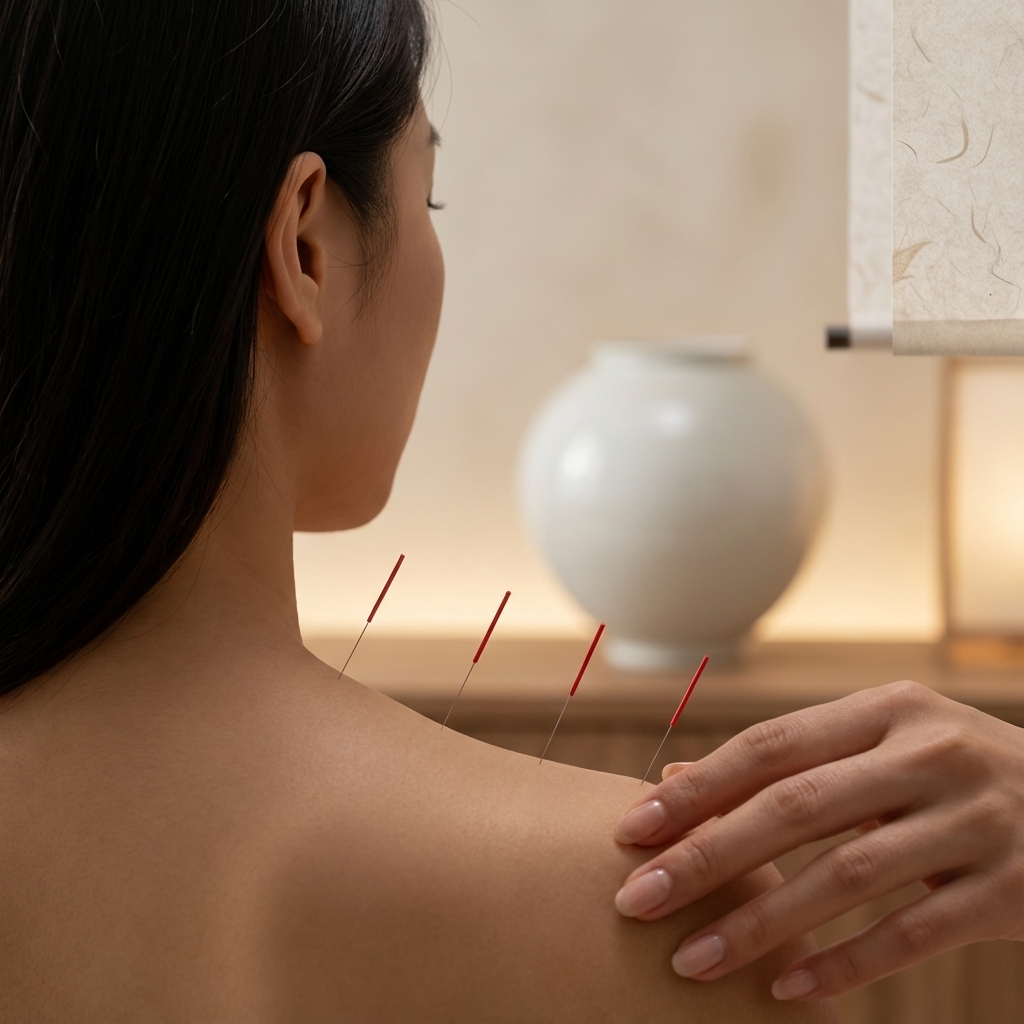
A First, after confirming the compression site and degree of adhesion through examination and ultrasound evaluation, we begin with Stage 1, which involves releasing muscle tension using acupuncture. If adhesions are deep, we proceed with dissection using a needle; if tissue regeneration is required, we use fire acupuncture or thread embedding; and if inflammation is present, we advance to bee venom acupuncture or pharmacopuncture. Throughout the entire process, herbal medicine tailored to the patient's constitution, along with posture and exercise correction, are administered concurrently.
Detailed Answer
The standard procedure is as follows: ① Evaluation: Physical examination and ultrasound are used to confirm the tension, adhesions, and location of nerve compression in the scalene and pectoralis minor muscles. ② Stage 1 (Acupuncture): Trigger points in hypertonic muscles are relaxed to reduce compression. ③ Stage 2 (Needle Needle): Fascial adhesions that cannot be released by acupuncture are dissected under ultrasound guidance. ④ Stage 3 (Fire Acupuncture/Thread Threading): Aids in the regeneration and strengthening of weakened ligaments and fascia. ⑤ Stage 4 (Bee Venom Acupuncture/Pharmacopuncture): Reduces inflammation around nerves. Responses are evaluated at each stage to select only necessary treatments, and not all patients undergo all stages.
Korean Medicine Clinic Perspective
This stage structure aligns with the concept of "deepness of illness" in Korean medicine. It involves arranging treatments that strike negative energy and support the body's proper energy according to the specific depth of the condition: simply blockages are cleared with acupuncture needles, hardened blood clots are broken with fine needles, and chronic tissue weakening is warmed and replenished using thermal stimulation needles and dissolvable threads. At Dongjedang, we add herbal medicine as a key pillar to this system; by using herbal remedies that empty accumulated waste and blood clots from the body and correct the body's constitution, we establish a foundation that sustains the effectiveness of external treatments. Our treatment philosophy is that relieving local pressure and restoring circulation and organ function must go hand in hand to ensure a state where recurrence does not occur after treatment is completed.
Related FAQs
-
Q
I am a 46-year-old welder. I was told at the hospital that if my symptoms persist, surgery should be considered. Is there really a possibility of improvement without surgery through Korean traditional medicine treatment?
#Possibility / Realistic Goals
-
Q
I am a 58-year-old seamstress. I have suffered from arm numbness since my 30s, so it has been over 20 years. Can I get better if I start treatment now, even with such long-standing thoracic outlet syndrome?
#Possibility / Realistic Goals
-
Q
I am a 50-year-old factory worker. My MRI showed a herniated cervical disc, and I am also suspected of having thoracic outlet syndrome. How is treatment handled when both are present? Which side should be examined first?
#Comorbidities
-
Q
I am a 29-year-old marketer. Are there any stretches for thoracic outlet syndrome that I can do in my spare time at work? I am currently receiving treatment, but I would also like to manage it myself.
#Lifestyle Management
-
Q
I am a 55-year-old restaurant owner in Dongincheon. I keep waking up at night because my arm feels numb. I’ve heard it is due to thoracic outlet syndrome; what position should I sleep in to reduce the numbness?
#Lifestyle Management