
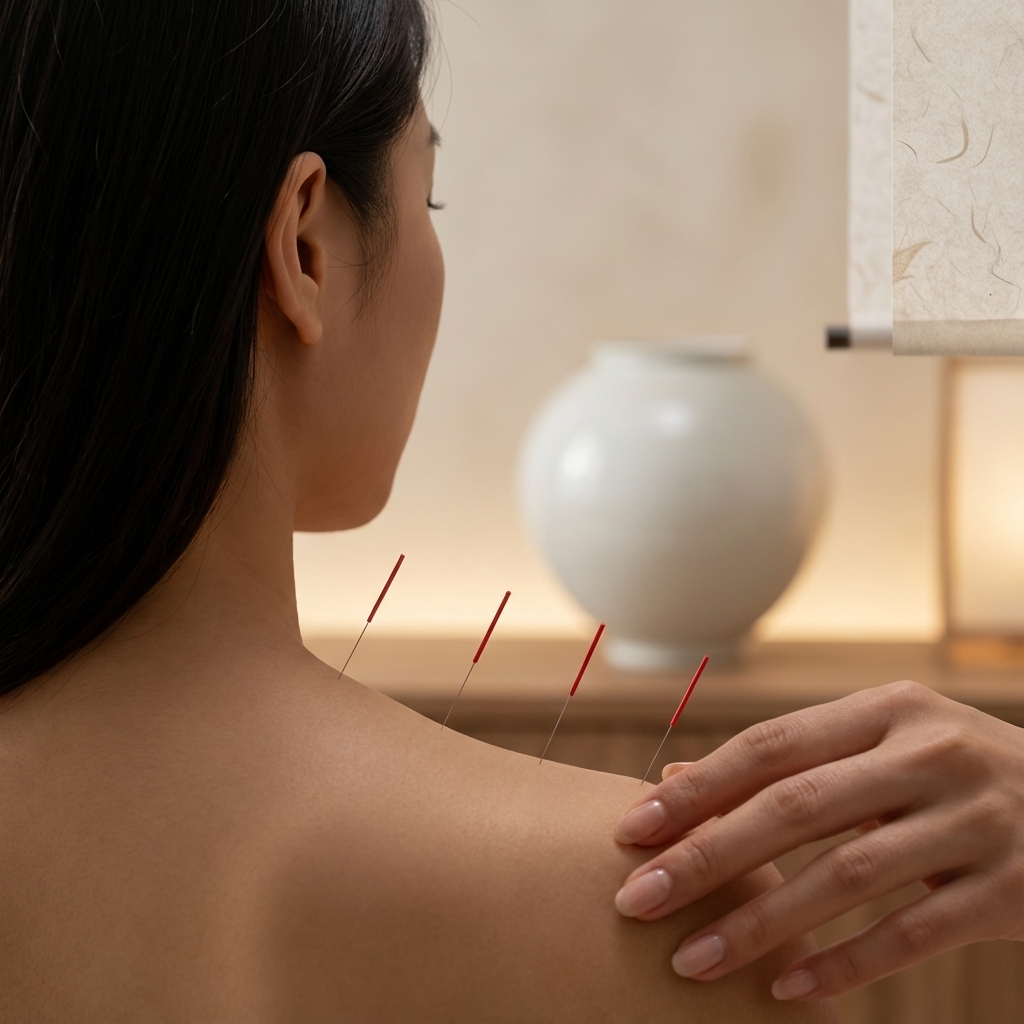
Q I am a 33-year-old physical therapist. Professionally, I understand the mechanisms of acupuncture and moxibustion, but why is herbal medicine used for thoracic outlet syndrome? I am curious about the role herbal medicine plays in treatment.
A Herbal medicine is responsible for areas that local procedures cannot reach, namely tissue recovery and systemic circulation. It improves the inflammatory environment of nerves and fascia, aids blood flow to maintain the effects of procedures, and corrects chronic fatigue and poor circulation that serve as breeding grounds for recurrence. If procedures are treatments that relieve pressure, herbal medicine is a treatment that maintains that relaxed state.
Detailed Answer
As you know as a physical therapist, the limitation of local treatments—whether manual therapy or procedures—is the time between treatments. Tissue recovery occurs outside the treatment room, and its speed is determined by blood flow, the inflammatory environment, and overall physical condition. Herbal medicine takes charge of this specific area; it aids microcirculation around nerves, improves the chronic inflammatory environment, and enhances the quality of sleep and fatigue recovery, thereby increasing recovery efficiency during the intervals between procedures. Reports showing that the combination of internal medication and external procedures yields better results than any single treatment in musculoskeletal disorders support this. From the perspective of a Korean Medicine Clinic, it can be explained as follows: The elasticity of muscles and fascia is maintained only when the body supplies sufficient blood; conversely, if digestive function is weak and waste products and fluids accumulate, muscles tend to tighten easily and do not relax properly. Patients with thoracic outlet syndrome who show a slow response to procedures generally have this underlying condition—namely, a deficiency of vital energy and blood or an excess of waste products. At Dongjedang, we tailor and apply prescriptions based on the patient's constitution to amplify the effects of the procedure by dissolving stagnant blood, improve muscle quality by clearing waste products, or enhance recovery by replenishing vital energy and blood. It is accurate to understand this as external treatment opening the pathway, while herbal medicine facilitates circulation along that path.
Related FAQs
-
Q
I am a 46-year-old welder. I was told at the hospital that if my symptoms persist, surgery should be considered. Is there really a possibility of improvement without surgery through Korean traditional medicine treatment?
#Possibility / Realistic Goals
-
Q
I am a 58-year-old seamstress. I have suffered from arm numbness since my 30s, so it has been over 20 years. Can I get better if I start treatment now, even with such long-standing thoracic outlet syndrome?
#Possibility / Realistic Goals
-
Q
I am a 50-year-old factory worker. My MRI showed a herniated cervical disc, and I am also suspected of having thoracic outlet syndrome. How is treatment handled when both are present? Which side should be examined first?
#Comorbidities
-
Q
I am a 29-year-old marketer. Are there any stretches for thoracic outlet syndrome that I can do in my spare time at work? I am currently receiving treatment, but I would also like to manage it myself.
#Lifestyle Management
-
Q
I am a 55-year-old restaurant owner in Dongincheon. I keep waking up at night because my arm feels numb. I’ve heard it is due to thoracic outlet syndrome; what position should I sleep in to reduce the numbness?
#Lifestyle Management