

Q I am a 55-year-old restaurant owner in Dongincheon. I keep waking up at night because my arm feels numb. I’ve heard it is due to thoracic outlet syndrome; what position should I sleep in to reduce the numbness?
A The key is to avoid sleeping with your arms raised above your head and lying on your side with the pain. Lie on your back with your arms beside your torso and use a low pillow to maintain neck alignment. When sleeping on your side, lie on the side that doesn't hurt and support your arm by hugging a pillow in front of your chest; this helps.
Detailed Answer
Arm numbness during sleep is a characteristic symptom of thoracic outlet syndrome. Raising your arms narrows the space between the clavicle and ribs and pulls the nerve bundles under the pectoralis minor muscle; therefore, those who sleep in the "arms up" position frequently wake up in the early morning due to numbness. The safest position is to lie on your back with your arms slightly lower than your heart and beside your body. When lying on your side, position the side of compression upward and support the weight of your arm by hugging a pillow. A low pillow is recommended to prevent the neck from bending. Perspective of a Korean Medicine Clinic
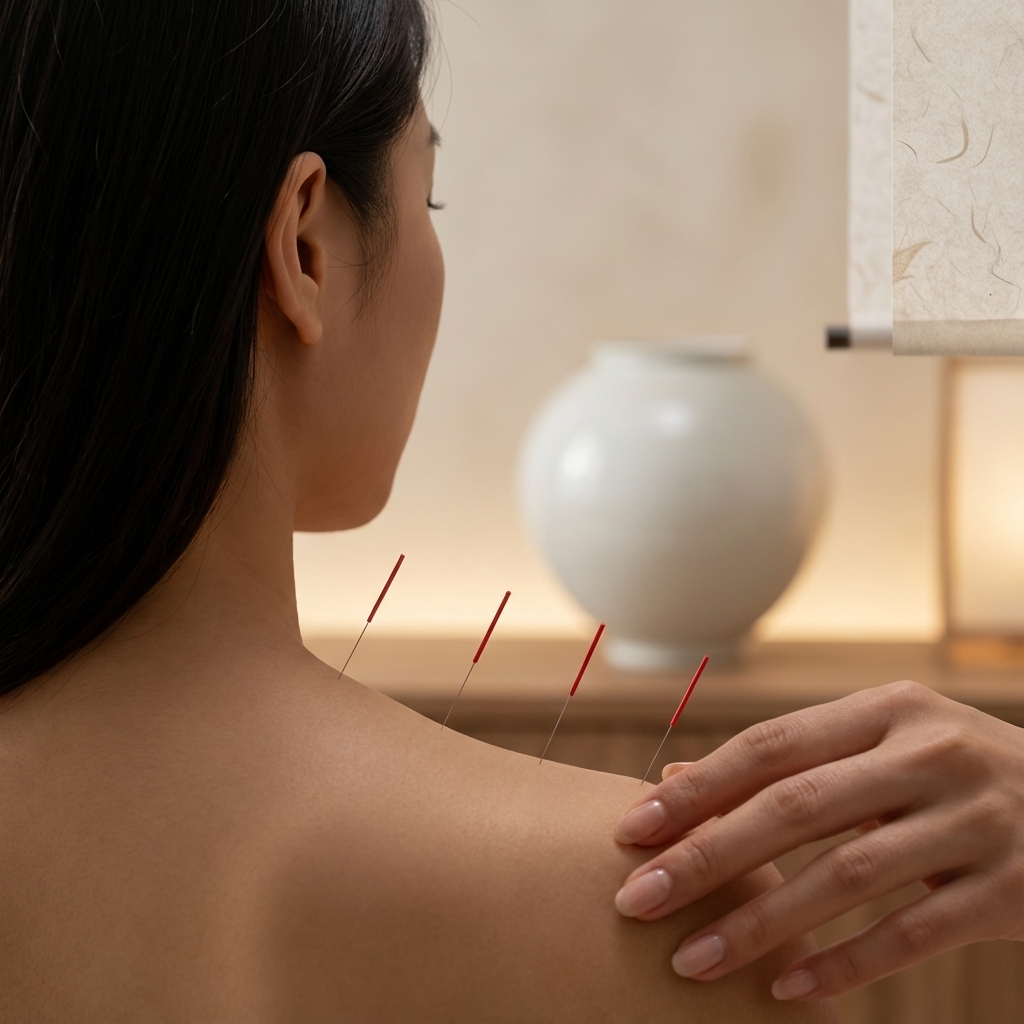
In Korean medicine, numbness that worsens at night holds significance. Since night is a time when the body's circulation slows down, stagnation that was held back during the day becomes apparent; this is a common symptom when stagnant blood has taken root. For those with occupations that involve standing and using their arms all day, it is common to find a type where energy is depleted and circulation is blocked, compounded by stagnant blood. At Dongjedang, we relieve tension in the scalene and pectoralis minor muscles with acupuncture. If adhesions are confirmed, we separate them using fine needles under ultrasound guidance. We combine this with herbal medicine treatment to replenish energy depleted during the day and flush out stagnant blood and waste products, thereby boosting circulatory power at night. In clinical practice, we frequently observe cases where early morning numbness, which could not be adequately addressed by posture correction alone, decreases as overall systemic circulation recovers.
Related FAQs
-
Q
I am a 46-year-old welder. I was told at the hospital that if my symptoms persist, surgery should be considered. Is there really a possibility of improvement without surgery through Korean traditional medicine treatment?
#Possibility / Realistic Goals
-
Q
I am a 58-year-old seamstress. I have suffered from arm numbness since my 30s, so it has been over 20 years. Can I get better if I start treatment now, even with such long-standing thoracic outlet syndrome?
#Possibility / Realistic Goals
-
Q
I am a 50-year-old factory worker. My MRI showed a herniated cervical disc, and I am also suspected of having thoracic outlet syndrome. How is treatment handled when both are present? Which side should be examined first?
#Comorbidities
-
Q
I am a 29-year-old marketer. Are there any stretches for thoracic outlet syndrome that I can do in my spare time at work? I am currently receiving treatment, but I would also like to manage it myself.
#Lifestyle Management
-
Q
I am a 49-year-old bus driver. I am scared to have acupuncture needles inserted into the side of my neck. I heard that major blood vessels and nerves pass through that area; is moxibustion treatment safe?
#Safety