
Q I am a 28-year-old fitness trainer. I had an X-ray taken at the hospital, and they told me I have an extra rib called a cervical rib. Did this cause my thoracic outlet syndrome?
A Cervical ribs (neck ribs) are a congenital mutation found in less than 1% of the population that can structurally narrow the thoracic outlet and cause syndrome. However, most people with cervical ribs are asymptomatic, and symptoms often manifest when muscle tension or postural issues are combined. Managing the surrounding soft tissues is the priority over the structure itself.
Detailed Answer
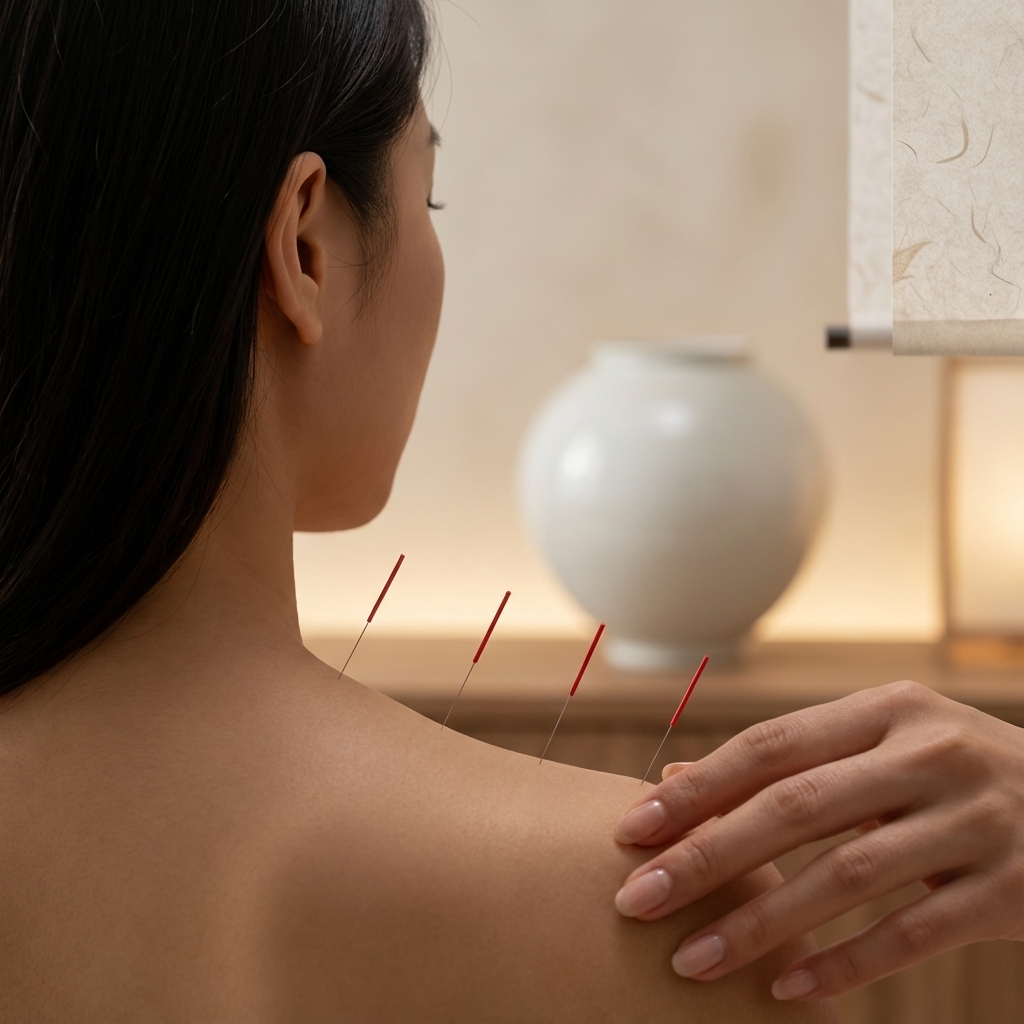
Cervical ribs are ribs that grow additionally from the 7th cervical vertebra, congenitally narrowing the space for nerves and blood vessels passing through the thoracic outlet. However, the majority of people with cervical ribs remain asymptomatic throughout their lives, and actual symptoms often appear when weight training causes hypertrophy of the scalene and pectoralis minor muscles, or when repetitive overhead movements are added. In other words, the bone acts as the cause, while the tension and hypertrophy of the soft tissues serve as the trigger. Surgical resection is considered only in specific cases where there is clear evidence of vascular compression. From a Korean medicine perspective, while the innate structure cannot be changed, what causes symptoms is the blockage, congestion, and hardening of the circulation of Qi and blood superimposed upon it. In our bodies, Qi and blood flow from the chest to the inner arm; if hypertrophied muscles constrict this pathway, circulation is blocked, leading to numbness. At Dongjedang, we check the thickness and tension of the scalene and pectoralis minor muscles using ultrasound, then relieve excessive tension with acupuncture. If tissue is attached to the nerve pathway, we meticulously detach it using fine needles, and for signs of inflammation, we apply pharmacopuncture in a stepwise manner. Since individuals with high levels of physical activity tend to accumulate stagnant waste and dead blood, the goal is to create a physical condition that allows for continued exercise without symptoms, even with a structural predisposition, by combining constitution-tailored herbal medicine treatment to flush these out.
Related FAQs
-
Q
I am a 46-year-old welder. I was told at the hospital that if my symptoms persist, surgery should be considered. Is there really a possibility of improvement without surgery through Korean traditional medicine treatment?
#Possibility / Realistic Goals
-
Q
I am a 58-year-old seamstress. I have suffered from arm numbness since my 30s, so it has been over 20 years. Can I get better if I start treatment now, even with such long-standing thoracic outlet syndrome?
#Possibility / Realistic Goals
-
Q
I am a 50-year-old factory worker. My MRI showed a herniated cervical disc, and I am also suspected of having thoracic outlet syndrome. How is treatment handled when both are present? Which side should be examined first?
#Comorbidities
-
Q
I am a 29-year-old marketer. Are there any stretches for thoracic outlet syndrome that I can do in my spare time at work? I am currently receiving treatment, but I would also like to manage it myself.
#Lifestyle Management
-
Q
I am a 55-year-old restaurant owner in Dongincheon. I keep waking up at night because my arm feels numb. I’ve heard it is due to thoracic outlet syndrome; what position should I sleep in to reduce the numbness?
#Lifestyle Management