
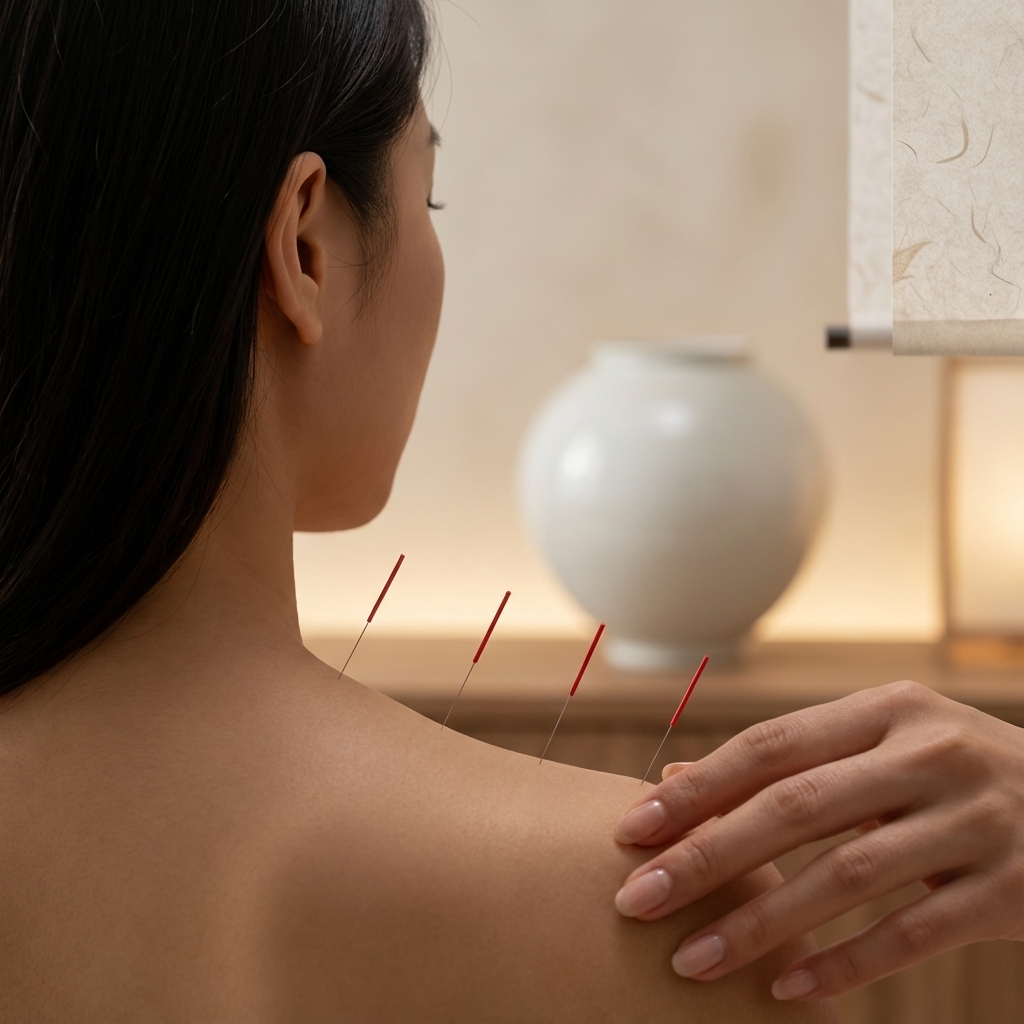
Whiplash Injury
Whiplash Injury
Whiplash injury resulting in stiff neck and shoulders and persistent headaches after a traffic accident

# Possibility / Realistic Goals (2)
Q I am a job seeker in my 20s. It has been three months since the accident, and I am anxious because there are many posts online saying that it lasts a lifetime. Is it really possible to fully recover?
A. Most patients with whiplash injuries make a full recovery. Cases where it is claimed to last a lifetime often occur when the appropriate timing for treatment was missed or when activity was excessively reduced due to anxiety. At the three-month mark, it is a time when active treatment targeting adhesions and weakened tissues can sufficiently put the condition on the path to recovery.
View details →Q I am a logistics center employee in my 30s. I even had an MRI after the accident, and while it says there are no abnormalities, the pain persists. Is treatment possible even though the test results are normal?
A. Yes, it is possible. Myofascial adhesions, micro-ligament damage, and joint capsule issues—the primary damages of whiplash—are often not clearly visible on MRI. Even if the images are normal, the pain is real, and the affected area can be identified and treated through palpation, ultrasound, and movement assessment.
View details →# Comorbidities (1)
# Lifestyle Management (2)
Q I am a bus driver in my 50s. I have been wearing a neck brace since an accident, but is it better to keep wearing it? I am not sure how long I need to wear it.
A. It is recommended to use the neck brace restrictively only for the first few days when severe pain is present, and to remove it as soon as possible. The current standard recommendation is that prolonged use weakens and stiffens neck muscles, which actually delays recovery. Gentle movement within the pain range is more beneficial for recovery.
View details →Q I am a nurse in my 30s. Since the accident, my neck feels stiffer when I wake up. What should I do regarding my pillow or sleeping position?
A. It is best to sleep facing the ceiling with a low pillow that supports the natural curve of the neck. Sleeping on your stomach is the most harmful position because the neck is fixed in a bent position to one side. When sleeping on your side, reinforce the pillow to shoulder height to ensure your neck remains straight.
View details →# Safety (1)
# Drug Combination / Interactions (1)
# Prognosis / Recovery (2)
Q I am an office worker in my 30s. I was diagnosed with a whiplash injury following a minor collision on my commute. How long does it usually take to recover? I am worried because I cannot miss work for a long time.
A. Mild whiplash injuries usually improve within 2 to 6 weeks, while moderate ones take about 2 to 3 months. It is not common to have to take time off work for treatment; in fact, maintaining daily activities as much as possible is beneficial for recovery. However, neglecting early treatment can lead to chronic conditions, so management during the first month is crucial.
View details →Q I am a hairdresser in my 40s. It has been six months since the accident last year, but my neck still feels heavy and achy on cloudy days. It has already become chronic; can it get better if I receive treatment now?
A. Even if it has become chronic, improvement is possible. Pain lasting more than six months is often caused by hardened adhesions and weakened ligaments, so it simply requires a different approach (adhesion release, ligament strengthening) than during the acute phase. Although the recovery speed is slower than during the acute phase, the intensity and frequency of pain can be reduced through stepwise treatment.
View details →# Causes Explained (2)
Q I am a delivery driver in my 40s. I was slightly rear-ended while waiting at a traffic light. I was fine at the time, but starting two days later, I can't turn my neck. It wasn't even a hard collision, so why is this happening?
A. Whiplash injury is a condition in which the neck is rapidly thrown back and twisted like a whip at the moment of impact, causing micro-damage to muscles, ligaments, and joint capsules. It can occur even in low-speed rear-end collisions; it is common for pain to be minimal immediately after the injury, but to develop pain and limited range of motion 24 to 72 hours later as the inflammatory response intensifies.
View details →Q I am a female office worker in my 30s. After a minor collision, my headache and dizziness are more severe than my neck pain. Why does my head hurt when my neck was injured?
A. When the muscles and joints of the upper cervical spine are damaged, the nerves ascending to the occipital region are irritated, causing cervicogenic headaches. Additionally, since receptors responsible for balance are densely concentrated in the neck joints, damage can be accompanied by dizziness and a dazed feeling. This is a very common symptom of whiplash injury.
View details →# Food / Triggers (2)
Q I am a housewife in my 40s. I am currently receiving treatment for my neck after an accident. Are there any foods that would be helpful for recovery, or any that I should avoid?
A. During the recovery period, it is advisable to avoid alcohol, greasy and spicy foods, and excessive caffeine. This is because they stimulate inflammation and reduce sleep quality, thereby hindering tissue recovery. A balanced diet with sufficient protein and vegetables, along with adequate hydration, is essential.
View details →Q I am a developer in my 30s. My neck improved a bit after the accident, but it gets worse again when I look at a monitor all day while working from home. Can posture hinder recovery?
A. Yes, forward head posture is a major obstacle to recovery from whiplash injuries. As the head moves forward, the load on the damaged muscles and ligaments at the back of the neck increases several times, effectively causing continuous re-injury to the tissues that are in the process of recovering. Adjusting the monitor height and ventilating your posture every 30 minutes is essential.
View details →# Treatment Schedule (1)
# Treatment Stages (2)
Q I am a private academy instructor in my 40s. I am planning to visit a Korean medicine clinic for the first time since the accident, and I would like to know in advance the sequence of treatment for whiplash injury.
A. First, the location and severity of the injury are confirmed using ultrasound or other methods. During the acute phase, pain and inflammation are reduced using acupuncture and pharmacopuncture. Once the pain is under control, adhesions are released and ligaments are strengthened using needle acupuncture. The recovery phase concludes with Chuna manual therapy and exercise guidance. Throughout the entire process, herbal medicine treatment can be combined to resolve blood stasis and enhance recovery.
View details →Q I am a caregiver in my 50s. Even after receiving acupuncture for several weeks, the deep part of my neck remains stiff, so I was recommended a treatment called Dochim. How is it different from regular acupuncture, and when is it administered?
A. Dochim is a treatment using needles with fine, blade-shaped tips that directly release hardened adhesions difficult to reach with ordinary needles and stimulate and strengthen weakened ligament attachment sites. It is applied when improvement with standard acupuncture has stalled and deep stiffness remains—that is, when adhesions are suspected—and is performed while confirming the location using ultrasound.
View details →# Effectiveness (2)
Q I am a self-employed individual in my 50s. After the accident, I received medication and physical therapy at an orthopedic clinic, but it has been a month and I am still in the same condition. Is Korean traditional medicine really effective?
A. Since the core of whiplash injuries involves damage to soft tissues such as muscles and ligaments, recovery is often slow with medication and heat therapy alone. Studies have reported that acupuncture and pharmacopuncture are effective in increasing blood flow to the injured area and reducing pain signals; in particular, they play a role in releasing adhesions and aiding tissue recovery when the condition progresses to a chronic stage.
View details →Q I am a graduate student in my 20s. I have been receiving acupuncture since the accident, but I was also recommended herbal medicine. Is acupuncture alone insufficient? I am curious about how herbal medicine helps with neck injuries.
A. While acupuncture is a treatment that directly relieves pain and tension in the injured area, herbal medicine is an internal treatment that dissolves blood stasis and replenishes the Qi and blood necessary for tissue recovery. If the injury is mild, acupuncture alone may be sufficient; however, if pain persists or is accompanied by fatigue or sleep disorders, combining the two often accelerates recovery.
View details →Whiplash Injury is not just a simple symptom
Korean medicine that considers both your constitution and lifestyle rhythm treats the root cause.
From consultation to precise treatment, we provide personalized care.
Prescriptions tailored to your constitution and symptoms treat the root cause
The director personally sees you from first to follow-up visits
We identify the essence through Sasang constitution, pulse and abdominal diagnosis
Treatment based on long clinical experience and evidence
Was this helpful? If you need accurate care for your condition, please contact us below.