
Q I am an elementary school teacher in my 40s. After the accident, I developed not only neck pain but also shoulder stiffness, numbness in my arms, and occasional tinnitus. Do I need to visit separate hospitals for each condition, or is it originating from my neck?
A It is highly likely that these symptoms stem from whiplash injury. Damage to neck muscles and nerves leads to shoulder stiffness and arm numbness, while tension in the upper cervical spine can cause tinnitus and dizziness. Rather than visiting separate clinics, an integrated assessment and treatment centered on the neck is more efficient.
Detailed Answer
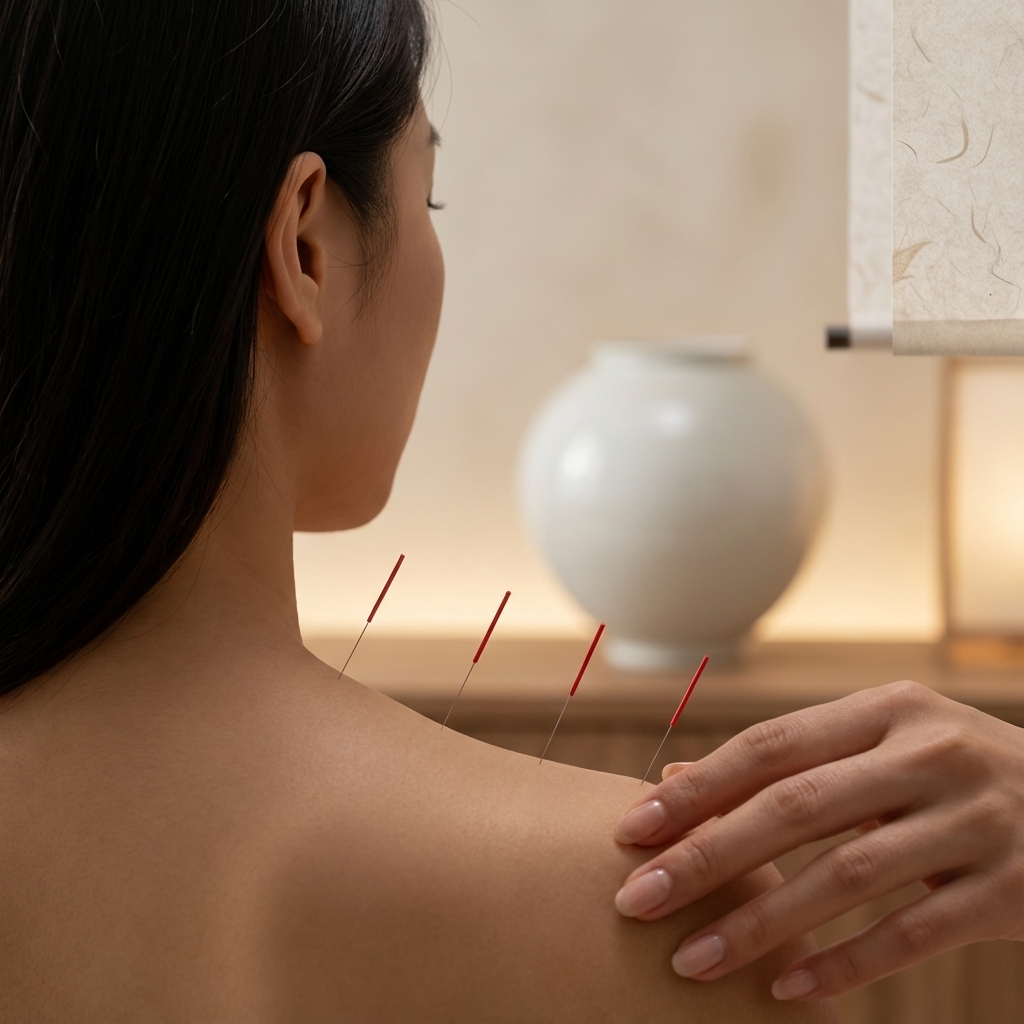
Whiplash injury is not limited to the cervical spine alone. During the impact, the muscles surrounding the scapula (trapezius and levator scapulae) are also damaged, leading to accompanying shoulder stiffness. Additionally, if damaged nerve roots or tense scalene muscles irritate the nerves leading to the arm, arm numbness occurs. Muscle tension and joint dysfunction in the upper cervical spine can lead to tension around the turn joints and inner ear, causing tinnitus, a feeling of fullness, and dizziness; this is referred to as cervical tinnitus. However, if arm numbness progressively worsens or is accompanied by muscle weakness, a precise examination is necessary to differentiate nerve root compression. From the perspective of Korean medicine, these symptoms are not scattered, separate diseases but rather a single meridian diagram. If the flow of meridians along the back and outer arms—connecting the neck, shoulders, and arms—is blocked by stagnant blood caused by trauma, stiffness and numbness manifest along that path; conversely, if the qi and blood in the lateral meridians surrounding the ears become stagnant, tinnitus develops. Since the ears are connected to the kidneys, if kidney energy is depleted due to chronic damage, the tinnitus becomes difficult to treat. At Dongjedang, we focus on the neck while identifying blocked points throughout the entire meridian system using palpation and ultrasound. We then implement a stepwise external treatment routine consisting of acupuncture, pharmacopuncture, and moxibustion as a single flow. Internally, we clear out stagnant blood and waste products while reinforcing the liver and kidneys with herbal medicine tailored to the body's condition. Since various symptoms are handled in one place, you can reduce the burden of visiting multiple medical departments.
Related FAQs
-
Q
I am a job seeker in my 20s. It has been three months since the accident, and I am anxious because there are many posts online saying that it lasts a lifetime. Is it really possible to fully recover?
#Possibility / Realistic Goals
-
Q
I am a logistics center employee in my 30s. I even had an MRI after the accident, and while it says there are no abnormalities, the pain persists. Is treatment possible even though the test results are normal?
#Possibility / Realistic Goals
-
Q
I am a bus driver in my 50s. I have been wearing a neck brace since an accident, but is it better to keep wearing it? I am not sure how long I need to wear it.
#Lifestyle Management
-
Q
I am a nurse in my 30s. Since the accident, my neck feels stiffer when I wake up. What should I do regarding my pillow or sleeping position?
#Lifestyle Management
-
Q
I am a woman in my 60s. I have osteoporosis; is it safe to receive Chuna manual therapy or moxibustion for neck treatment after an accident? I am scared by the talk of my neck being "broken."
#Safety