
Q I am a logistics center employee in my 30s. I even had an MRI after the accident, and while it says there are no abnormalities, the pain persists. Is treatment possible even though the test results are normal?
A Yes, it is possible. Myofascial adhesions, micro-ligament damage, and joint capsule issues—the primary damages of whiplash—are often not clearly visible on MRI. Even if the images are normal, the pain is real, and the affected area can be identified and treated through palpation, ultrasound, and movement assessment.
Detailed Answer
While MRI is strong at visualizing structural lesions such as herniated discs, fractures, and spinal cord compression, the core lesions of whiplash—micro-fascial adhesions, partial ligament damage, inflammation of the facet joint capsule, and impaired deep muscle function—are not easily revealed in images. A normal MRI is simply good news indicating the absence of major structural damage; it does not mean that there should be no pain. In such cases, the key to diagnosis lies in locating tender points and hardenings through skilled palpation, verifying the condition of soft tissues with musculoskeletal ultrasound, and evaluating functional problems through active and passive movement tests. Korean Medicine Clinic Perspective
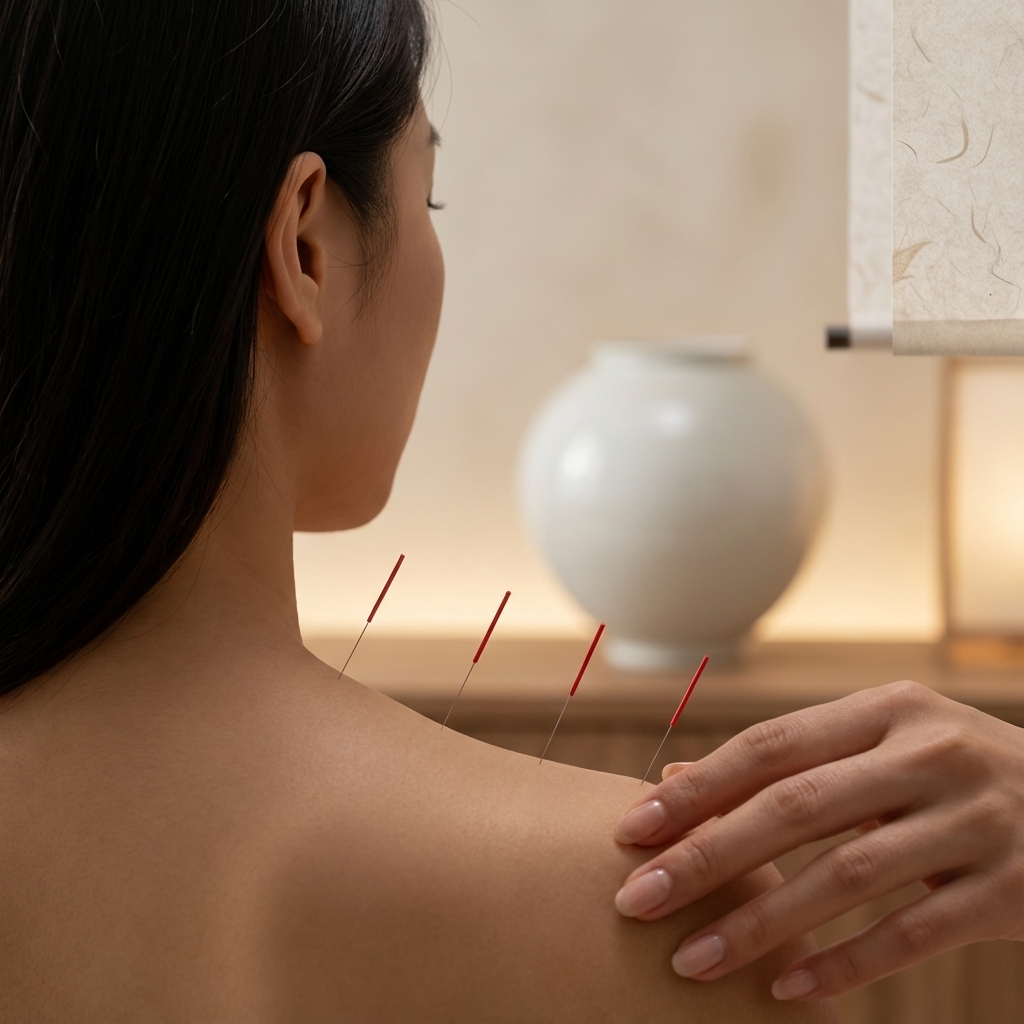
Korean medicine is fundamentally a medical system that identifies lesions through the palpation of the fingertips and signs throughout the body, rather than imaging. A significant portion of pain invisible on imaging is explained by issues at the meridian level—specifically, conditions where pain arises from blocked Qi and blood circulation—and blood stasis accumulated in the fascia; the locations of these conditions are clearly palpable through tender points and hardenings. Hardenings formed along the fascial lines of the neck and back, as well as the midline of the spine, are a finding consistently observed in patients with whiplash injury. At Dongjedang, after confirming these hardenings and adhesions through palpation and ultrasound, we directly resolve them through a stepwise external treatment ranging from acupuncture to moxibustion, and through internal treatment, we empty the body of blood stasis and dampness to create an environment where pain does not re-form. There is no need to give up on treatment simply because test results are normal. Addressing invisible damage is a long-standing strength of Korean pain treatment.
Related FAQs
-
Q
I am a job seeker in my 20s. It has been three months since the accident, and I am anxious because there are many posts online saying that it lasts a lifetime. Is it really possible to fully recover?
#Possibility / Realistic Goals
-
Q
I am an elementary school teacher in my 40s. After the accident, I developed not only neck pain but also shoulder stiffness, numbness in my arms, and occasional tinnitus. Do I need to visit separate hospitals for each condition, or is it originating from my neck?
#Comorbidities
-
Q
I am a bus driver in my 50s. I have been wearing a neck brace since an accident, but is it better to keep wearing it? I am not sure how long I need to wear it.
#Lifestyle Management
-
Q
I am a nurse in my 30s. Since the accident, my neck feels stiffer when I wake up. What should I do regarding my pillow or sleeping position?
#Lifestyle Management
-
Q
I am a woman in my 60s. I have osteoporosis; is it safe to receive Chuna manual therapy or moxibustion for neck treatment after an accident? I am scared by the talk of my neck being "broken."
#Safety