
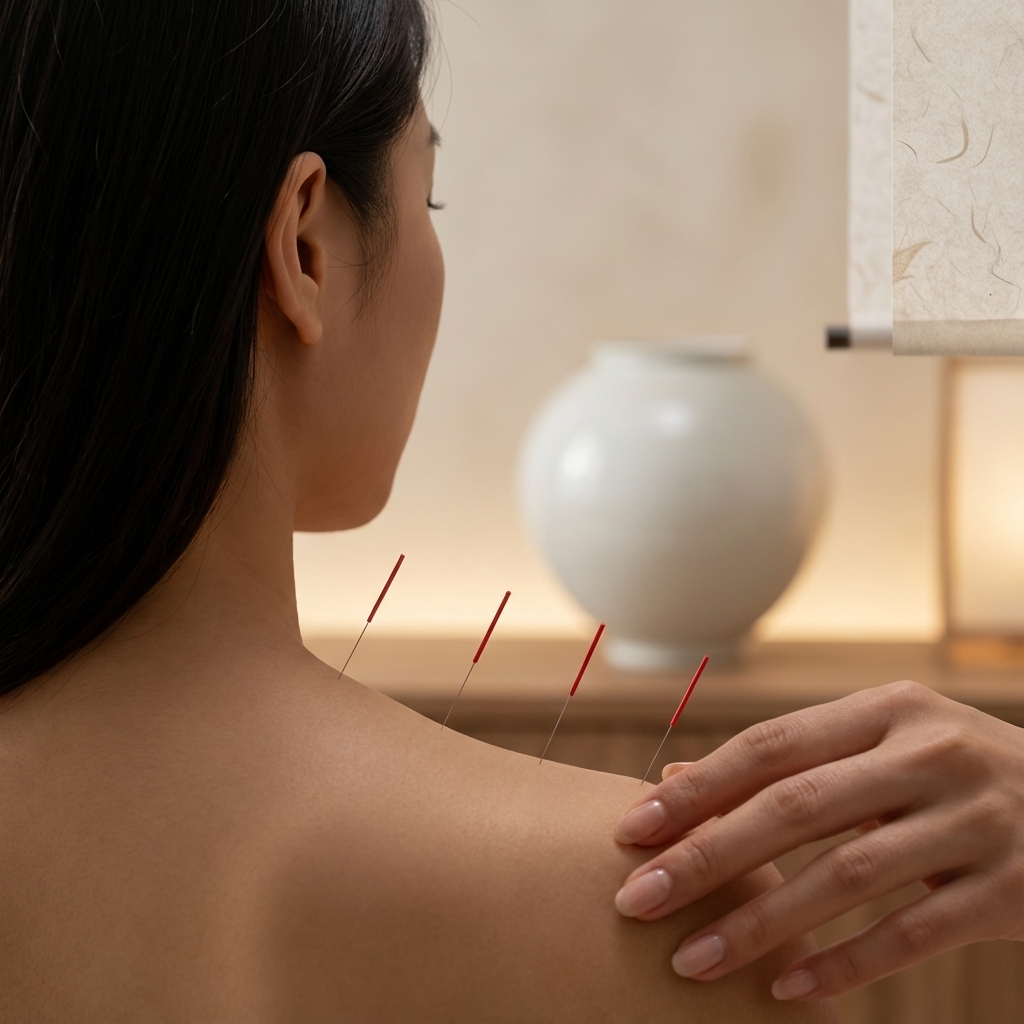
Piriformis Syndrome
Piriformis Syndrome
Piriformis syndrome, characterized by deep buttock pain and leg numbness

# Possibility / Realistic Goals (2)
Q I was recommended surgery by an orthopedic surgeon. Is it possible to avoid surgery with treatment at a Korean medicine clinic alone?
A. In most cases, piriformis syndrome is treated without surgery unless there is an anatomical variation (such as the nerve penetrating the piriformis muscle). In many cases, surgery becomes unnecessary once sciatic nerve compression is relieved through conservative treatment (acupuncture, moxibustion, and physical therapy). Surgery is generally considered as a last resort after conservative treatment has failed for more than six months.
View details →Q I’ve heard that Piriformis Syndrome tends to recur even after recovery. Can treatment at a Korean medicine clinic prevent recurrence?
A. Piriformis Syndrome has a high recurrence rate if treatment is received without correcting the underlying posture or movements. Treatment at a Korean medicine clinic is effective in preventing recurrence by reducing structural vulnerability through adhesion release and tissue regeneration, and by increasing muscle elasticity through the restoration of meridian Qi and blood circulation. Consistently practicing piriformis strengthening exercises and posture correction after treatment is key to preventing recurrence.
View details →# Comorbidities (1)
# Lifestyle Management (2)
Q Are there any stretches or exercises that are good for piriformis syndrome? I am curious about methods that are safe to perform alone at home.
A. For piriformis syndrome, piriformis stretching (sitting, placing the ankle on the opposite knee, and bending the upper body forward) and hip internal rotation stretching while lying down are effective. Avoid excessive stretching during the acute pain phase, and it is safer to start gradually after the pain has subsided. The basic principle is to hold the stretch for 30 seconds, 2 to 3 times a day.
View details →Q I have to continue working even while undergoing treatment for piriformis syndrome. What precautions should I take in my work life?
A. The key to working during treatment is to stand up and walk for at least 5 minutes every hour, use a cushion for pelvic support, and avoid crossing your legs. Donut cushions or memory foam cushions help reduce pressure on the piriformis muscle rather than hard chairs. On days with severe pain, it is advisable to avoid strenuous walking and replace it with short stretches.
View details →# Safety (1)
# Drug Combination / Interactions (1)
# Prognosis / Recovery (2)
Q If it is the early stage of Piriformis Syndrome, how quickly can I recover? For reference, it has been about 3 months since the symptoms started.
A. 3 months after the onset of symptoms is still a pre-chronic stage, and the prognosis for recovery is good with active treatment. If adhesions are not severe, pain in daily life can be eliminated with 2 to 3 months of treatment. Combining posture correction and stretching with treatment speeds up the recovery process.
View details →Q I have had pain in my hips and legs for over two years, but I was only recently diagnosed with piriformis syndrome. Can I improve with Korean medicine treatment even in a case this long-standing?
A. While treatment effects can be expected for chronic piriformis syndrome lasting more than two years, the treatment period is prolonged due to thick adhesions and heightened nerve sensitivity. Significant symptom improvement is possible with consistent deep structural treatments such as moxibustion and thread embedding. It is advisable to set realistic goals of functional recovery and a reduction in daily pain levels rather than complete pain relief.
View details →# Causes Explained (2)
Q I am an office worker in my 40s, and when I sit for a long time, I experience pain deep in my buttocks and numbness extending down to my legs. I was told this is not a herniated disc but piriformis syndrome. Why do these symptoms occur?
A. The piriformis muscle is located deep within the pelvis and externally rotates the hip joint. If this muscle becomes excessively tense or hypertrophied, it compresses the sciatic nerve passing right next to it, causing buttock pain and leg numbness. Prolonged sitting, sudden exercise, trauma, and pelvic misalignment are the main causes.
View details →Q I am in my 30s working as a delivery driver in Dongincheon. I ride my motorcycle frequently and climb stairs repeatedly, and one side of my buttocks hurts severely. Can piriformis syndrome be caused by occupation?
A. Repetitive external rotation of the hip, riding a motorcycle for long periods, and climbing stairs place a chronic load on the piriformis muscle. Piriformis syndrome is particularly likely to occur in occupational groups where one side of the body is fixed in a certain posture, especially if pelvic asymmetry becomes severe. If the occupational cause is clear, posture and movement correction must be performed in conjunction with treatment.
View details →# Food / Triggers (2)
Q Are there any foods that are bad for piriformis syndrome or things I should avoid? I tend to drink alcohol frequently; will this have an effect?
A. While food itself does not directly cause piriformis syndrome, excessive drinking and a high-fat, high-sugar diet increase systemic inflammation and hinder muscle recovery. Alcohol can worsen pain by disrupting blood flow within the muscles and weakening anti-inflammatory mechanisms. During treatment, moderation in drinking, along with a diet rich in omega-3 and magnesium, is helpful.
View details →Q What postures or behaviors worsen symptoms after developing Piriformis Syndrome? I am curious about what precautions I should take in daily life.
A. Typical postures that aggravate Piriformis Syndrome include sitting with legs crossed, sitting on hard surfaces for extended periods, and squatting. Climbing stairs, walking on inclines, and sudden changes in direction also place a heavy load on the piriformis muscle. Avoiding these postures and movements as much as possible during treatment accelerates recovery.
View details →# Treatment Schedule (1)
# Treatment Stages (2)
Q What is the order of treatment when visiting a Korean medicine clinic for the first time for Piriformis Syndrome? I would like to know what needs to be done during the first visit.
A. During the first visit, the condition is assessed through symptom history taking, physical examination (FABER/FADIR tests), and ultrasound measurement of the piriformis muscle thickness. Subsequently, acupuncture treatment is initiated to improve meridian circulation, and advanced treatments such as moxibustion, thread embedding, and pharmacopuncture are planned in stages. The treatment direction is adjusted by monitoring the response for 24 to 48 hours after the first visit.
View details →Q I understand that the treatment for piriformis syndrome begins with acupuncture, followed by moxibustion and thread embedding. Could you please explain why each step is necessary?
A. Acupuncture is the first step, relaxing spasms and restoring blood flow; moxibustion is the second step, physically separating hardened adhesive fibers; and thread lifting is the third step, inducing collagen regeneration to restore muscle strength. The order of these steps is significant because each intervenes in different tissue conditions. Depending on the severity of symptoms, steps may be skipped or performed in parallel.
View details →# Effectiveness (2)
Q Is acupuncture treatment at a Korean medicine clinic actually effective for piriformis syndrome? How does it compare to injection therapy?
A. Acupuncture treatment for piriformis syndrome is effective in relieving muscle spasms and reducing nerve compression. In particular, ultrasound-guided needle acupuncture is effective in directly dissecting adhered piriformis muscles, which may be more advantageous than simple injections in preventing recurrence. Steroid injections are strong for short-term anti-inflammatory effects, but repeated use carries a risk of tissue weakening.
View details →Q How many treatment sessions do I need to receive at a Korean medicine clinic for Piriformis Syndrome to see results? I have received 3 or 4 sessions, but I am still not sure.
A. While the response to treatment for Piriformis Syndrome varies from person to person, initial effects usually appear after 5 to 8 sessions. In cases of long-standing adhesions, a course of 2 to 3 months may be required, including structural treatments such as moxibustion and thread embedding. Since 3 to 4 sessions is still in the early stages, it is advisable to monitor the progress further.
View details →Piriformis Syndrome is not just a simple symptom
Korean medicine that considers both your constitution and lifestyle rhythm treats the root cause.
From consultation to precise treatment, we provide personalized care.
Prescriptions tailored to your constitution and symptoms treat the root cause
The director personally sees you from first to follow-up visits
We identify the essence through Sasang constitution, pulse and abdominal diagnosis
Treatment based on long clinical experience and evidence
Was this helpful? If you need accurate care for your condition, please contact us below.