

Q I am an office worker in my 40s, and when I sit for a long time, I experience pain deep in my buttocks and numbness extending down to my legs. I was told this is not a herniated disc but piriformis syndrome. Why do these symptoms occur?
A The piriformis muscle is located deep within the pelvis and externally rotates the hip joint. If this muscle becomes excessively tense or hypertrophied, it compresses the sciatic nerve passing right next to it, causing buttock pain and leg numbness. Prolonged sitting, sudden exercise, trauma, and pelvic misalignment are the main causes.
Detailed Answer
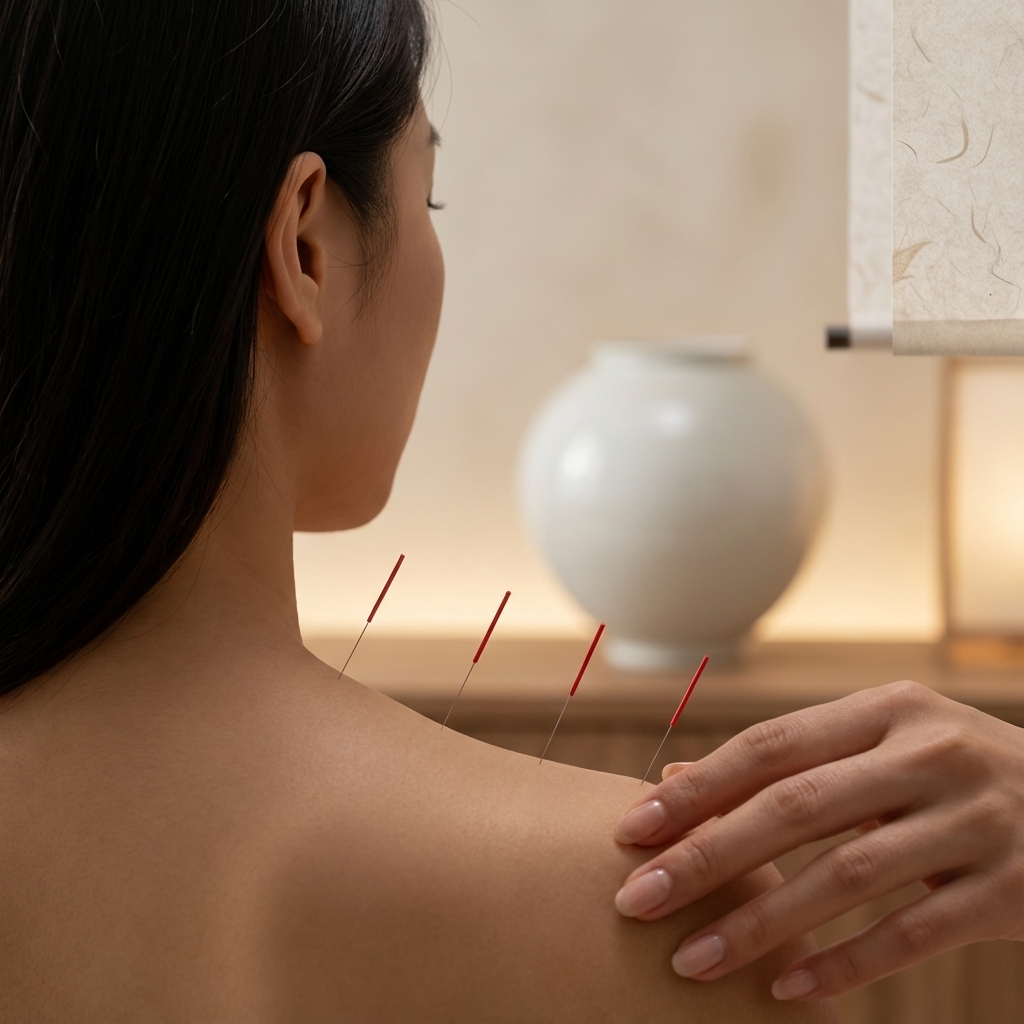
The piriformis muscle is a small muscle that extends from the deep pelvis, from the anterior surface of the sacrum, to the greater trochanter of the femur. If this muscle spasms, hypertrophies, or adheres, it physically compresses the adjacent sciatic nerve, causing symptoms similar to sciatica. Major causes include: ① continuous compression due to prolonged sitting; ② sudden twisting movements or falls; ③ leg length discrepancy or pelvic asymmetry; and ④ long-distance driving or cycling. Due to various anatomical variations in the sciatic nerve—such as positioning below the piriformis muscle (80%), penetrating it (15%), or above it (5%)—compression occurs more easily in some individuals. In Korean medicine, deep pelvic piriformis muscle issues are viewed as a state of stagnation within the muscle caused by a decline in the function governing muscles and tendons, as well as blocked Qi and blood circulation. When trauma, overwork, wind, cold, or dampness invade the meridians running through the buttocks and the back of the thighs, Qi and blood become blocked, leading to muscle spasms and adhesions that constrict the sciatic nerve. Dongjedang focuses on separating adhesions in the piriformis muscle using ultrasound-guided needle acupuncture and restoring meridian Qi and blood circulation to create a state where the muscle relaxes naturally.
Related FAQs
-
Q
I was recommended surgery by an orthopedic surgeon. Is it possible to avoid surgery with treatment at a Korean medicine clinic alone?
#Possibility / Realistic Goals
-
Q
I’ve heard that Piriformis Syndrome tends to recur even after recovery. Can treatment at a Korean medicine clinic prevent recurrence?
#Possibility / Realistic Goals
-
Q
I have been told that I have both Piriformis Syndrome and a herniated disc (lumbar disc herniation). Can both be treated together?
#Comorbidities
-
Q
Are there any stretches or exercises that are good for piriformis syndrome? I am curious about methods that are safe to perform alone at home.
#Lifestyle Management
-
Q
I have to continue working even while undergoing treatment for piriformis syndrome. What precautions should I take in my work life?
#Lifestyle Management