
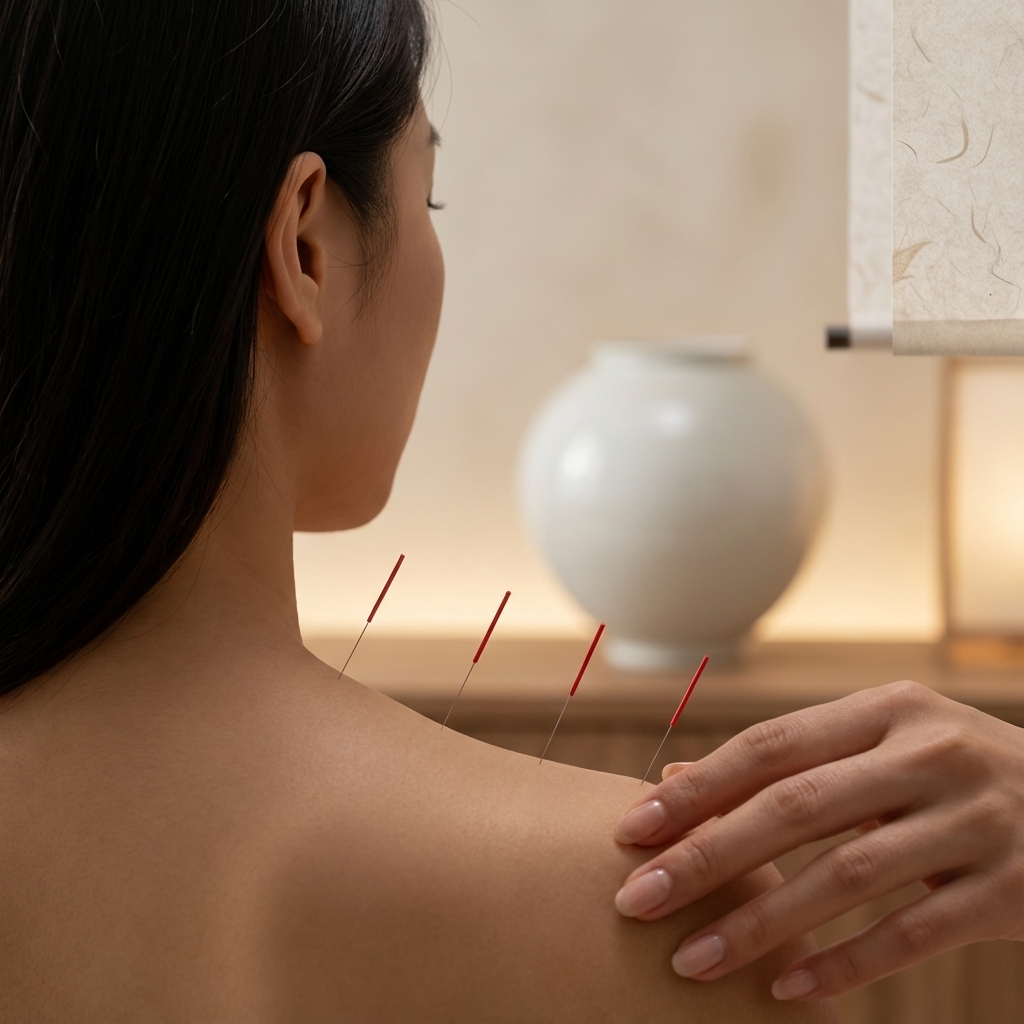
Ankle Sprain
Ankle Sprain
Ligament damage from a sprained ankle, swollen and painful, recurrent sprains

# Possibility / Realistic Goals (2)
Q I was diagnosed with a Grade 3 complete rupture. Can I be treated without surgery? Is it possible with Korean traditional medicine? (Male in his 30s)
A. Conservative treatment is usually attempted first for most Grade 3 complete ruptures. The current standard treatment approach is to consider surgery only if instability persists after 6 months of conservative treatment. Korean traditional medicine can actively support ligament regeneration and functional recovery, making it a key pillar of conservative treatment.
View details →Q I am in my 60s and I was told that my ankle ligaments are already significantly worn out. Is Korean traditional medicine effective for older people as well? (Female, 60s)
A. While the rate of ligament and cartilage regeneration slows with age, Korean traditional medicine actually has a strong advantage in reinforcing function deterioration caused by aging. By reinforcing liver and kidney functions and resolving blood stasis, it improves the environment for tissue regeneration. Furthermore, it can aid in functional recovery by stimulating degenerated ligaments using needle acupuncture and thread embedding. Even those over 60 can expect sufficient therapeutic effects.
View details →# Comorbidities (1)
# Lifestyle Management (2)
Q Do I need to continue wearing a brace or taping in daily life after an ankle sprain? Will I develop a dependency? (Housewife in her 40s)
A. Wearing a brace is effective in preventing re-injury during the acute and early recovery phases. However, since prolonged use can cause weakening of surrounding muscles, it is advisable to gradually reduce its use and replace it with strength training exercises once the pain subsides. Taping should be used for preventive purposes during sports activities, but in daily life, it is better to build natural stability through proprioceptive training.
View details →Q My ankle hasn't fully healed yet, but I have to stand all day at work. Is there a way to manage this? (Retail worker in their 30s, Dong-gu, Incheon)
A. If you have a job that requires you to stand for long periods, it is recommended to wear well-cushioned shoes and ankle braces, and to perform simple stretches, such as ankle rotations and heel raises, every hour. After work, managing swelling with a cold compress (15–20 minutes) and resting with your feet elevated above your heart can be helpful. If pain persists, it is important to establish a management plan tailored to your work environment while undergoing treatment.
View details →# Safety (1)
# Drug Combination / Interactions (1)
# Prognosis / Recovery (2)
Q How long does it usually take for an ankle sprain to fully heal? What happens if it doesn't heal properly? (Office worker in their 30s)
A. The general recovery period is 1 to 2 weeks for a Grade 1 sprain, 4 to 6 weeks for Grade 2, and 3 to 6 months for Grade 3 (complete rupture). If left untreated, it can progress to chronic instability, arthritis, or cartilage damage. However, with diligent treatment and rehabilitation, most patients can recover normal function.
View details →Q I am an athlete. Is it possible to make a full return to sports using only Korean medicine treatment without ankle surgery? (Soccer club member in their 20s)
A. For sprains of Grade 2 or lower, a full return without surgery is possible through Korean medicine treatment and rehabilitation. Even for Grade 3 complete ruptures, conservative treatment is attempted first in the early stages, and surgery is considered only if instability remains after more than 6 months of treatment. Strengthening ligaments with needle acupuncture and thread embedding, combined with proprioceptive training, can increase the success rate of returning to sports.
View details →# Causes Explained (2)
Q I sprained my ankle, but why is it swelling and bruising so much? Is it just a stretched ligament? (Office worker in their 30s)
A. Ankle sprains occur when ligaments are excessively stretched or partially torn, damaging surrounding blood vessels and causing bleeding and swelling. A bruise is blood spreading beneath the skin and is classified into grades 1 to 3 depending on the extent of the damage. Even if it appears to be a simple sprain, it may be accompanied by a complete ligament rupture or cartilage damage, so an accurate evaluation is necessary.
View details →Q "I keep spraining my ankle; what is the reason it is becoming habitual? I have been spraining it repeatedly since high school." (College student in their 20s)
A. If ligaments do not fully recover after the first sprain, proprioception around the joint deteriorates, leading to chronic ankle instability where the ankle easily sprains again even under the same stimulus. This is because the ligaments themselves harden in a stretched state, weakening the force that supports the joint. The biggest cause is insufficient initial treatment and rehabilitation.
View details →# Food / Triggers (2)
Q Are there any foods that are good to eat or should be avoided when my ankle is swollen and painful? (Nurse in her 30s)
A. During the inflammatory phase, oily fish rich in Omega-3 and vegetables and fruits rich in antioxidants aid in recovery. On the other hand, it is best to avoid alcohol, as it increases vascular permeability, worsening edema and slowing tissue recovery. Spicy and stimulating foods, as well as instant foods, can also amplify inflammatory responses.
View details →Q When can I resume exercising after spraining my ankle? Will overexertion make it worse? (Aspiring athlete in their 20s)
A. During the acute phase (48–72 hours), follow the RICE (Rest, Ice, Compression, Elevation) principles. Once pain subsides, gradually resume exercises, starting with range of motion exercises. Overexertion too early can cause the ligaments to stiffen in a stretched state, leading to chronic instability. It is safer to begin weight-bearing exercises under professional guidance after you can walk normally without pain.
View details →# Treatment Schedule (1)
# Treatment Stages (2)
Q I sprained my ankle yesterday. Can I go to a Korean medicine clinic right now? How does the initial treatment proceed? (College student in their 20s)
A. You can receive treatment at a Korean medicine clinic within 24 hours of an acute sprain. During the initial consultation, after evaluating the stage of injury, acupuncture and cupping are applied with the goal of reducing swelling and alleviating pain. If necessary, X-ray or ultrasound examinations are recommended to check for fractures or ligament tears. Intensive early treatment is crucial for preventing the condition from becoming chronic.
View details →Q It has been two months since I sprained my ankle, but the pain still persists. What kind of treatment is received at this stage? (Male in his 40s)
A. In the subacute to chronic phase, the treatment goal is to resolve ligament adhesions and restore joint function. A complex treatment is applied that involves separating adhered tissues with a fine needle, promoting collagen regeneration with thread embedding, and controlling residual inflammation with pharmacopuncture and bee venom acupuncture. At this stage, combining proprioceptive training with strength training is crucial for preventing recurrence.
View details →# Effectiveness (2)
Q Does acupuncture actually work for a sprained ankle? Doesn't it just heal on its own if I rest? (Self-employed, 40s, resident of Dongincheon)
A. Unlike simple rest, acupuncture treatment has been clinically proven to accelerate recovery by increasing local blood flow and regulating inflammatory cytokines. In particular, it shows a rapid response in pain relief and swelling reduction, and needle acupuncture physically loosens adhered ligament tissues to aid in functional recovery. Since neuromuscular dysfunction is not corrected by simple rest alone, the recurrence rate is high.
View details →Q I have ankle pain for over six months. Is treatment at a Korean medicine clinic worthwhile right now? I am worried that it might already be too late. (Housewife in her 50s)
A. Korean traditional medicine is highly effective for chronic ankle pain. In fact, during the chronic stage, where adhesions and scar tissues are fixed, physical release methods such as needle acupuncture and thread embedding play a more critical role. By combining the strengthening of liver and kidney functions with the resolution of blood stasis, one can expect pain reduction and the recovery of joint function.
View details →Ankle Sprain is not just a simple symptom
Korean medicine that considers both your constitution and lifestyle rhythm treats the root cause.
From consultation to precise treatment, we provide personalized care.
Prescriptions tailored to your constitution and symptoms treat the root cause
The director personally sees you from first to follow-up visits
We identify the essence through Sasang constitution, pulse and abdominal diagnosis
Treatment based on long clinical experience and evidence
Was this helpful? If you need accurate care for your condition, please contact us below.