
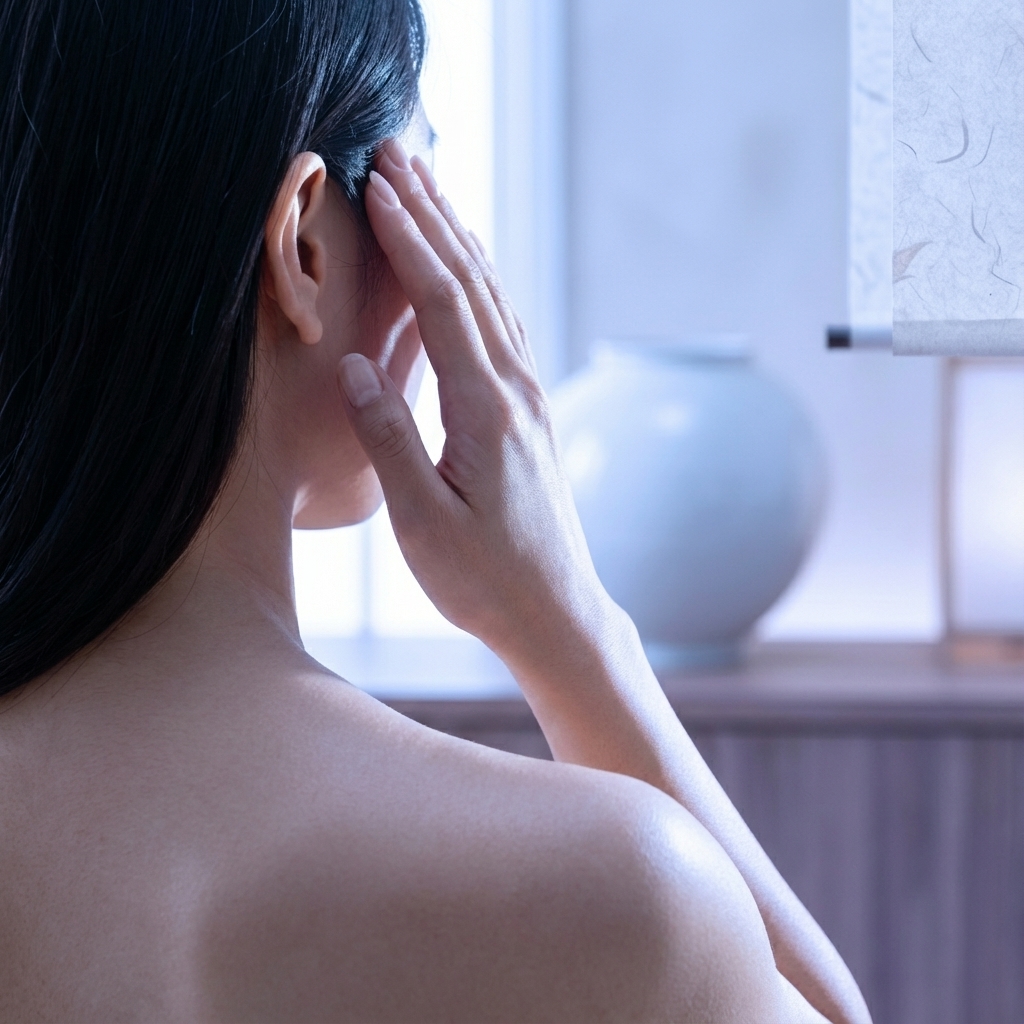
Q Whenever I'm stressed before exams or presentations, my eye twitches even more. Besides managing stress, is there anything else I can do?
A Stress overactivates the sympathetic nervous system and is a major trigger for facial nerve overexcitability. Getting at least 7 hours of sleep, cutting back on caffeine, and eating magnesium-rich foods (nuts, green vegetables) help to stabilize the nerves.
Detailed Answer
Under stress or anxiety, adrenaline is released and the nerve's excitation threshold lowers, so spasms become more frequent. Caffeine (coffee, energy drinks) also overactivates the nervous system, so it is best to cut back. Adequate sleep is the foundation of nerve recovery, and a lack of it greatly increases spasm frequency. Magnesium is a mineral that suppresses neuromuscular excitability, and a deficiency worsens muscle and nerve hypersensitivity.
Korean Medicine Clinic Perspective
In Korean medicine, stress is a leading cause of Liver qi stagnation (gangi-ulgyeol). When Liver qi becomes knotted, it generates Wind, and this Wind rises to the face to cause spasms. Treatment begins with soothing the Liver (sogan) by releasing the knotted qi, and uses herbal medicine and acupuncture to ease the internal impact of tension and stress.
Related FAQs
-
Q
Is a complete cure possible with Korean medicine treatment alone, without surgery?
#Possibility / Realistic Goals
-
Q
I came because of facial spasm, but my headaches are severe too. Are they related?
#Comorbidities
-
Q
I have facial spasm and also hear a sound in my ear. Is it the same cause?
#Comorbidities
-
Q
As an office worker, it's really embarrassing when my face pulls during video calls. Is there a way to reduce it in daily life?
#Lifestyle Management
-
Q
My face pulls more after I sleep. Do my sleeping posture or pillow have an effect?
#Lifestyle Management