
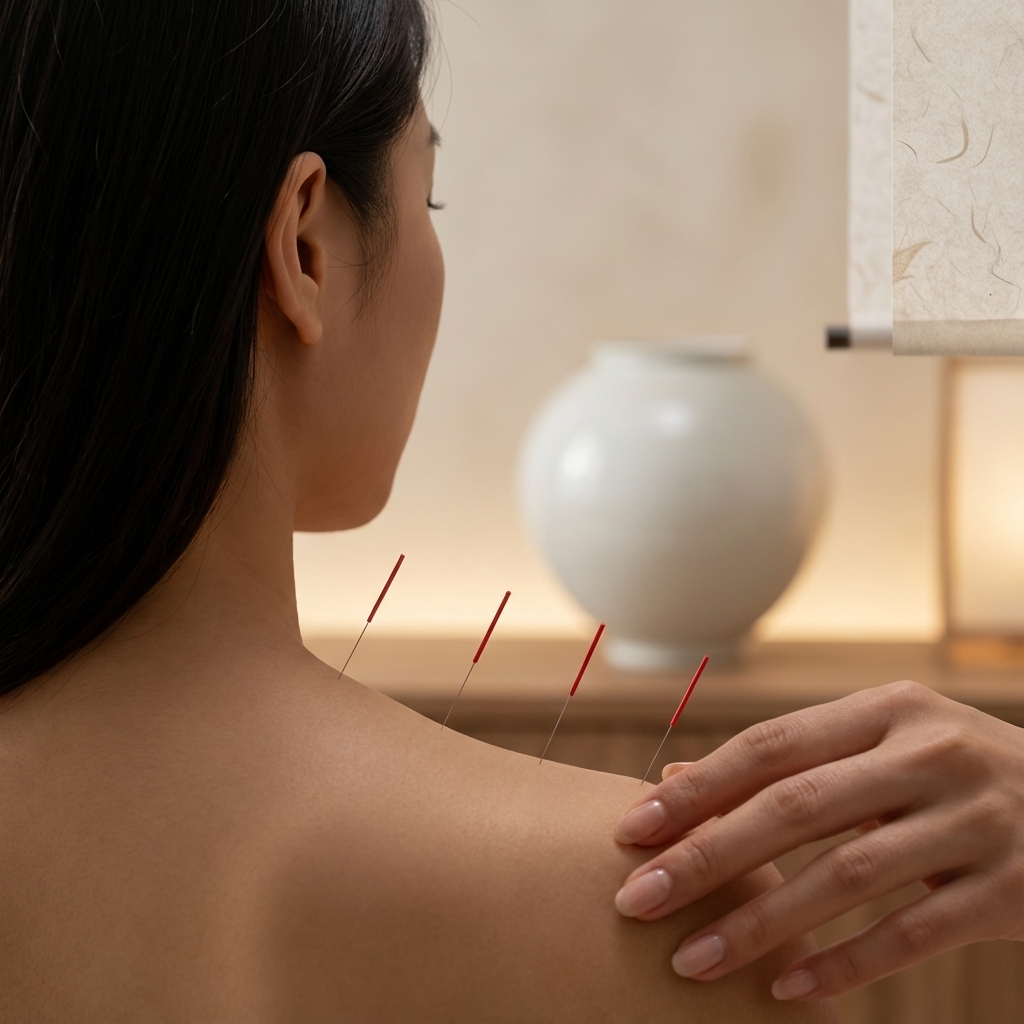
Shoulder Impingement
Shoulder Impingement
Shoulder impingement syndrome, which causes pain that feels like it is catching when raising the arm to a certain angle
# Possibility / Realistic Goals (2)
Q I have had shoulder pain for over 5 years. Can I get better with Korean medicine treatment even in such a long-standing case?
A. There are many cases where the condition improves with Korean medicine treatment, even in chronic cases lasting more than 5 years. However, since adhesions may be thick and muscle weakness may be severe, a longer treatment period is required. It is important to accurately assess the current condition using ultrasound and set realistic goals.
View details →Q My mother, in her 70s, has shoulder impingement syndrome. Can she receive traditional Korean medicine treatment despite her advanced age?
A. Elderly patients aged 70 and older can also receive Korean medicine treatment, which is safely administered starting with gentle therapies such as acupuncture and pharmacopuncture. However, as older patients often have rotator cuff degeneration and osteoporosis, we first conduct an ultrasound evaluation and identify any medications they are taking.
View details →# Comorbidities (1)
# Lifestyle Management (2)
Q Are there any exercises that help with shoulder impingement syndrome? Conversely, what exercises should be avoided?
A. Strengthening exercises for the lower trapezius and external rotators (infraspinatus and teres minor) are effective in improving symptoms by widening the subacromial space. On the other hand, overhead movements that raise the arms (presses, freestyle swimming) cause repeated impingement and should be avoided during treatment.
View details →Q How should I sleep if I have shoulder impingement syndrome? It seems to get worse when I lie on the painful shoulder side.
A. If you lie down with the affected shoulder lower, symptoms worsen overnight due to continuous pressure. It is recommended to lie on your healthy side or, when lying on your back, place a thin pillow under the affected arm to maintain a neutral shoulder position.
View details →# Safety (1)
# Drug Combination / Interactions (1)
# Prognosis / Recovery (2)
Q Is shoulder impingement syndrome curable, or does it require lifelong management?
A. If treated properly in the early stages, complete recovery is possible, and most patients can return to their daily lives within a few months. However, if accompanied by a rotator cuff tear or if left untreated for a long time, a longer treatment period is required, and exercise management to prevent recurrence may be necessary for life.
View details →Q My doctor recommended surgery; can I avoid it through treatment at a Korean medicine clinic?
A. In cases where there is no complete rotator cuff tear or severe structural abnormalities, recovery without surgery is often possible through Korean medicine treatment. The general recommendation is to reconsider surgery only if there is no improvement after attempting non-surgical treatments, such as moxibustion and pharmacopuncture, for at least three months.
View details →# Causes Explained (2)
Q I am an office worker in my 40s, and I feel a sharp, stabbing sensation in the upper part of my shoulder whenever I lift my arm. Exactly why does shoulder impingement syndrome occur?
A. Shoulder impingement syndrome occurs when the space above the shoulder joint (subacromial space) narrows, causing the rotator cuff tendons to repeatedly get pinched and rub against the acromion bone. Pain worsens when lifting the arm, and if left untreated, it can lead to a rotator cuff tear.
View details →Q I am in my 50s working in logistics in Dongincheon. My job involves frequently lifting heavy loads; could my shoulder impingement syndrome have developed because of my work?
A. Repetitive lifting of the arms or exerting force upward on the shoulder causes cumulative damage to the rotator cuff, making it a major cause of impingement syndrome. The risk is significantly higher, especially when repeatedly lifting heavy objects while the shoulder stabilizing muscles are weakened.
View details →# Food / Triggers (2)
Q Are there specific foods that worsen inflammation in shoulder impingement syndrome? How should I adjust my daily eating habits?
A. Inflammation-inducing foods such as instant foods, fried foods, and sugary drinks can worsen inflammation around tendons. Consuming oily fish rich in omega-3, antioxidant vegetables, and sufficient protein helps with tendon recovery.
View details →Q Can the habit of looking at a smartphone for a long time worsen shoulder impingement syndrome?
A. Looking at a smartphone with your head bowed for extended periods can exacerbate imbalances in the neck and shoulder muscles, narrowing the subacromial space and potentially worsening impingement symptoms. It is important to adjust the screen to eye level and perform shoulder stretches every 30 minutes.
View details →# Treatment Schedule (1)
# Treatment Stages (2)
Q How does the treatment for shoulder impingement syndrome proceed in stages? I would like to know what is done when I first visit.
A. During the initial consultation, the extent of rotator cuff damage is assessed via ultrasound. The treatment proceeds in the following order: Stage 1: Inflammation relief (acupuncture/pharmacopuncture) → Stage 2: Adhesion lysis (straight needle acupuncture) → Stage 3: Regeneration/strengthening (thread thread lifting/exercise). Treatment response is checked via ultrasound re-evaluation between each stage.
View details →Q What role does herbal medicine play in the treatment of shoulder impingement syndrome? Is external treatment alone insufficient?
A. Herbal medicine serves as an internal treatment that promotes the circulation of Qi and blood, reduces inflammation, and facilitates tissue regeneration. By simultaneously using external treatments (acupuncture, moxibustion, and pharmacopuncture) to directly release adhesions and reduce inflammation, and improving the body's overall environment with herbal medicine, the treatment effect is faster and the recurrence rate is reduced.
View details →# Effectiveness (2)
Q Is acupuncture treatment at a Korean medicine clinic actually effective for shoulder impingement syndrome? I was recommended injection treatment at an orthopedic clinic, and I am hesitant.
A. Acupuncture treatment, particularly needle acupuncture, is effective for shoulder impingement syndrome by directly separating adhesions around the rotator cuff and improving blood flow. While steroid injections are effective for short-term inflammation relief, they carry a risk of tendon weakening with repetition; therefore, it is advisable to compare the pros and cons of both treatments before making a choice.
View details →Q How many treatment sessions does it take to feel the effects of shoulder impingement syndrome at a Korean medicine clinic?
A. Most patients begin to feel a reduction in the intensity and range of pain after 3 to 5 treatment sessions. However, this varies depending on the duration of symptoms and the extent of damage, so it is more accurate to establish a treatment plan after confirming the condition of the rotator cuff via ultrasound.
View details →Shoulder Impingement is not just a simple symptom
Korean medicine that considers both your constitution and lifestyle rhythm treats the root cause.
From consultation to precise treatment, we provide personalized care.
Prescriptions tailored to your constitution and symptoms treat the root cause
The director personally sees you from first to follow-up visits
We identify the essence through Sasang constitution, pulse and abdominal diagnosis
Treatment based on long clinical experience and evidence
Was this helpful? If you need accurate care for your condition, please contact us below.