
Q I am in my 50s working in logistics in Dongincheon. My job involves frequently lifting heavy loads; could my shoulder impingement syndrome have developed because of my work?
A Repetitive lifting of the arms or exerting force upward on the shoulder causes cumulative damage to the rotator cuff, making it a major cause of impingement syndrome. The risk is significantly higher, especially when repeatedly lifting heavy objects while the shoulder stabilizing muscles are weakened.
Detailed Answer
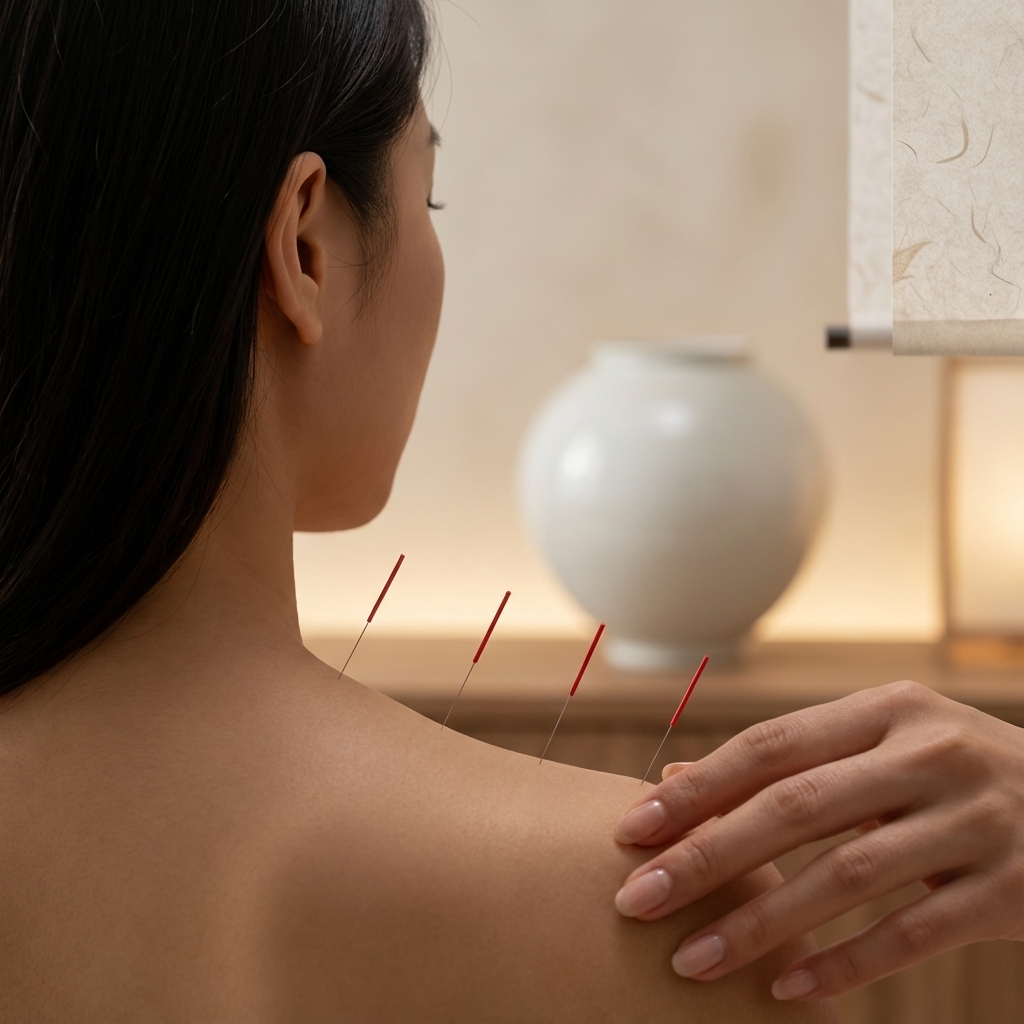
Repetitive overhead work in fields such as logistics, construction, and painting is a representative occupational risk factor that accumulates micro-damage to the rotator cuff tendons. When the shoulder stabilizing muscles (particularly the lower trapezius and serratus anterior) become fatigued, the humeral head shifts upward, narrowing the subacromial space; performing repetitive movements in this state leads to repeated friction and impingement of the tendons. Furthermore, as we age, blood flow and elasticity within the tendons themselves decrease, making them more susceptible to damage even from the same movements. From a Korean medicine perspective, overwork and repetitive injuries obstruct the circulation of Qi and blood, causing blood clots. Additionally, if the digestive and absorptive functions responsible for muscle recovery weaken, the regeneration of damaged tendons is delayed. Stagnation in the Qi and blood pathways flowing along the outer side of the shoulder exacerbates localized swelling and pain. At Dongjedang, we aid in recovery from cumulative occupational injuries by using ultrasound-guided needle acupuncture to release blood clots at the injury site, inducing tendon regeneration with fire acupuncture and thread embedding, and reinforcing digestive and muscle recovery functions with herbal medicine tailored to your constitution.
Related FAQs
-
Q
I have had shoulder pain for over 5 years. Can I get better with Korean medicine treatment even in such a long-standing case?
#Possibility / Realistic Goals
-
Q
My mother, in her 70s, has shoulder impingement syndrome. Can she receive traditional Korean medicine treatment despite her advanced age?
#Possibility / Realistic Goals
-
Q
I have heard that shoulder impingement syndrome can lead to a rotator cuff tear. Does the treatment differ when both conditions are present?
#Comorbidities
-
Q
Are there any exercises that help with shoulder impingement syndrome? Conversely, what exercises should be avoided?
#Lifestyle Management
-
Q
How should I sleep if I have shoulder impingement syndrome? It seems to get worse when I lie on the painful shoulder side.
#Lifestyle Management