
Q I am an office worker in my 40s, and I feel a sharp, stabbing sensation in the upper part of my shoulder whenever I lift my arm. Exactly why does shoulder impingement syndrome occur?
A Shoulder impingement syndrome occurs when the space above the shoulder joint (subacromial space) narrows, causing the rotator cuff tendons to repeatedly get pinched and rub against the acromion bone. Pain worsens when lifting the arm, and if left untreated, it can lead to a rotator cuff tear.
Detailed Answer
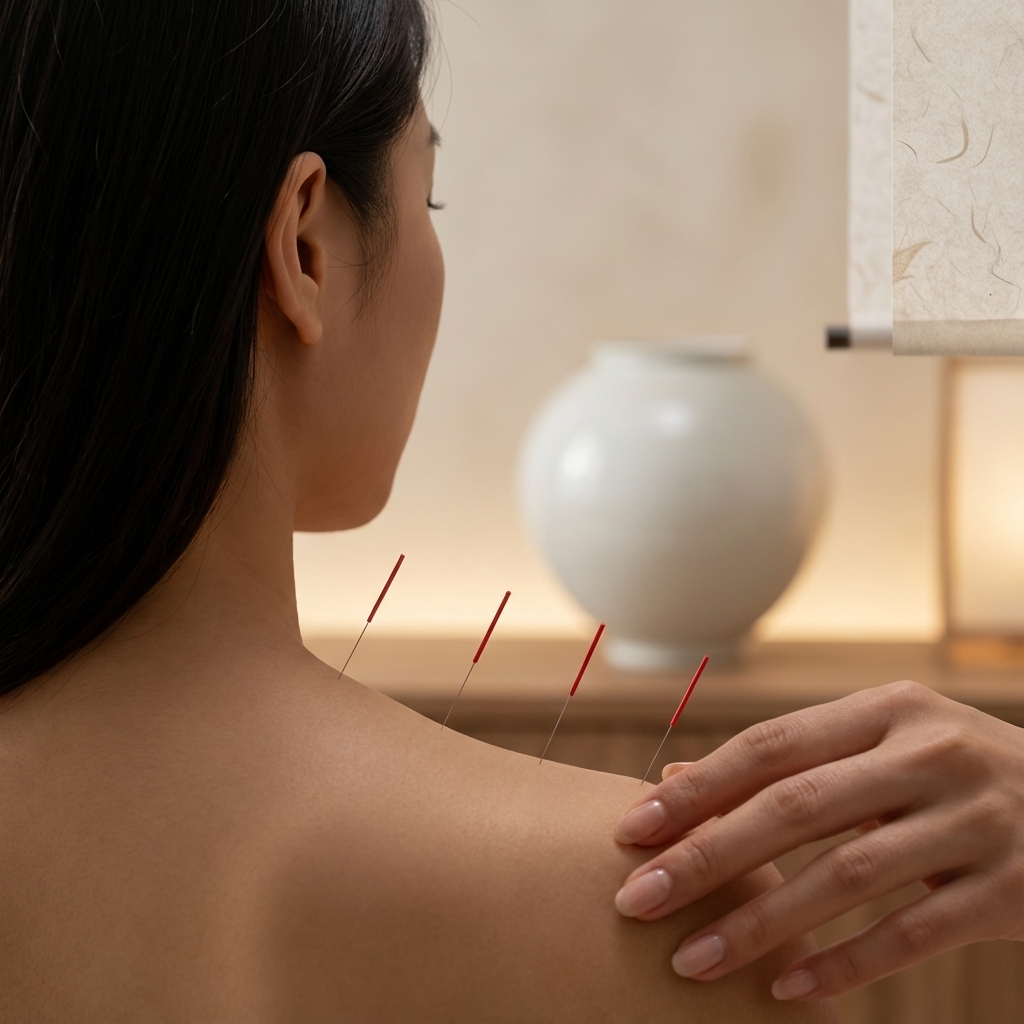
Shoulder Impingement Syndrome is a condition in which friction and compression occur as the space between the rotator cuff tendons and the acromion repeatedly narrows. The main causes are: ① stenosis of the subacromial space due to muscle imbalance around the shoulder, ② an anteriorly tilted acromion (abnormal acromion shape), and ③ repetitive overhead movements (lathe work, swimming, tennis, etc.). In the early stages, the condition is characterized by a painful arc, where pain occurs when lifting the arm 60 to 120 degrees; this can also lead to nocturnal pain and sleep disturbances. In Korean medicine, it is believed that impingement symptoms occur when the function of the organs governing muscles and tendons declines or when the circulation of Qi and blood in the shoulder area becomes blocked, resulting in reduced nutrient supply to muscle and tendon tissues. If wind, cold, or dampness invades the shoulder, or if clotted blood and stagnant Qi and blood accumulate due to overwork or poor posture, the tissues beneath the shoulder blade swell, further narrowing the space. At Dongjedang, our approach focuses on reducing recurrence by separating adhered tissues around the rotator cuff using needle acupuncture, reducing local inflammation with pharmacopuncture and bee venom acupuncture, and restoring the function of muscles and tendons as well as Qi and blood circulation in the shoulder using herbal medicine tailored to the patient's constitution.
Related FAQs
-
Q
I have had shoulder pain for over 5 years. Can I get better with Korean medicine treatment even in such a long-standing case?
#Possibility / Realistic Goals
-
Q
My mother, in her 70s, has shoulder impingement syndrome. Can she receive traditional Korean medicine treatment despite her advanced age?
#Possibility / Realistic Goals
-
Q
I have heard that shoulder impingement syndrome can lead to a rotator cuff tear. Does the treatment differ when both conditions are present?
#Comorbidities
-
Q
Are there any exercises that help with shoulder impingement syndrome? Conversely, what exercises should be avoided?
#Lifestyle Management
-
Q
How should I sleep if I have shoulder impingement syndrome? It seems to get worse when I lie on the painful shoulder side.
#Lifestyle Management