
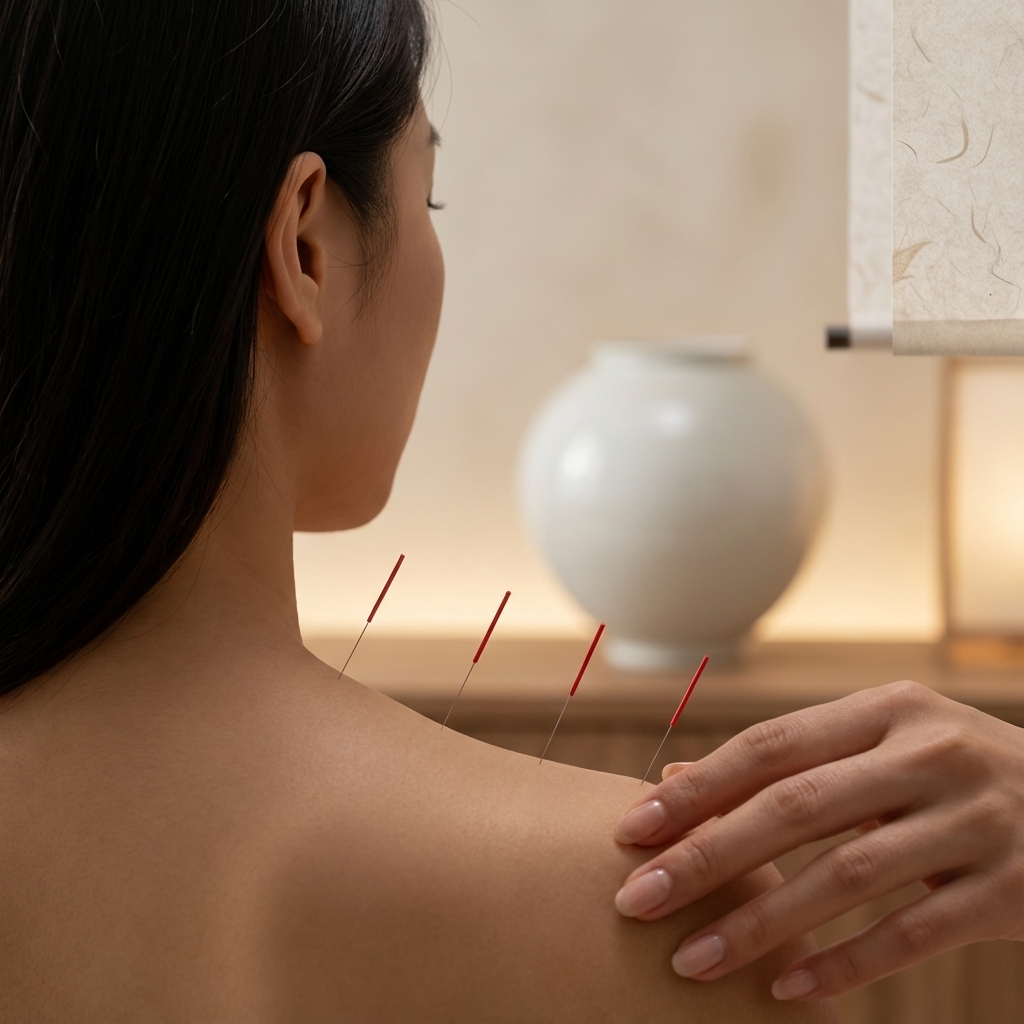
Postherpetic Neuralgia
Postherpetic Neuralgia
Burning nerve pain that lingers after shingles

# Possibility / Realistic Goals (2)
Q I am a 52-year-old housewife who wants to stop taking Gabapentin because the side effects (dizziness and drowsiness) are severe. Can I manage the pain with only Korean traditional medicine treatment?
A. If the side effects of Gabapentin are severe, it is recommended that you first consult with your doctor to reduce the dosage or switch to an alternative medication. It is more realistic to use Korean traditional medicine in conjunction with the medication to reduce dependence rather than to completely replace it. If the pain intensity is moderate or lower, it may be possible to maintain the condition to some extent using acupuncture and pharmacopuncture; however, since individual differences are significant, it is safer to establish a gradual dosage reduction plan with a doctor or a Korean medicine practitioner.
View details →Q I am a 39-year-old delivery driver whose whole body aches, and I am unable to work because even the slightest touch of my collar causes pain. Will I be able to return to work after treatment?
A. Even in cases where severe allodynia makes occupational activity difficult, a significant number of patients achieve a return to work after intensive treatment. While the likelihood of returning to work varies depending on pain intensity, duration of onset, and occupational characteristics, systematic integrated treatment often leads to improvement to a workable level within 4 to 8 weeks. If the nature of the job involves frequent physical contact, it is advisable to plan for protective gear and work method adjustments in parallel with treatment.
View details →# Comorbidities (1)
# Lifestyle Management (2)
Q I am a 56-year-old housewife who cannot sleep at night due to pain. Are there any lifestyle management tips to improve my sleep?
A. It is helpful to position yourself so that direct pressure is not placed on the affected area, and to use soft bedding made of cotton. Keep smartphones and TVs away for 1 to 2 hours before bedtime, and relieve tension through light stretching and abdominal breathing. Since sleep aids can be addictive, it is best to avoid long-term use without consulting your doctor.
View details →Q I am a 42-year-old delivery driver, and the pain gets much worse when exposed to wind or cold air. How should I manage this?
A. If you have allodynia, even normal contact and temperature stimuli are felt as severe pain. The basic principle is to cover the affected area with soft materials to block wind and contact. Since overly tight clothing can actually worsen the pain, loose cotton clothing is recommended. When working outdoors, please protect the affected area with thin windproof material.
View details →# Safety (1)
# Drug Combination / Interactions (1)
# Prognosis / Recovery (2)
Q I am a 51-year-old office worker. How long does postherpetic neuralgia last? Does it sometimes resolve naturally?
A. While there is significant individual variation in postherpetic neuralgia, spontaneous improvement occurs in approximately 50% of patients within one year of onset and in about 75% within three years. However, in elderly patients or those who experienced very severe initial pain, it may persist for several years. Prompt initiation of treatment and appropriate pain management are crucial in preventing chronicity.
View details →Q I am a 48-year-old nurse. Can my pain disappear completely with treatment, or will some remain?
A. A realistic treatment goal is to reduce pain intensity to a level that allows for daily life, rather than aiming for complete eradication. While many patients experience a reduction of 60–80% or more in pain with appropriate treatment, it may not disappear completely, especially in chronic cases. Even if pain persists, restoring sleep, activity, and emotional function is a key outcome of treatment.
View details →# Causes Explained (2)
Q I am an office worker in my 50s. Even though my shingles has fully healed, I still have tingling pain. Why is this happening?
A. The shingles virus lies dormant in the nerve ganglia and, upon activation, damages the nerve itself. If the damaged nerve does not recover, it continuously sends abnormal signals, causing pain to persist. This condition is called postherpetic neuralgia, and it can last for months to years even after the skin rash has disappeared. The risk of developing this condition is higher for those over 60, those with weakened immune systems, and those who experienced severe initial pain.
View details →Q I am a 65-year-old retiree living in Dongincheon. I was told that I didn't experience any aftereffects from shingles when I was younger, so why is it taking so long for me?
A. As people age, the function of immune cells declines and the speed of nerve recovery slows down, which is why post-herpetic neuralgia (PHN) occurs much more frequently and lasts longer in the elderly. Additionally, those who experienced severe pain before the rash appeared, or those who had shingles on the head or face, face a higher risk of aftereffects. Delayed treatment or insufficient use of antiviral medication also has an impact.
View details →# Food / Triggers (2)
Q I am a 45-year-old self-employed individual, and it seems like my pain gets worse when I eat spicy food. Does food affect nerve pain?
A. Spicy foods containing capsaicin or alcohol can excite peripheral nerves and temporarily worsen pain. Additionally, excessive sugar and processed foods can heighten inflammatory responses, hindering nerve recovery. On the other hand, fish rich in omega-3 fatty acids and antioxidant vegetables and fruits help regulate nerve inflammation.
View details →Q I am a 55-year-old teacher living in Dong-gu, Incheon, and it seems like the pain flares up suddenly on days when I am under a lot of stress. Does stress worsen neuralgia?
A. Stress can worsen post-herpetic neuralgia by increasing cortisol secretion, which lowers immune function, and amplifying pain signals in the central nervous system. Furthermore, sleep disorders caused by stress create a vicious cycle that hinders nerve recovery. Psychological stability and sleep management are management factors just as important as pain treatment.
View details →# Treatment Schedule (1)
# Treatment Stages (2)
Q I am a 49-year-old office worker. It has been a month since I developed shingles, and I am still experiencing pain. How should I receive Korean medicine treatment at this stage?
A. The first 1 to 3 months after onset is the golden time for preventing PHN. During this period, actively removing residual inflammation and blood stasis using acupuncture and pharmacopuncture can prevent the condition from becoming chronic. At the first visit, the location and intensity of the pain are assessed, and intensive treatment is initiated 2 to 3 times a week. If Western antiviral treatment is still ongoing, it may be combined with Korean medicine.
View details →Q I am a 64-year-old retired civil servant who has had post-herpetic neuralgia for over a year. What treatment sequence should I receive at a Korean medicine clinic?
A. In cases of chronicity lasting more than one year, Stage 1 involves using acupuncture and pharmacopuncture to first resolve hardened blood stasis and meridian blockages. If a response is observed, Stage 2 supports the reconstruction of surrounding nerve tissue using thread embedding and needle insertion. In Stage 3, herbal medicine tailored to the patient's constitution is used to replenish vital energy and prevent recurrence. Each stage is evaluated and adjusted every four weeks.
View details →# Effectiveness (2)
Q I am an office worker in my 40s, and even though I take medication from the hospital, my pain doesn't go away. Is Korean traditional medicine actually effective for this type of neuralgia?
A. Since postherpetic neuralgia is a type of neuropathic pain that does not respond well to general painkillers, Korean traditional medicine treatments such as acupuncture and pharmacopuncture play a meaningful complementary role. According to research, acupuncture treatment has been confirmed to reduce central sensitization of neuropathic pain and raise the pain threshold. It yields better results in pain reduction and sleep improvement when combined with Western medical treatments rather than alone.
View details →Q I am a 58-year-old housewife who has had postherpetic neuralgia for two years. Should I just give up now? Can I get better with Korean traditional medicine treatment?
A. Even chronic postherpetic neuralgia that persists for more than two years after onset can respond to treatment. It is more realistic to aim for reducing pain intensity and restoring daily living functions rather than seeking a complete cure. Korean traditional medicine focuses on improving quality of life and preventing pain exacerbation by reducing remaining inflammatory signals and central sensitization, rather than directly supporting nerve regeneration. It is important to approach this consistently by adjusting goals step by step rather than giving up.
View details →Postherpetic Neuralgia is not just a simple symptom
Korean medicine that considers both your constitution and lifestyle rhythm treats the root cause.
From consultation to precise treatment, we provide personalized care.
Prescriptions tailored to your constitution and symptoms treat the root cause
The director personally sees you from first to follow-up visits
We identify the essence through Sasang constitution, pulse and abdominal diagnosis
Treatment based on long clinical experience and evidence
Was this helpful? If you need accurate care for your condition, please contact us below.