

Q I am an office worker in my 30s who developed pain in the back of my head after a car accident. Is there a connection between occipital neuralgia and neck joints?
A Cervical joints and occipital neuralgia are closely linked. In particular, if problems arise with the joints of the first and second cervical vertebrae, the greater occipital nerve passing nearby is irritated, causing pain to spread to the scalp. After trauma, micro-damage may remain in the joints and fascia, leading to persistent nerve compression. It is important not to ignore pain in the back of the head after an accident and to have the upper cervical spine structure professionally evaluated.
Detailed Answer
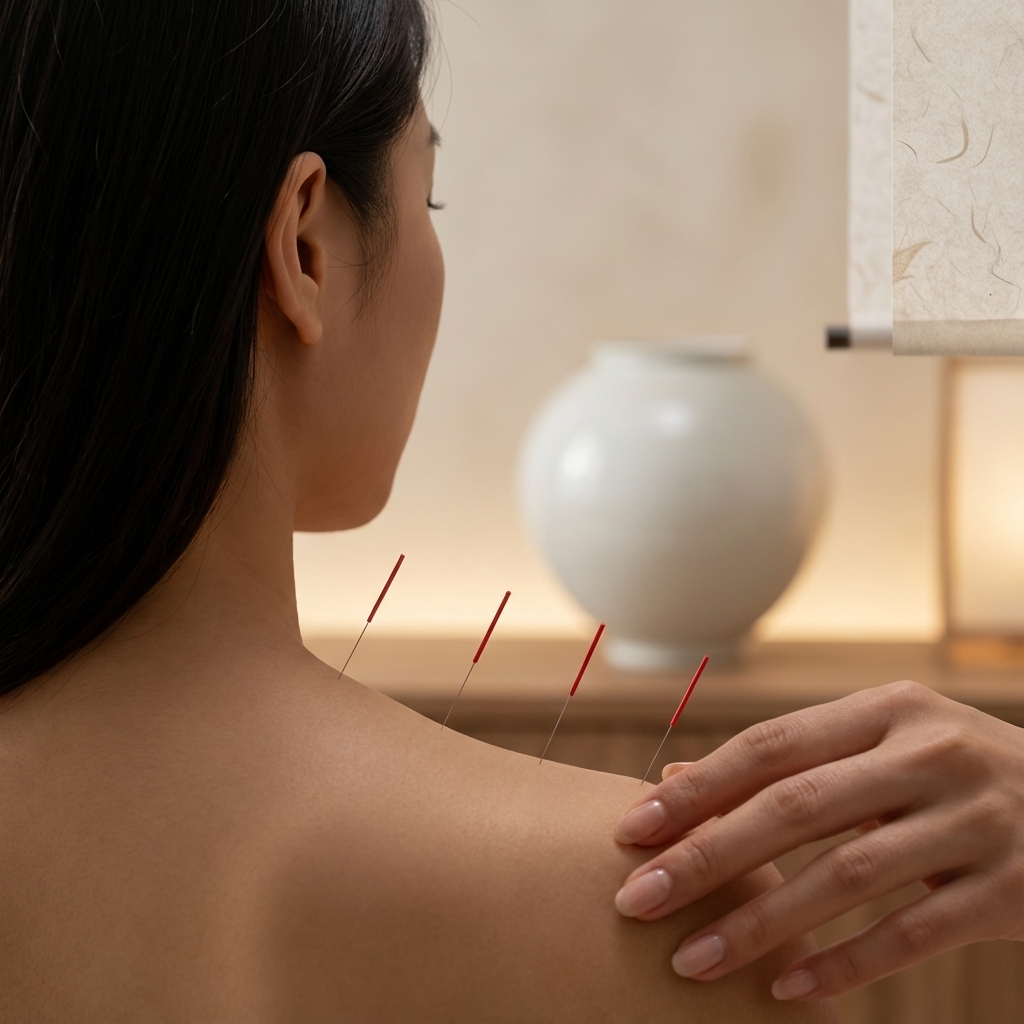
Trauma such as car accidents or falls can lead to microfractures in the cervical facet joints, ligament damage, and fascial scar formation, which chronically irritate the greater occipital nerve (originating from the C2 nerve root). If accompanied by limited rotational function of the first and second cervical vertebrae, the nerve is repeatedly compressed, causing the pain to become more entrenched. Even if imaging tests show no abnormalities, a clinical evaluation is essential because functional joint limitation and myofascial adhesions may be the underlying causes. From a Korean medicine perspective, traumatic occipital neuralgia corresponds to a type where clotted blood accumulates and vital energy (Qi) becomes stagnant at the site of injury. If localized blood stasis remains after a blow, the circulation of Qi and blood is blocked, preventing the passageway from opening, and pain persists in proportion to the blockage. To relieve the stagnation of Qi and blood flowing along the neck and back that has accumulated in the occipital region and the back of the neck, adhesions are separated using standard and micro-blade needles, while heated needles are used to induce the regeneration of damaged ligaments and fascia. In terms of oral treatment, the focus is on reducing recurrence by formulating herbal medicine tailored to the patient's condition to dissolve clotted blood and promote Qi and blood circulation.
Related FAQs
-
Q
The MRI showed no abnormalities, but the back of my head hurts so much. Is this occipital neuralgia? Is treatment worthwhile?
#Possibility / Realistic Goals
-
Q
The neurology department recommended surgery, but I am very scared. Can this be resolved with Korean medicine treatment without surgery?
#Possibility / Realistic Goals
-
Q
I have both occipital neuralgia and migraines. Can both be treated together?
#Comorbidities
-
Q
I have occipital neuralgia, and it hurts more after I sleep. Is it related to my pillow or sleeping position?
#Lifestyle Management
-
Q
Is it okay to do stretching or exercise during treatment for occipital neuralgia? What kind of exercises are helpful?
#Lifestyle Management