

Q I am a father of a middle school son. My child looks at his smartphone for 4 to 5 hours a day, and he already seems to have "turtle neck" syndrome. Is the smartphone really the main culprit? How many hours a day is considered acceptable?
A Looking down at a smartphone is a major cause of turtle neck syndrome. Tilting your head down 60 degrees places a load of approximately 27 kg on the cervical spine. There is no safe time limit; posture (holding the phone at eye level) and taking breaks (stretching the neck every 30 minutes) are more important than the duration.
Detailed Answer
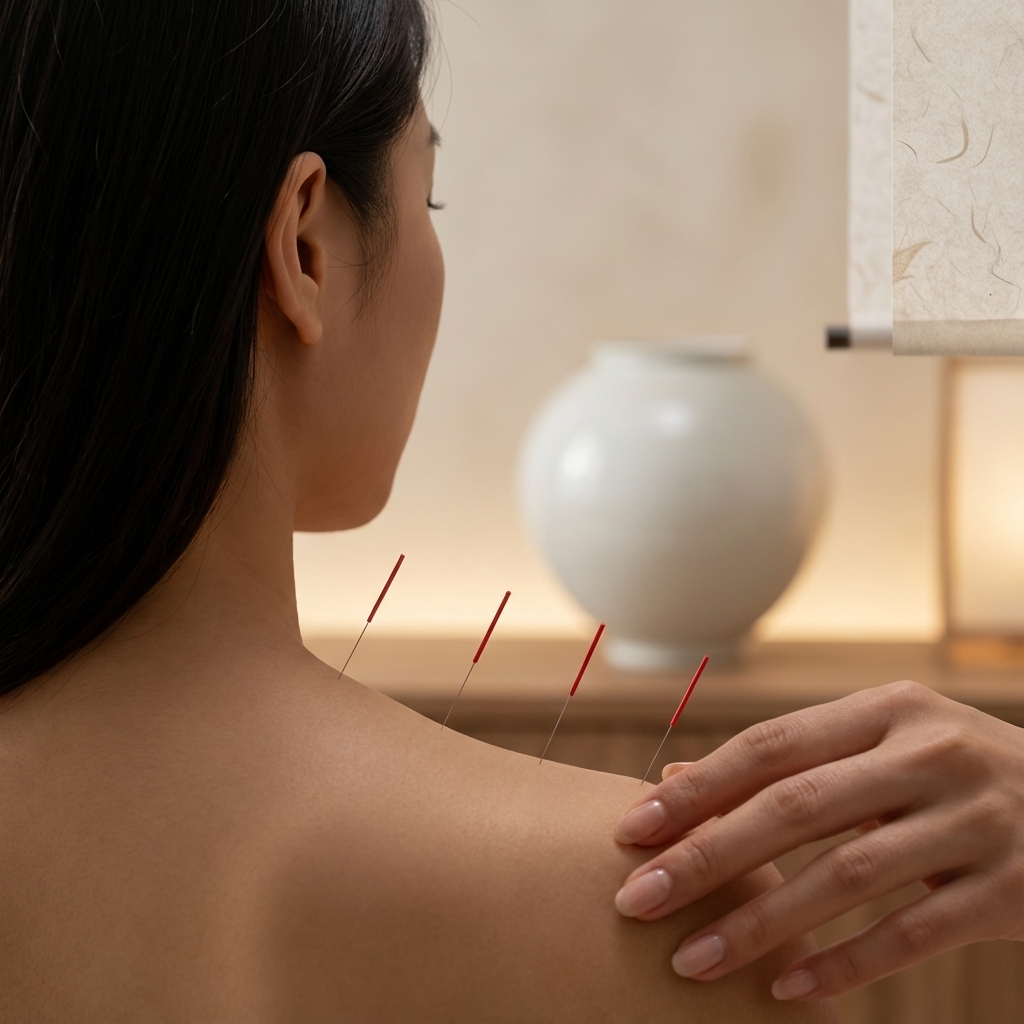
The load on the cervical spine increases exponentially depending on the angle at which the head is tilted. Biomechanical studies show that the load, which is about 5 kg at 0 degrees (neutral), increases to 12 kg at 15 degrees, 18 kg at 30 degrees, and 27 kg at 60 degrees. Growing adolescents require extra caution because their musculoskeletal ligaments are still flexible, making it easy for incorrect posture to harden into a skeletal shape. There is no absolute safe time; the key lies in usage habits such as holding the smartphone at eye level, tilting the head back every 30 minutes, and avoiding looking at it while hunched over. In Korean medicine, prolonged viewing is considered damaging to the blood, and prolonged sitting damages muscles and flesh; thus, maintaining a single posture itself is regarded as the cause of illness. Based on the principle that kidney energy governs skeletal development during the growth period, chronic stagnation of Qi and blood in the meridian centered on the nape of the neck and along the neck and back lines can affect skeletal alignment during this stage. Since children are generally in the early stages where Qi and blood stagnation are not deep, recovery is rapid if tension is relieved and alignment is corrected through gentle acupuncture and Chuna manual therapy. However, if you have a constitution with a weak digestive system that prevents you from building solid muscle, you lack the strength to sustain your posture; therefore, it is effective to reinforce your foundation with herbal medicine tailored to your constitution while simultaneously correcting your usage habits.
Related FAQs
-
Q
I am a 38-year-old bank employee who has had forward head posture for 10 years. Honestly, I am curious: is it realistically possible to restore the original neck curve for a neck that has been like this for 10 years? Or is pain management the best option?
#Possibility / Realistic Goals
-
Q
I am a 44-year-old logistics center manager with early-stage cervical disc herniation. The orthopedic doctor says that surgery might be necessary if the condition worsens, but is it possible to manage this with traditional Korean medicine treatments without surgery?
#Possibility / Realistic Goals
-
Q
I am a 47-year-old woman working in a sewing factory. I have a forward head posture and stiff shoulders as a matter of course, and lately, my arms have been tingling as well. Are the tingling in my shoulders and arms also due to the forward head posture, or are there other underlying conditions?
#Comorbidities
-
Q
I am a 36-year-old developer in my third year of working from home. I have started treatment for straight neck syndrome, but how should I change my home desk environment to prevent recurrence?
#Lifestyle Management
-
Q
I am a 42-year-old housewife looking to start exercising. There are so many exercises said to be good for forward head posture that I am confused. Please tell me just a few key exercises I can do at home every day.
#Lifestyle Management