
Chronic Low Back Pain
Chronic Low Back Pain
Recurring chronic back pain with no clear cause

# Possibility / Realistic Goals (2)
Q I am a 58-year-old male. I have been advised to have spinal surgery, but I am scared and hesitant. In what cases is it possible to manage the condition with Korean medicine treatment without surgery?
A. Unless there are absolute indications for surgery, such as progressive paralysis or bowel and bladder dysfunction, most cases of chronic low back pain are well worth attempting conservative treatment. In fact, a significant number of cases where surgery is recommended improve with non-surgical treatment, and guidelines also recommend prioritizing conservative treatment unless it is an emergency. However, regular follow-up monitoring must be performed in parallel.
View details →Q I am a 67-year-old woman who has had back pain for 20 years. At this age, can such long-standing pain be treated and improved? Is it too late?
A. It is not too late. While recovery speed is slower when the duration of pain is long and age is advanced, many studies show that combining acupuncture with exercise significantly improves pain and walking function even in the elderly. If you set your goal on reducing pain intensity and restoring daily activities rather than achieving complete pain relief, you can expect realistic improvement.
View details →# Comorbidities (1)
# Lifestyle Management (2)
Q I am a 52-year-old male civil servant. There is conflicting information regarding whether walking or swimming is good for the back; what exercise is actually helpful for chronic lower back pain?
A. The conclusion is that for chronic lower back pain, exercises that can be performed consistently are best, rather than specific types of exercise. Among these, core stabilization exercises (such as planks and bird dogs) and walking have solid evidence supporting them, while swimming is advantageous during the painful phase due to its low load. The principle is to gradually increase the intensity within a range that does not cause severe pain.
View details →Q I am a 40-year-old female nurse. My lower back hurts the most when I wake up. Do sleeping positions or mattresses affect chronic lower back pain? How should I sleep?
A. Yes, they do have an effect. A mattress that sinks too deeply disrupts lumbar alignment, and sleeping on your stomach hyperextends the lower back, worsening morning pain. It is recommended to sleep on a medium-firm mattress while lying on your side with a pillow between your knees, or lying on your back with a pillow under your knees.
View details →# Safety (1)
# Drug Combination / Interactions (1)
# Prognosis / Recovery (2)
Q I am a 44-year-old delivery driver. I have had back pain for 5 years. If I start treatment, how long does it usually take to get better? I am curious about a realistic timeframe.
A. For chronic lower back pain that has lasted for 5 years, it is generally common to confirm a significant reduction in pain during 4 to 6 weeks of intensive treatment, and then move on to a phase of functional recovery and recurrence prevention over the course of 2 to 3 months. The duration may increase if the pain persists for a long time and the occupational load is high, and the treatment plan is adjusted based on the response during the first 2 to 4 weeks.
View details →Q I am a 49-year-old female caregiver. I feel better after treatment, but the pain returns after a few months. Is chronic low back pain a condition that recurs repeatedly throughout one's life?
A. While recurrence is common in chronic low back pain, it is not a fate that repeats for a lifetime. The primary cause of recurrence lies in ending treatment after only reducing pain, without correcting weakened deep muscles or the load of daily activities. Even after pain subsides, undergoing stages of muscle strength recovery and correcting the underlying cause can significantly reduce the frequency and severity of recurrence.
View details →# Causes Explained (2)
Q I am a 42-year-old male working at a logistics center in Dongincheon. My lower back has been hurting for three years, but the MRI shows no major abnormalities. Why does the pain persist when the test results are normal?
A. Since MRI is a test that examines structural changes in discs or bones, it cannot detect functional problems with muscles, ligaments, or joint capsules, or hypersensitivity of pain nerves. A significant portion of chronic low back pain stems from functional causes such as myofascial adhesions, weakness of deep stabilizing muscles, and central sensitization, rather than structural abnormalities. A normal test result does not mean the pain is fake.
View details →Q I am a 38-year-old developer in my fourth year of working from home. I have never lifted anything heavy, but my lower back hurts chronically. Can back pain develop just from sitting?
A. Yes, sitting for long periods is a major cause of chronic back pain. Sitting increases intradiscal pressure compared to standing, weakens deep stabilizing muscles, and shortens hip flexor muscles. Even without lifting heavy objects, accumulated static load can lead to chronic pain.
View details →# Food / Triggers (2)
Q I am a 46-year-old female office worker. Are there specific foods that are good for back pain and foods I should avoid? I have also heard that coffee and flour are bad.
A. While specific foods do not directly cause back pain, refined carbohydrates, fructose, and excessive alcohol consumption can worsen pain through chronic inflammation and weight gain. Omega-3 fatty acids from oily fish, sufficient protein, vitamin D, and calcium are helpful for musculoskeletal recovery. Coffee is fine as long as it is not consumed in excessive amounts.
View details →Q I am a 63-year-old woman who has run a business at Baedari Market for 30 years. Every winter, and especially the day before it rains, my lower back feels like it is going to break. Is there really a connection between the weather and back pain?
A. There is a connection. Cold weather constricts muscles and blood vessels, reducing blood flow and lowering the pain threshold, while a drop in atmospheric pressure can affect changes in intra-joint pressure and the sensitization of pain receptors. Maintaining blood flow through warmth and light movement is key to preventing aggravation.
View details →# Treatment Schedule (1)
# Treatment Stages (2)
Q I am a 47-year-old male self-employed individual. I thought that treating lower back pain at a Korean medicine clinic was simply about getting acupuncture. What are the differences between moxibustion, thread embedding, and pharmacopuncture, and in what order are they administered?
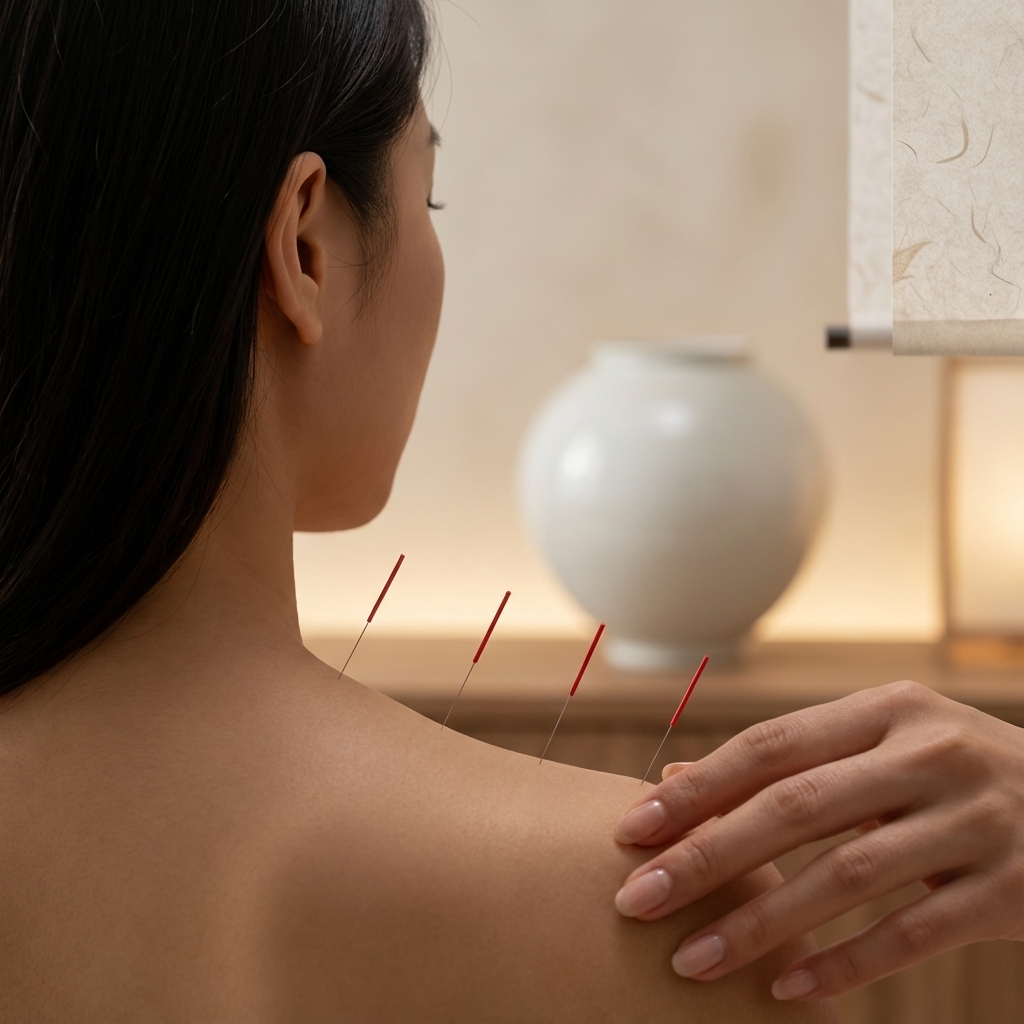
A. Acupuncture plays a different role: moxibustion promotes the circulation of Qi and blood and relieves muscle tension; moxibustion releases hardened adhesions and stimulates ligaments; fire acupuncture and thread embedding promote tissue regeneration; and bee venom acupuncture and pharmacopuncture have anti-inflammatory effects. Treatment typically begins with acupuncture, and necessary procedures are added step-by-step based on the patient's response, while the tissue condition is monitored via ultrasound.
View details →Q I am a 33-year-old woman planning to visit a Korean medicine clinic for the first time due to back pain. What tests and treatments will I receive during the initial consultation? Will I be treated immediately on the same day?
A. During the initial consultation, we conduct a medical history interview, posture and movement tests, and, if necessary, check the condition of muscles and ligaments using ultrasound, followed by a diagnosis based on Korean medical differential diagnosis. If there are no warning signs, it is common to start with acupuncture treatment on the same day. Based on the test results, you will be guided on the overall treatment plan and duration.
View details →# Effectiveness (2)
Q I am a 50-year-old housewife. I have had back pain for 10 years. Is acupuncture really effective, or is it just my imagination? I am curious about the scientific basis.
A. Acupuncture treatment has been confirmed by numerous large-scale clinical studies to provide significant pain reduction and functional improvement compared to placebo in chronic low back pain, and is recommended as a first-line non-pharmacological treatment in guidelines such as those of the American Medical Association. It is not merely a matter of mood; it is driven by endogenous analgesic mechanisms and improved blood flow.
View details →Q I am a 55-year-old man who runs a small restaurant in Dong-gu, Incheon. I don't understand why I am being told to take herbal medicine for back pain. Why is oral medication necessary for back pain?
A. Chronic lower back pain is often not merely a localized issue, but is frequently underpinned by a decline in the body's overall recovery capacity responsible for regenerating muscles and ligaments. Along with its anti-inflammatory and muscle-relaxing effects, herbal medicine plays a role in boosting the body's overall condition, which serves as the foundation for tissue recovery; when combined with acupuncture, its effects are sustained for a longer period.
View details →Chronic Low Back Pain is not just a simple symptom
Korean medicine that considers both your constitution and lifestyle rhythm treats the root cause.
From consultation to precise treatment, we provide personalized care.
Prescriptions tailored to your constitution and symptoms treat the root cause
The director personally sees you from first to follow-up visits
We identify the essence through Sasang constitution, pulse and abdominal diagnosis
Treatment based on long clinical experience and evidence
Was this helpful? If you need accurate care for your condition, please contact us below.