
Q I am a 39-year-old working mom living in Songnim-dong, Dong-gu, Incheon. I would like to receive treatment for straight neck syndrome, but I don't think I will be able to visit often due to my job. How many times a week, and for a total of how many sessions, do I need to visit?
A During the acute pain phase, we visit 2 to 3 times a week; once the pain subsides, we gradually reduce the frequency to 1 to 2 times a week. Typically, one cycle lasts 4 to 8 weeks, after which we transition to management sessions every other week to once a month depending on the progress. We can adjust the treatment plan to fit your work schedule, so please discuss this during your first consultation.
Detailed Answer
The frequency of treatment varies by stage. During the acute phase with severe pain, intensive treatment 2 to 3 times a week is used to quickly relieve muscle tension and inflammation. Once pain is reduced by more than half, the interval is widened to 1 to 2 times a week to focus on correction and preventing recurrence. Overall, a cycle is considered to be 4 to 8 weeks, and intermediate evaluations are conducted; however, the duration may be longer if chronic or structural problems are present. Since Chuna manual therapy is covered by health insurance up to 20 times per year, it can be utilized in your corrective treatment schedule. In cases where the interval between visits inevitably becomes long, the gaps are filled with self-exercise prescriptions.
Perspective of a Korean Medicine Clinic
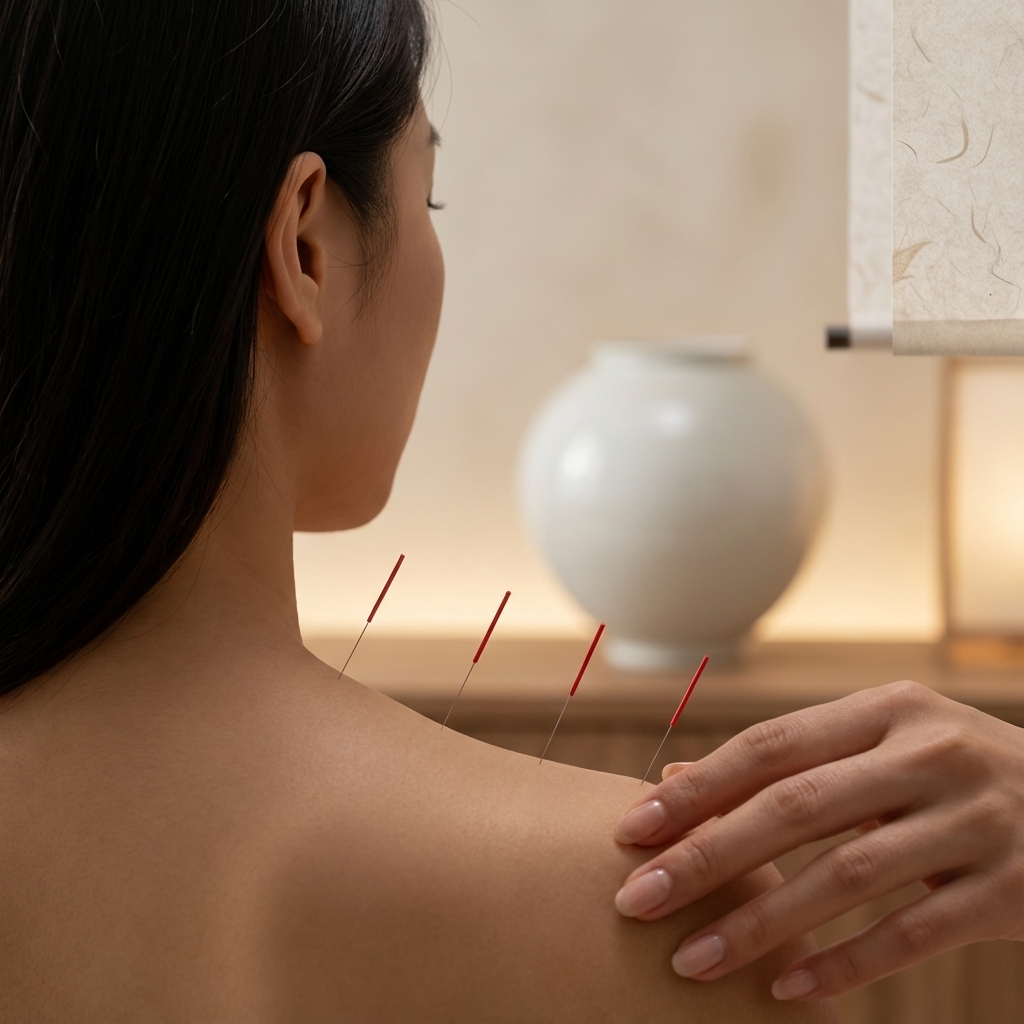
When determining treatment intervals, Korean medicine examines the balance of vital energy (Jeonggi) and pathogenic energy (Sagi). When Qi stagnation and blood stasis are severe, acupuncture and pharmacopuncture are administered at short intervals to continuously clear blockages, allowing for the accumulation of effects. Once cleared, the intervals are widened to check if the body can maintain circulation on its own. For working mothers who find it difficult to visit the clinic, a strategy of supplementing gaps in external treatments with internal treatments is useful — if blood stasis and dampness are cleared and liver blood is replenished using herbal medicine tailored to the constitution, the effects are often maintained with just one treatment per week. By appropriately scheduling treatments that provide long-lasting effects with a single procedure, such as needle acupuncture or thread lifting, it is possible to reduce the total number of visits while maintaining treatment density.
Related FAQs
-
Q
I am a 38-year-old bank employee who has had forward head posture for 10 years. Honestly, I am curious: is it realistically possible to restore the original neck curve for a neck that has been like this for 10 years? Or is pain management the best option?
#Possibility / Realistic Goals
-
Q
I am a 44-year-old logistics center manager with early-stage cervical disc herniation. The orthopedic doctor says that surgery might be necessary if the condition worsens, but is it possible to manage this with traditional Korean medicine treatments without surgery?
#Possibility / Realistic Goals
-
Q
I am a 47-year-old woman working in a sewing factory. I have a forward head posture and stiff shoulders as a matter of course, and lately, my arms have been tingling as well. Are the tingling in my shoulders and arms also due to the forward head posture, or are there other underlying conditions?
#Comorbidities
-
Q
I am a 36-year-old developer in my third year of working from home. I have started treatment for straight neck syndrome, but how should I change my home desk environment to prevent recurrence?
#Lifestyle Management
-
Q
I am a 42-year-old housewife looking to start exercising. There are so many exercises said to be good for forward head posture that I am confused. Please tell me just a few key exercises I can do at home every day.
#Lifestyle Management