

Q I am a 45-year-old office worker currently taking anti-inflammatory painkillers and muscle relaxants prescribed by an orthopedic clinic for forward head posture pain. I would like to combine this with herbal medicine treatment; is it okay to take them together?
A In most cases, it is possible to take them together if you space out the dosage by about two hours. However, if you provide the exact names of the medications you are currently taking during your consultation, the Korean medicine doctor will check for potential interactions and adjust the composition of the herbal medicine accordingly. There is no need to stop taking Western medicine on your own.
Detailed Answer
NSAIDs (anti-inflammatory painkillers) and muscle relaxants are commonly prescribed for the acute management of forward head posture pain. When taking them in combination with herbal medicine, generally, spacing out the dosage by at least two hours can reduce liver damage during the "Heungsu" stage. Points to note are the risk of gastrointestinal mucosal damage with long-term use of NSAIDs and the fact that some herbal ingredients have been reported to have potential interactions with specific drugs, such as anticoagulants. Therefore, informing the Korean medicine doctor of all medications currently being taken (including nutritional supplements) is the starting point for safe concurrent treatment.
Perspective of a Korean Medicine Clinic
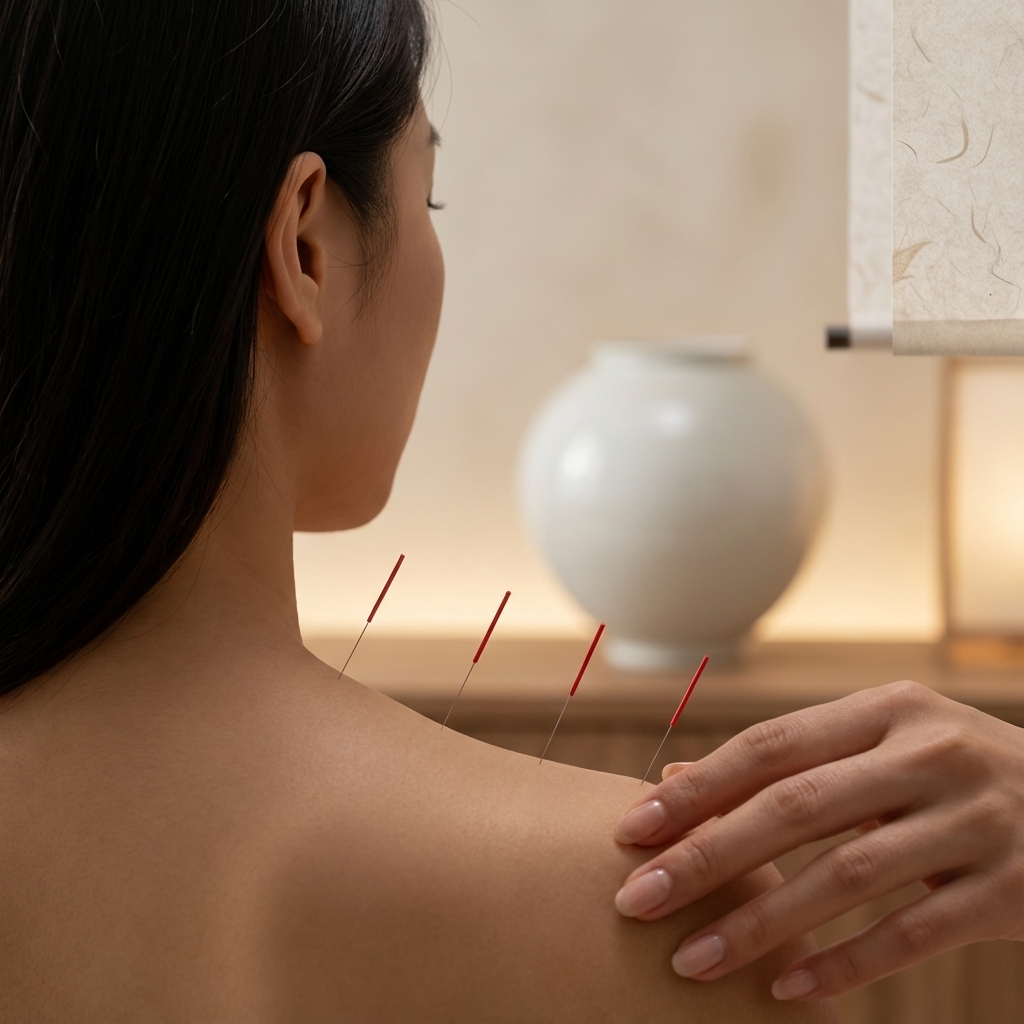
While painkillers reduce pain signals, the root of the disease as viewed by Korean medicine—Qi stagnation and blood stasis in the neck and neck, and nutritional deficiencies in the muscles and veins—remains intact. Following the principle that "when flow is clear, there is no pain," the goal of treatment is to restore the flow of blocked Qi and blood. By directly releasing hardened fascia and adhesions using acupuncture and moxibustion, and adding anti-inflammatory effects with pharmacopuncture in areas with pronounced inflammation, dependence on painkillers can be gradually reduced. For internal treatment, herbal medicines tailored to the patient's constitution are used to dissolve blood stasis and empty dampness and phlegm; however, for those with gastric discomfort who experience heartburn from painkillers, the prescription is adjusted to also support spleen and stomach functions. The direction of concurrent treatment is to create a comfortable state where medication is unnecessary by combining external and internal treatments in this way.
Related FAQs
-
Q
I am a 38-year-old bank employee who has had forward head posture for 10 years. Honestly, I am curious: is it realistically possible to restore the original neck curve for a neck that has been like this for 10 years? Or is pain management the best option?
#Possibility / Realistic Goals
-
Q
I am a 44-year-old logistics center manager with early-stage cervical disc herniation. The orthopedic doctor says that surgery might be necessary if the condition worsens, but is it possible to manage this with traditional Korean medicine treatments without surgery?
#Possibility / Realistic Goals
-
Q
I am a 47-year-old woman working in a sewing factory. I have a forward head posture and stiff shoulders as a matter of course, and lately, my arms have been tingling as well. Are the tingling in my shoulders and arms also due to the forward head posture, or are there other underlying conditions?
#Comorbidities
-
Q
I am a 36-year-old developer in my third year of working from home. I have started treatment for straight neck syndrome, but how should I change my home desk environment to prevent recurrence?
#Lifestyle Management
-
Q
I am a 42-year-old housewife looking to start exercising. There are so many exercises said to be good for forward head posture that I am confused. Please tell me just a few key exercises I can do at home every day.
#Lifestyle Management