
Q I am a 51-year-old taxi driver who has been suffering from chronic straight neck syndrome for several years. I have tried regular acupuncture several times, but the relief is only temporary. I heard there is something called *Dochim*; would it be suitable for my case?
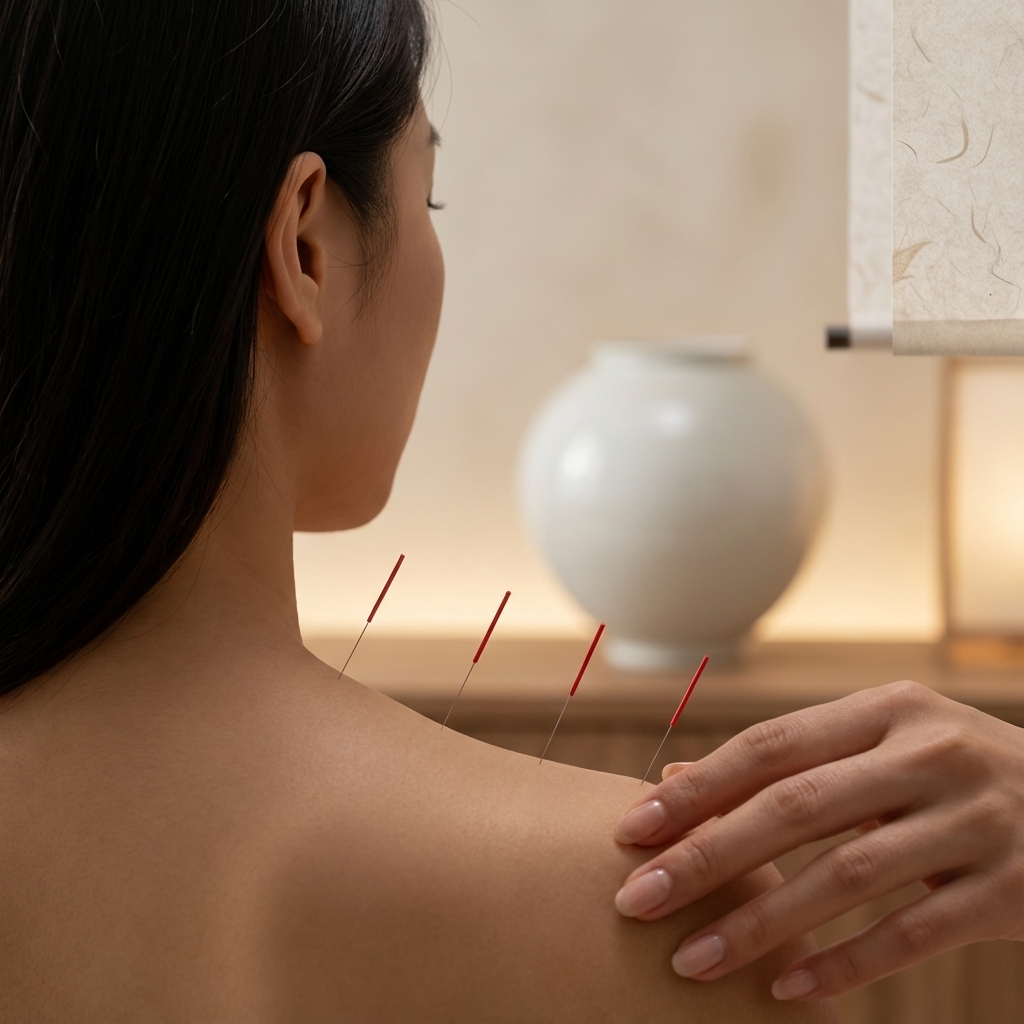
A Chronic cases where regular acupuncture only provides temporary relief are excellent indications for *Dochim*. *Dochim* is an acupuncture needle with a fine blade-like tip. It directly separates fascia and ligaments that have hardened and adhered over time, releasing structural stiffness that regular needles cannot reach. The decision to apply it is made after confirming the areas of adhesion during an examination.
Detailed Answer
In cases of straight neck syndrome that have persisted for years, repeated micro-injuries and healing occur within the fascia and ligaments, leading to adhesion (tissue sticking together and hardening) and fibrosis. At this stage, the relaxation effect of regular acupuncture often does not last more than a few days. *Dochim* (needle blade) is a treatment that uses a fine blade-like tip of about 0.5 to 1 mm to physically separate adhered fascia and ligaments and induce a tissue regenerative response. It is highly worth considering in chronic cases where the same posture is repeated professionally, such as driving. Treatment intervals are typically 1 to 2 weeks, requiring fewer sessions than standard acupuncture. From a Korean medicine perspective, a condition described as "temporary relief" refers to a stage where blood stasis and phlegm are firmly lodged in the fascia, blocking the pathways themselves even when Qi and blood circulate. While acupuncture is a treatment that moves Qi, Dochim plays a different role as it structurally opens blocked pathways. The procedure is performed precisely by confirming adhesion sites and surrounding structures using ultrasound. After dissection, weakened ligaments are reinforced using fire acupuncture and thread embedding to promote regeneration and maintain the relaxed state. Chronic patients in their 50s often exhibit a combination of muscle and vein excess yang, where tissue recovery is impaired due to liver and kidney deficiency. Therefore, internal treatment using constitution-tailored herbal medicine to clear blood stasis and replenish the liver and kidneys is necessary to ensure the long-lasting effects of Dochim. Opening the structure (external treatment) and filling the foundation (internal treatment) are the two key approaches to escaping chronic straight neck syndrome.
Related FAQs
-
Q
I am a 38-year-old bank employee who has had forward head posture for 10 years. Honestly, I am curious: is it realistically possible to restore the original neck curve for a neck that has been like this for 10 years? Or is pain management the best option?
#Possibility / Realistic Goals
-
Q
I am a 44-year-old logistics center manager with early-stage cervical disc herniation. The orthopedic doctor says that surgery might be necessary if the condition worsens, but is it possible to manage this with traditional Korean medicine treatments without surgery?
#Possibility / Realistic Goals
-
Q
I am a 47-year-old woman working in a sewing factory. I have a forward head posture and stiff shoulders as a matter of course, and lately, my arms have been tingling as well. Are the tingling in my shoulders and arms also due to the forward head posture, or are there other underlying conditions?
#Comorbidities
-
Q
I am a 36-year-old developer in my third year of working from home. I have started treatment for straight neck syndrome, but how should I change my home desk environment to prevent recurrence?
#Lifestyle Management
-
Q
I am a 42-year-old housewife looking to start exercising. There are so many exercises said to be good for forward head posture that I am confused. Please tell me just a few key exercises I can do at home every day.
#Lifestyle Management