
Q I am a woman in my 50s. I received treatment for a gastrocnemius muscle injury, but I continue to experience intermittent pulling and aching sensations in my calves. Is this a normal part of the recovery process?
A The pulling and aching sensations that persist for several weeks to months following a gastrocnemius injury are due to scar tissue formation and fascial adhesions; this is a natural process that can occur until complete recovery. However, if the symptoms persist for more than three months or the intensity does not decrease, it may indicate a chronic condition where the scar tissue has hypertrophied, requiring further evaluation. Symptoms can be significantly improved by combining active stretching with adhesion lysis treatment.
Detailed Answer
It takes up to 12 months for the transition from Type III to Type I collagen to be completed during the remodeling process following a gastrocnemius injury. If adhesions in the fascia and epimysium remain during this period, a pulling sensation when stretching the muscle and aching immediately after starting exercise will persist. If a hyperechoic scar signal remains on an ultrasound examination, it means that adhesions are still present. Combining an eccentric stretching program with moxibustion is effective at this stage.
Korean Medicine Clinic Perspective
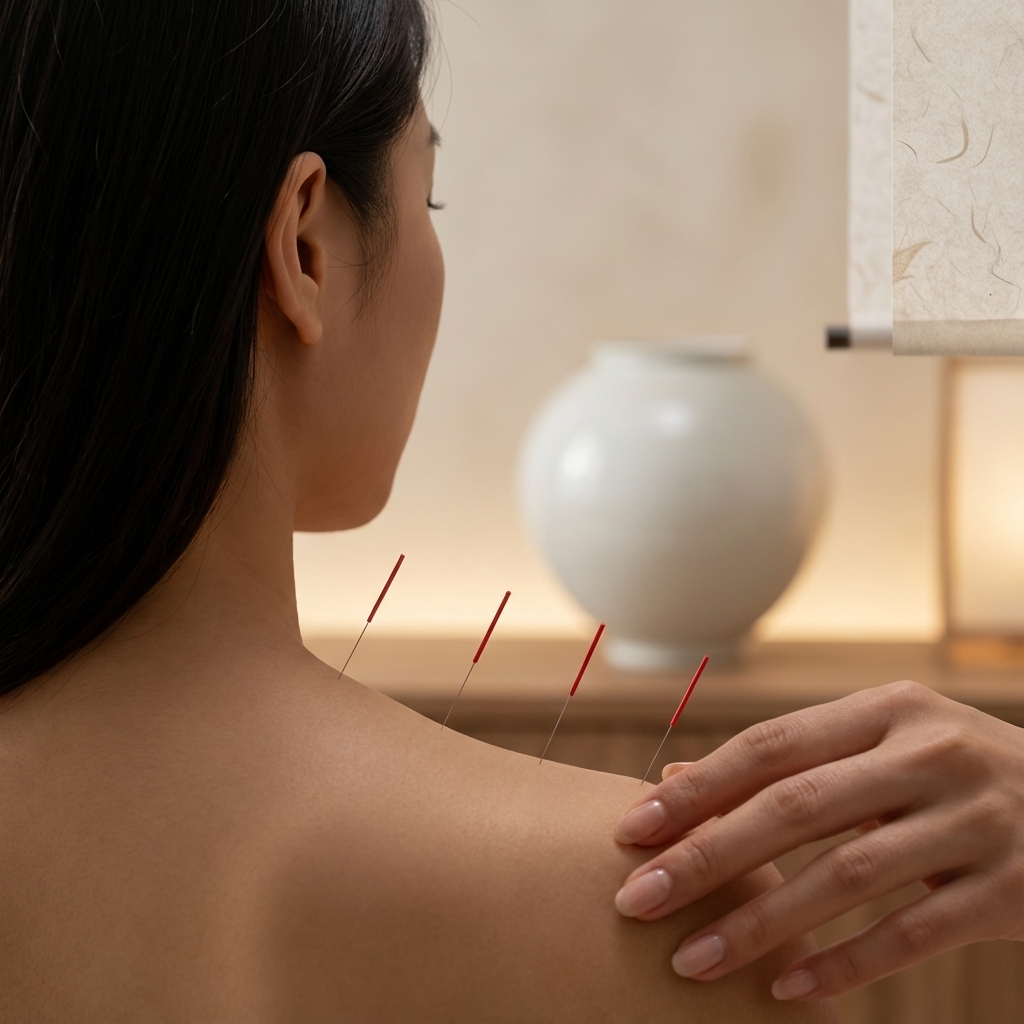
In Korean medicine, the persistent pulling and stiff sensation following an injury is viewed as a sign of remaining blood clots and poor circulation of Qi and blood. It indicates a state where the energy governing the muscles has not yet fully released, resulting in insufficient nutrient supply to the muscles. At Dongjedang, during this stage of recovery stagnation, we use moxibustion to separate remaining adhesions and combine it with acupuncture and moxibustion treatments to boost Qi and blood circulation. Herbal medicine tailored to the individual's constitution enhances digestive and muscle recovery functions, aiding in the processing of waste products within the muscles and the formation of new tissue, thereby gradually relieving the stiffness.
Related FAQs
-
Q
I am a woman in my 50s who enjoys hiking. Is it possible to completely prevent a calf muscle injury from recurring?
#Possibility / Realistic Goals
-
Q
I am an elderly male in my 70s. Can a gastrocnemius muscle injury be fully recovered through Korean medicine treatment, even at my advanced age?
#Possibility / Realistic Goals
-
Q
I am a diabetic patient in my 40s. I have heard that recovery from gastrocnemius muscle injuries is more difficult with diabetes. In what ways is it dangerous, and how should I manage it?
#Comorbidities
-
Q
I am an office worker in my 40s. I have to stand all day at work after a gastrocnemius injury. How should I manage this?
#Lifestyle Management
-
Q
I am a male marathon enthusiast in my 30s. When and how can I safely resume running after a calf muscle injury?
#Lifestyle Management