
Baker's Cyst
Baker's Cyst
Baker's cyst causing swelling and tightness behind the knee
# Possibility / Realistic Goals (2)
Q Is it realistically possible to treat a Baker's cyst solely with Korean medicine without surgery?
A. If the underlying lesion is mild to moderate and the cyst is not severe, clinical improvement can be expected with Korean medicine treatment alone. However, in cases of severe arthritis, a complete meniscal tear, or when the cyst severely compresses nerves or blood vessels, surgical intervention may be prioritized; in such cases, Korean medicine is utilized as an adjunct before and after surgery.
View details →Q My mother, in her 60s, has both knee osteoarthritis and a Baker's cyst. Is Korean traditional medicine effective even for an elderly patient?
A. Although the rate of tissue recovery slows with age, Korean traditional medicine focuses on restoring constitutional organ function, making it suitable for elderly patients. In particular, conservative Korean traditional medicine treatment can be a safer choice when the risk of surgery is high in the elderly.
View details →# Comorbidities (1)
# Lifestyle Management (2)
Q Can I continue exercising if I have a Baker's cyst? Are there any movements I should avoid?
A. Caution is required when performing knee overload exercises while a cyst is present, as it can enlarge the cyst or increase the risk of rupture. It is advisable to avoid movements that drastically increase knee flexion and pressure, such as squatting, lifting heavy weights, and running, and instead maintain low-impact exercises like swimming, cycling, and light stretching.
View details →Q I am an office worker in Dong-gu, Incheon, and I sit all day. Are there any good daily habits for managing Baker's cysts?
A. Sitting for long periods keeps the knee fixed in a bent position, leading to continuous pressure on the back of the knee and reduced blood circulation. Habits such as standing up every hour to lightly straighten the knee and walk, elevating the leg to relieve swelling, and using warm compresses to promote blood circulation are helpful.
View details →# Safety (1)
# Drug Combination / Interactions (1)
# Prognosis / Recovery (2)
Q Can a Baker's cyst disappear on its own? What happens if it is left untreated?
A. If the underlying lesion is mild, it may be naturally absorbed. However, Baker's cysts in adults accompanied by arthritis or cartilage damage often maintain their size or grow larger if left untreated. Caution is required because if the cyst ruptures, the entire calf may swell and severe pain may occur.
View details →Q Can a Baker's cyst completely disappear with Korean medicine treatment? How long does the treatment take?
A. The response to treatment varies depending on the size of the cyst, the severity of the underlying lesion, and the duration. Mild to moderate cysts can be significantly reduced within a few months, and if the underlying joint lesion improves as well, remission without recurrence is possible. Long-term management is required in cases accompanied by severe arthritis.
View details →# Causes Explained (2)
Q I am a housewife in my 50s, and a bulge resembling a lump has formed behind my knee. Why do Baker's cysts occur?
A. A Baker's cyst is a condition in which joint fluid accumulates in the popliteal fossa behind the knee joint, causing it to swell up like a sac. It primarily occurs when joint fluid is excessively secreted due to conditions such as knee arthritis, meniscal tears, or synovitis. When internal joint pressure increases, fluid is pushed out toward the weaker area, the popliteal fossa, forming a cyst.
View details →Q I am a man in my 40s working as a delivery driver in Dongincheon. I developed a lump behind my popliteal fossa due to excessive use of my knees. Does repetitive knee use cause a Baker's cyst?
A. Repetitive knee flexion and extension movements increase friction and pressure within the joint, irritating the synovial membrane and increasing the secretion of synovial fluid. This excess fluid can be pushed to the weaker area at the back of the knee, forming a cyst. It occurs more easily, especially if there is already micro-damage to the meniscus or cartilage.
View details →# Food / Triggers (2)
Q I have a Baker's cyst. Are there any foods I should avoid or dietary habits that could worsen it?
A. Caution is required regarding foods that worsen joint inflammation, as they can aggravate the underlying lesions causing cysts. Processed foods, fried foods, excessive sugar intake, and excessive alcohol consumption heighten systemic inflammatory responses. Conversely, foods rich in omega-3, vegetables, and anti-inflammatory foods are beneficial for joint health.
View details →Q I am on the heavier side. Is there a connection between Baker's cysts and obesity? Will dieting help with the treatment?
A. Excessive body weight significantly increases the load on the knee joint, accelerating cartilage damage and arthritis, which is a major cause of Baker's cysts. Weight loss reduces joint load, providing substantial help in alleviating inflammation and shrinking cysts. Low-impact exercises that do not strain the knees, such as swimming, water exercises, and cycling, are recommended.
View details →# Treatment Schedule (1)
# Treatment Stages (2)
Q What are the stages of Korean medicine treatment for a Baker's cyst? I am curious about the treatment I will receive upon my first visit.
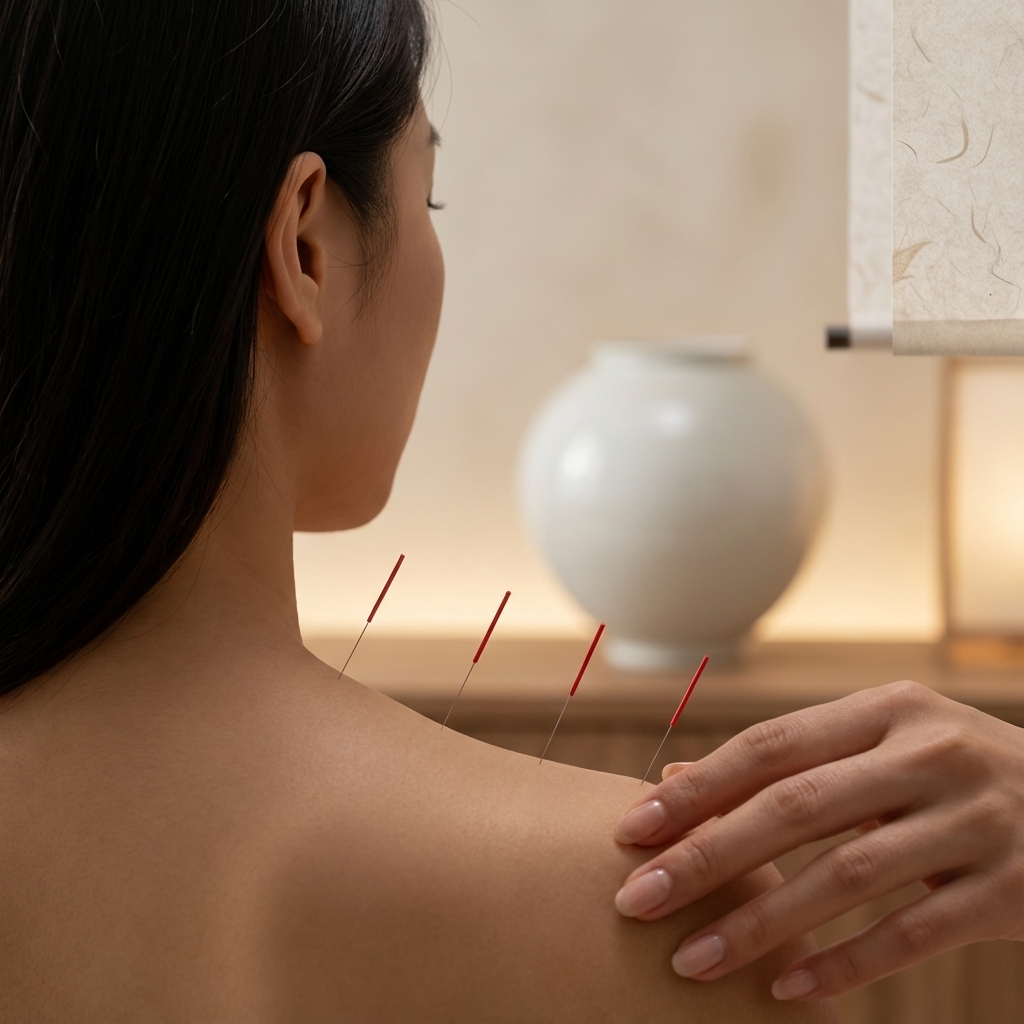
A. During the initial visit, we identify the size and underlying cause of the cyst through medical history taking and palpation, and then establish a treatment plan. In the early stages, inflammation is reduced using acupuncture and pharmacopuncture. Subsequently, fundamental treatment is carried out using fine needles and thread embedding. During the stabilization phase, recurrence is prevented through maintenance therapy and self-care.
View details →Q Is thread lifting helpful for treating Baker's cysts? I am curious about the principle behind its effectiveness.
A. Thread lifting is a method that involves inserting biodegradable threads into weakened tissues surrounding the cyst to induce continuous stimulation and collagen production. It helps restore the elasticity of ligaments and fascia around the joint, thereby creating a structural environment that prevents joint fluid from leaking out again.
View details →# Effectiveness (2)
Q Does treating a Baker's cyst at a Korean medicine clinic actually reduce its size? How is this different from draining it with an injection?
A. Korean medicine treatment is not a method of directly puncturing and draining the cyst, but rather an approach that reduces intra-articular inflammation and excessive secretion, which are the root causes of cyst formation. Once inflammation subsides and joint fluid production normalizes, the cyst can naturally be absorbed and shrink. While injection puncture provides an immediate reduction effect, the recurrence rate is high without addressing the underlying cause.
View details →Q I am an office worker in my 30s, and I have a pulling sensation and pain behind my knee due to a Baker's cyst. Is Korean medicine effective for pain relief?
A. The swelling, pulling, and pain in the back of the popliteal fossa caused by a Baker's cyst occur as the cyst compresses surrounding nerves and blood vessels, restricting joint movement. Acupuncture treatment is effective in improving local blood circulation and reducing inflammatory pain, while moxibustion relaxes tense fascia to alleviate compression symptoms.
View details →Baker's Cyst is not just a simple symptom
Korean medicine that considers both your constitution and lifestyle rhythm treats the root cause.
From consultation to precise treatment, we provide personalized care.
Prescriptions tailored to your constitution and symptoms treat the root cause
The director personally sees you from first to follow-up visits
We identify the essence through Sasang constitution, pulse and abdominal diagnosis
Treatment based on long clinical experience and evidence
Was this helpful? If you need accurate care for your condition, please contact us below.