
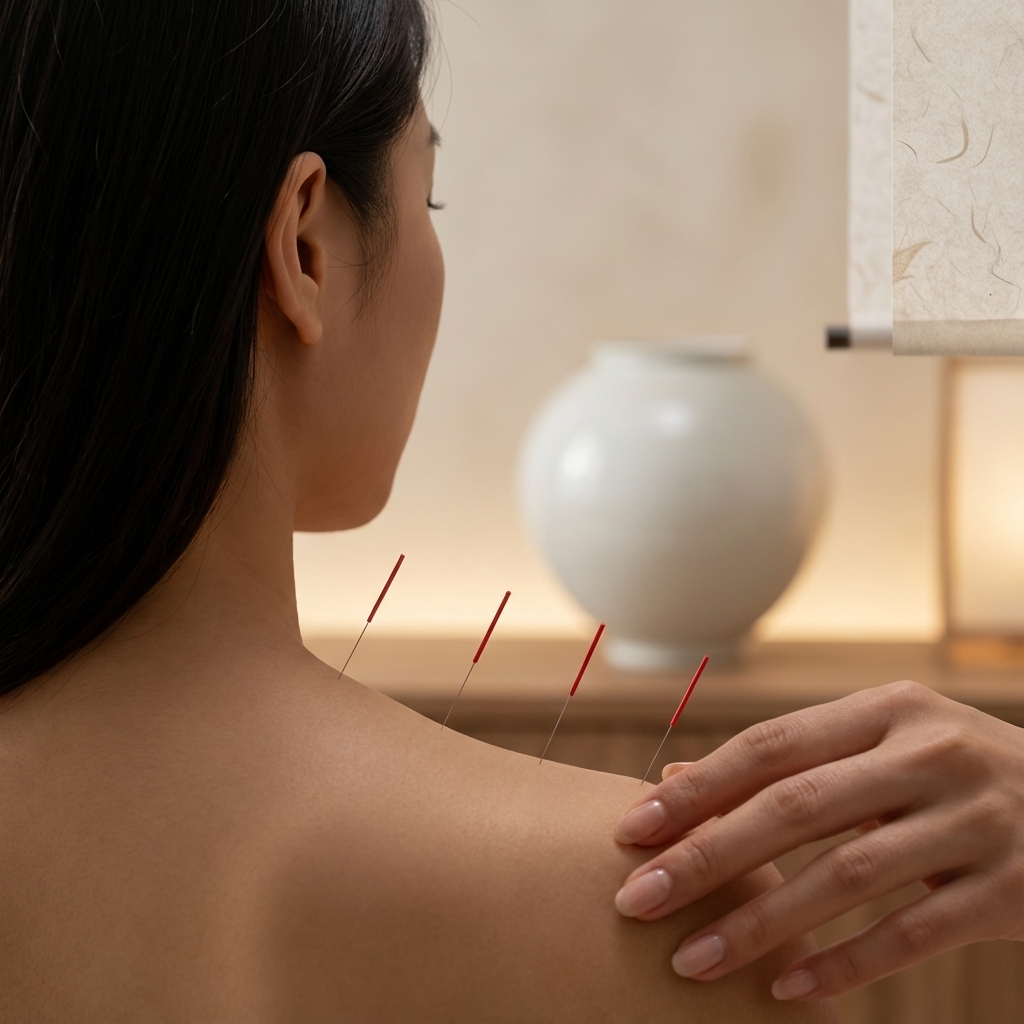

Q I am planning to visit a Korean medicine clinic for the first time for myofascial pain syndrome. How often should I visit, and what is the total treatment duration?
A Intensive treatment 2 to 3 times a week is recommended for the initial 2 to 4 weeks, and the interval is increased to once a week after improvement. You can expect 4 to 8 weeks for the acute phase and 8 to 16 weeks for the chronic phase. The schedule is adjusted according to the individual's condition, and a specific plan can be provided during the first consultation.
Detailed Answer
The frequency and duration of treatment for myofascial pain syndrome vary depending on the duration of the onset, the number of trigger points, the degree of chronicity, and occupational load. Generally, during the initial 2 to 4 weeks, treatment is conducted 2 to 3 times a week to intensively resolve active trigger points. Once symptoms decrease by more than 50%, the frequency is switched to once a week for maintenance treatment for an additional 4 to 8 weeks. Chronic patients may require a full course of 8 to 16 weeks. Intensive early treatment is crucial because excessively long treatment intervals can reactivate trigger points. From a Korean medicine perspective, intensive stimulation must be applied during the early stages when Qi and blood begin to circulate in order to establish a flow of change. After creating a flow by resolving liver stagnation and eliminating blood stasis through intensive early treatment, subsequent treatments proceed by maintaining and deepening that flow. At Dongjedang, we fully assess your current condition during the initial consultation and provide detailed guidance on a step-by-step treatment plan, allowing you to clearly set your treatment schedule and goals from the very beginning.
Related FAQs
-
Q
I am an IT developer who sits in front of a computer for over 10 hours a day. Is it possible to manage myofascial pain syndrome solely through treatment at a Korean medicine clinic without changing my profession?
#Possibility / Realistic Goals
-
Q
I am in my late 60s, and my fascia is knotted all over my body. I am worried that treatment might be ineffective as I get older.
#Possibility / Realistic Goals
-
Q
You mentioned Myofascial Pain Syndrome. How is it different from Fibromyalgia? Can they coexist?
#Comorbidities
-
Q
I am currently receiving treatment for myofascial pain syndrome. How can I perform stretching or posture correction at home to prevent recurrence?
#Lifestyle Management
-
Q
I am unable to sleep properly due to severe pain from myofascial pain syndrome. Is there a relationship between sleep and pain? How should I manage this?
#Lifestyle Management