
Costochondritis
Costochondritis
Costochondritis (Tietze syndrome), where the rib cartilage in the front of the chest is painful due to pressure.

# Possibility / Realistic Goals (2)
Q Is it possible to completely cure costochondritis? I am worried because I have heard that some people around me have it for a long time.
A. In most cases of costochondritis, complete recovery is possible with appropriate treatment and lifestyle management. However, the treatment period may be prolonged in chronic cases, cases with severe adhesions, or cases involving underlying immune abnormalities. If the cause is accurately identified and treatment is approached in stages, even long-standing costochondritis can be significantly improved.
View details →Q Does costochondritis heal on its own? I am wondering if it is okay to just rest without going to the hospital.
A. While acute costochondritis can sometimes improve naturally with sufficient rest and self-care, there is a high risk of it becoming chronic if the underlying posture or overload is not corrected. Therapeutic intervention is necessary if pain persists for more than 3 weeks or interferes with daily life. Since chest pain requires differentiation from heart or lung diseases, it is strongly recommended to receive a professional diagnosis before attempting self-care.
View details →# Comorbidities (1)
# Lifestyle Management (2)
Q Are there any postures or stretches that help with the recovery from costochondritis? I work in a job where I sit in front of a computer all day; how should I manage this?
A. When sitting for long periods, the basics involve maintaining a posture where your back is straight and your shoulders are pulled back to prevent your rib cage from collapsing forward. Performing chest-opening thoracic stretches (door frame stretches or foam roller thoracic extensions) 2 to 3 times a day helps relieve tension around the costochondritis. Consciously practicing abdominal breathing to prevent shallow breathing is also beneficial for recovery.
View details →Q Do sleeping positions or the sleep environment affect costochondritis? I can't sleep because it hurts so much when I sleep on my side.
A. When you have costochondritis, sleeping on your side can worsen pain by adding pressure to the costal cartilage in the affected area. During the acute phase, lying flat on your back is the least strenuous position, and it is recommended to place a pillow under your knees to relieve tension in your lower back. Once the pain subsides, try gradually attempting a position where you lie on the side that is not painful, but place a cushion between your knees to minimize chest twisting.
View details →# Safety (1)
# Drug Combination / Interactions (1)
# Prognosis / Recovery (2)
Q How long does costochondritis usually last? I have been experiencing recurring chest pain for three months now, and I am worried that it might become chronic.
A. The natural course of costochondritis is usually several weeks to several months, but if the cause is not removed, it can progress to a chronic form that persists for 3 to 6 months or more, or involves repeated relapses. If it persists for more than three months, recovery is often slow with only simple rest or anti-inflammatory drugs, so active treatment is necessary. The key to preventing chronicity is to restore tissues using methods such as moxibustion or pharmacopuncture before adhesions and fibrosis progress.
View details →Q Does costochondritis not recur once it is cured? I’ve heard that it keeps recurring even after treatment.
A. Costochondritis is prone to recurrence if the underlying causes—postural imbalance, thoracic tension, and a systemic inflammatory constitution—are not improved. The recurrence rate tends to be high if pain is only managed with simple anti-inflammatory drugs and rest. A full recovery without recurrence is only possible after completing treatment that includes adhesion release, ligament strengthening, and constitutional improvement.
View details →# Causes Explained (2)
Q I am an office worker in my 40s. Suddenly, the area next to the bone on the front of my chest hurts when pressed, and I feel a sharp tingling sensation when I take a deep breath. Is this costochondritis? Why does it occur?
A. Costochondritis is a condition in which inflammation occurs in the costochondral area connecting the ribs and the sternum. Major causes include excessive use of the upper body, repetitive poor posture, and weakened immunity; it occurs most commonly at the junction of the 2nd to 5th costochondral ribs. If pain recurs when taking a deep breath or pressing on the affected area, you may suspect costochondritis.
View details →Q I am a mother in my 30s raising a baby in Dongincheon. After frequently holding my baby, the area near the bone on the left side of the center of my chest continues to hurt. Is costochondritis related to childcare posture?
A. Repeatedly holding a baby or maintaining a breastfeeding posture for a long time can overload the pectoral muscles and costochondritis junction, leading to inflammation. In particular, if supporting the baby with one arm becomes a habit, the area around the sternoclavicular and sternocostal joints becomes unevenly tense, increasing the risk of developing costochondritis. Starting treatment early, along with posture correction, accelerates recovery.
View details →# Food / Triggers (2)
Q Are there any foods to avoid or dietary habits that worsen costochondritis? I usually eat spicy food often; could this be related?
A. While there are no specific foods that directly aggravate costochondritis, dietary habits that increase the body's inflammatory response slow down recovery. Spicy foods, alcohol, processed foods, and foods high in trans fats can raise systemic inflammation levels, so it is advisable to reduce their intake during the acute phase. Conversely, fish rich in omega-3, green and yellow vegetables, and antioxidant foods help with inflammation recovery.
View details →Q Are there any specific movements I need to be particularly careful about during exercise or daily activities while suffering from costochondritis? I go to the gym, so I'm worried.
A. Movements that compress the chest or twist the rib cage strongly can place a direct load on the costochondrosis and cause severe pain. It is advisable to avoid bench presses, dips, fly-type exercises, and push-ups during the acute phase. It is recommended to switch to lower-body focused exercises or cardio, and to gradually resume upper-body exercises once the pain has completely subsided.
View details →# Treatment Schedule (1)
# Treatment Stages (2)
Q In what order is treatment performed during the early (acute) phase of costochondritis? I would like to know what is done when I first visit the Korean medicine clinic.
A. During the first visit, the painful area is palpated, the state of inflammation is checked via ultrasound, and internal medical causes, such as heart conditions, are differentiated. Subsequently, tension in the surrounding muscles and fascia is relieved with acupuncture, and local anti-inflammatory treatment is administered using pharmacopuncture or bee venom acupuncture. During the acute phase, rest is prioritized over heat therapy, often combined with cold compresses. The decision to use moxibustion is made after observing the progress following 2 to 3 treatments.
View details →Q How does treatment differ when costochondritis becomes chronic? I have been experiencing pain for 6 months and would like to know the direction of treatment.
A. Since chronic costochondritis involves adhesions and fibrosis around the cartilage, in-depth treatment is required to separate adhesions using a fine needle and promote tissue regeneration through fire acupuncture and thread embedding. Herbal medicine treatment to improve the patient's constitution is also combined to aim for a recovery without recurrence. Although the treatment period often lasts longer than in the acute phase, definite improvement can be expected through staged treatment.
View details →# Effectiveness (2)
Q Is acupuncture treatment at a Korean medicine clinic actually effective for costochondritis? I am skeptical whether the needles are actually reaching the inflamed cartilage.
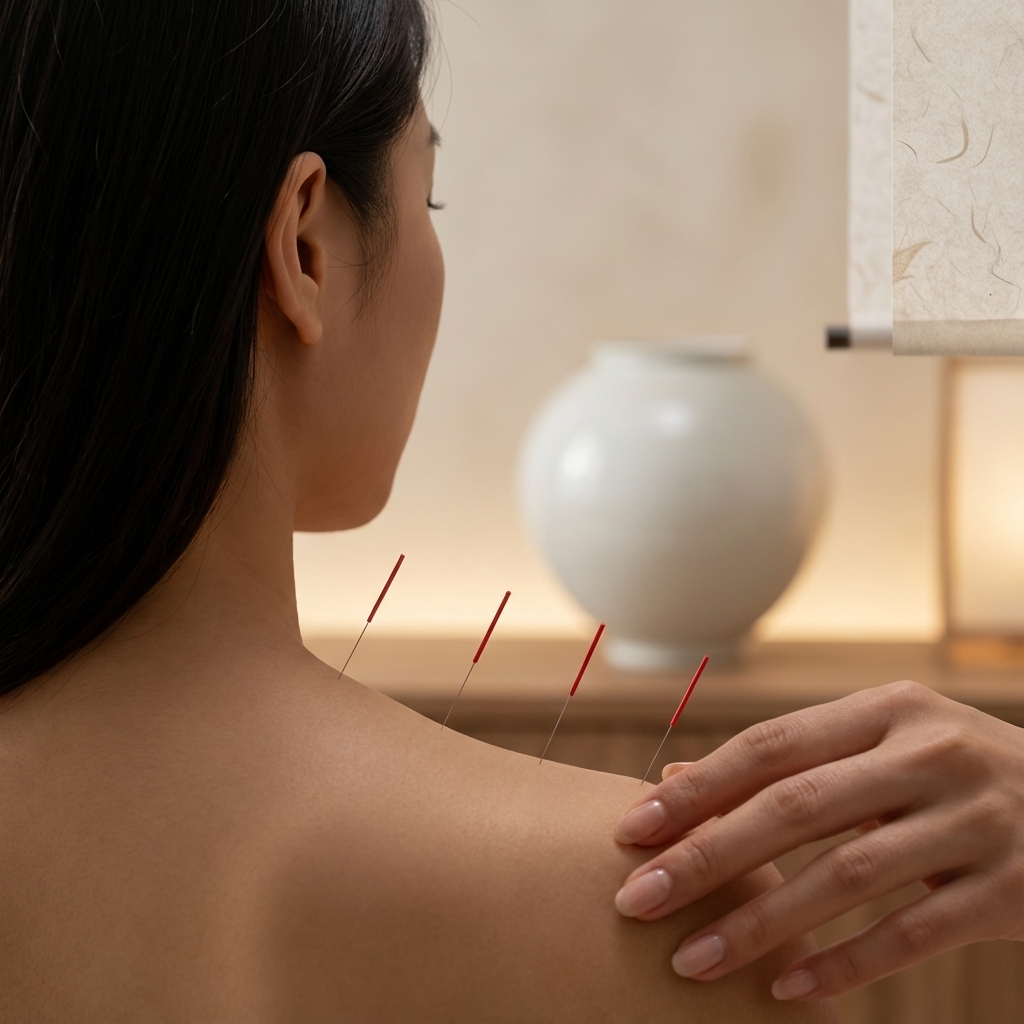
A. Acupuncture treatment relieves tension in the fascia and ligaments surrounding the costal cartilage and improves local blood flow, thereby promoting the recovery from inflammation. In particular, needle acupuncture is effective in reducing pain by directly separating adhesions and fibrosis around the cartilage junction. Studies have also reported that acupuncture treatment for musculoskeletal cartilage pain shows significant effects on pain indices and functional improvement.
View details →Q Does taking herbal medicine for costochondritis reduce cartilage inflammation? I am wondering if herbal medicine can be used as a substitute for Western anti-inflammatory drugs.
A. Herbal medicine helps manage chronic and recurrent costochondritis by relieving Qi stagnation and blood stasis, and by regulating the immune system. A common approach involves using Western anti-inflammatory drugs in conjunction during the acute phase to rapidly reduce inflammation, followed by focusing on preventing recurrence and improving the patient's constitution with herbal medicine. This can be a particularly suitable alternative for those with weak digestive systems or kidneys who find long-term use of anti-inflammatory drugs burdensome.
View details →Costochondritis is not just a simple symptom
Korean medicine that considers both your constitution and lifestyle rhythm treats the root cause.
From consultation to precise treatment, we provide personalized care.
Prescriptions tailored to your constitution and symptoms treat the root cause
The director personally sees you from first to follow-up visits
We identify the essence through Sasang constitution, pulse and abdominal diagnosis
Treatment based on long clinical experience and evidence
Was this helpful? If you need accurate care for your condition, please contact us below.