
Cervical Disc Herniation
Cervical Disc Herniation
Cervical disc herniation accompanied by numbness in the neck, shoulders, and arms

# Possibility / Realistic Goals (2)
Q I am a 49-year-old construction site manager who was advised to have surgery at the hospital. In what cases is it possible to manage with Korean medicine treatment without surgery?
A. If arm pain and numbness are the main symptoms and there is no or only mild muscle weakness, conservative treatment is well worth attempting, and in fact, many patients improve without surgery. On the other hand, if there are symptoms of spinal cord compression such as progressive muscle weakness, impaired hand precision, or gait abnormalities, surgical evaluation is the priority. This distinction must be confirmed through a physical examination.
View details →Q I am a 67-year-old housewife, and I was told that my MRI showed a herniated disc in my neck with some stenosis. If I receive treatment at this age, can I really get better, or do I just have to live with it?
A. While it is impossible to reverse the degenerative changes caused by aging back to a youthful state, reducing pain and numbness and restoring daily function are fully achievable goals even for the elderly. In reality, the severity of imaging findings often does not correlate with the severity of symptoms, so it is appropriate to set treatment goals based on symptoms and function rather than imaging.
View details →# Comorbidities (1)
# Lifestyle Management (2)
Q I was diagnosed with a herniated cervical disc and told I need to exercise, but I don't know what to do. I am a 33-year-old office worker and a beginner at the gym; which exercises are allowed and which are not?
A. During the acute phase, light walking within a pain-free range and chin-tuck exercises are appropriate. Once the pain subsides, add deep neck muscle strengthening and upper back exercises. You should avoid lifting heavy objects overhead, sit-ups, and excessive neck stretching.
View details →Q I am a 42-year-old designer who spends 10 hours a day in front of a monitor. I cannot reduce my workload, but are there ways to prevent the worsening of my herniated cervical discs through my desk environment or work habits?
A. Adjust the top of the monitor to eye level and maintain an arm's length distance between the screen and your eyes. It is most effective to make it a habit to set an alarm to reset your posture (tuck your chin, straighten your chest) for 2 to 3 minutes after 50 minutes of work. If you only use a laptop, a stand and an external keyboard are essential.
View details →# Safety (1)
# Drug Combination / Interactions (1)
# Prognosis / Recovery (2)
Q I am a 35-year-old nurse who was diagnosed with a herniated cervical disc two weeks ago. It is difficult to work due to numbness in my arm. How long does it usually take to get better?
A. Acute pain usually passes its critical point within 4 to 6 weeks, and numbness caused by nerve compression often gradually decreases over 2 to 3 months. In many cases, the herniated nucleus pulposus itself is naturally absorbed over several months, so 80 to 90% of patients improve without surgery. However, recovery is delayed if postural stress persists, so treatment must be combined with lifestyle modifications.
View details →Q I suffered from a herniated disc in my neck last year and had gotten better, but recently I have been experiencing stiffness and numbness again. I am a 50-year-old taxi driver; is it normal for neck herniated discs to recur like this?
A. Once a disc is damaged, a weak area remains in the annulus fibrosus. Therefore, even if the pain subsides, the condition can recur if the same load is repeated. The risk of recurrence is particularly high for occupations that require maintaining a fixed posture for long periods, such as driving. The key is to start treatment quickly when signs of recurrence are mild, and to maintain posture and muscle strength management even during periods without pain.
View details →# Causes Explained (2)
Q I am a 38-year-old office worker who stares at a monitor all day. I suddenly received a diagnosis of a herniated cervical disc even though I have no history of trauma. Why does a disc rupture when I have never been injured?
A. Herniated cervical discs are far more likely to occur due to long-term cumulative load than from a single traumatic injury. If a posture of leaning the head forward persists, pressure concentrates on the back of the cervical intervertebral disc, causing the annulus fibrosus to gradually weaken. Eventually, the nucleus pulposus is pushed out, irritating the nerves. This is a degenerative change that can occur even without trauma.
View details →Q I am a 45-year-old hairdresser whose right arm is numb, and whose thumb and index finger have dull sensation. My neck doesn't hurt much, so why is the numbness in my arm due to a herniated disc in my neck?
A. Since nerves originating from the cervical spine extend to the arms and fingers, compression of a nerve in the neck causes radiating pain that travels down to the arms and fingers. Numbness in the thumb and index finger is a typical symptom of compression of the C6 nerve root. It is also common for only arm symptoms to appear without pain in the neck itself.
View details →# Food / Triggers (2)
Q I am a 29-year-old developer who spends two hours looking at my smartphone while lying in bed after work. Do pillow height and smartphone habits really worsen a herniated cervical disc?
A. Yes, both are major aggravating factors. A high pillow flexes the cervical spine throughout sleep, increasing posterior pressure on the disc, while the posture of looking at a smartphone while lying down applies both twisting and flexion to the neck. The appropriate pillow height is one that supports the nape of the neck and maintains the C-shaped curve of the cervical spine.
View details →Q Does what I eat have an impact? I am a 48-year-old self-employed individual who frequently attends social gatherings involving alcohol and often eats late-night snacks. I am curious if there is a relationship between my neck disc pain and food.
A. While no food directly causes a disc to rupture, frequent drinking, high-sugar late-night snacks, and processed foods can raise the body's inflammation levels, worsening inflammation around the nerves and delaying recovery. Weight gain also increases the burden on the cervical spine. During periods of severe pain, it is beneficial for recovery to reduce alcohol consumption and focus on a diet rich in protein and vegetables.
View details →# Treatment Schedule (1)
# Treatment Stages (2)
Q I am a 39-year-old bank employee visiting a Korean medicine clinic for the first time due to a herniated cervical disc. I would like to know the entire process in advance regarding the order in which the treatment proceeds.
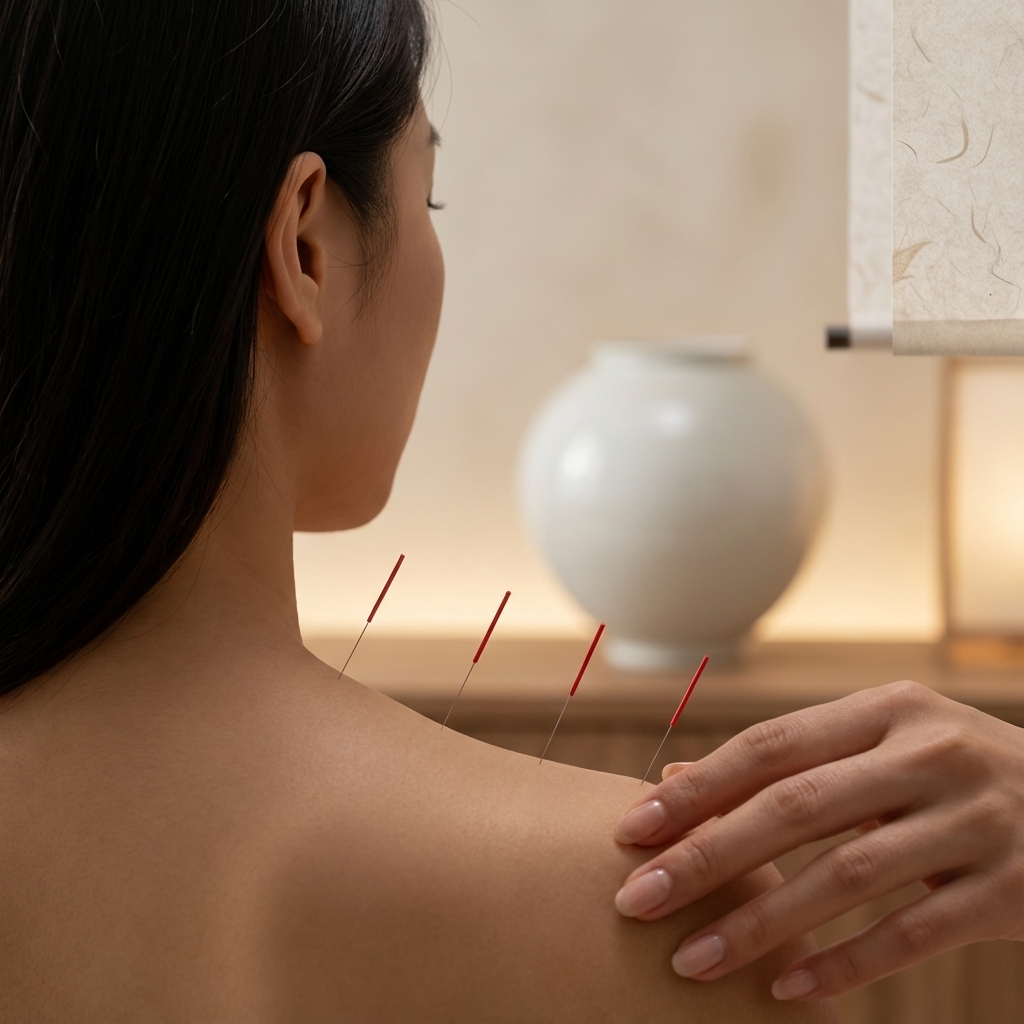
A. First, the condition is evaluated through examination and ultrasound. During the acute phase, pain and inflammation are controlled using acupuncture and pharmacopuncture. Once pain subsides, adhesions are released using moxibustion needles. During the recovery phase, fire acupuncture and thread embedding aid tissue regeneration and ligament strengthening are performed. Throughout the entire process, herbal medicine tailored to your constitution and lifestyle modifications are administered in parallel.
View details →Q I've had acupuncture a few times, but this is the first time I've heard of "Dochim." I am a 44-year-old caregiver; in what cases is the treatment progressed to the Dochim stage?
A. Dochim is considered when muscle tension and pain are not sufficiently relieved with standard acupuncture, and when chronic adhesions or stiff ligaments are identified as the cause of the pain. Dochim is a procedure that uses a special needle with a blade-like tip to microscopically dissect adhered tissues and directly release blocked areas; the procedure is performed while confirming the location using ultrasound.
View details →# Effectiveness (2)
Q The orthopedic doctor said it doesn't require surgery, but taking medication only provides temporary relief. I am a 52-year-old housewife; is acupuncture really effective for a herniated cervical disc?
A. The majority of herniated cervical disc cases that do not require surgery improve with conservative treatment. Acupuncture helps relieve excessive tension in the neck muscles and improve blood flow to soothe the inflammatory environment around the nerves. Studies on acupuncture for cervical radiculopathy also report pain-reducing effects. Unlike simply suppressing pain with medication, this approach creates an environment conducive to recovery.
View details →Q Isn't herbal medicine just a tonic? I am a 41-year-old logistics center employee, and I am curious about what changes occur if I take herbal medicine along with treatment for a herniated disc in the neck.
A. Herbal medicine used for a herniated disc in the neck is not a tonic, but a treatment. It is prescribed to reduce inflammation around the nerves, dissolve blood stasis, and boost the recovery capacity of the musculoskeletal system that supports the disc and ligaments. While acupuncture deals with localized issues, herbal medicine plays a role in changing the body's overall recovery environment.
View details →Cervical Disc Herniation is not just a simple symptom
Korean medicine that considers both your constitution and lifestyle rhythm treats the root cause.
From consultation to precise treatment, we provide personalized care.
Prescriptions tailored to your constitution and symptoms treat the root cause
The director personally sees you from first to follow-up visits
We identify the essence through Sasang constitution, pulse and abdominal diagnosis
Treatment based on long clinical experience and evidence
Was this helpful? If you need accurate care for your condition, please contact us below.