
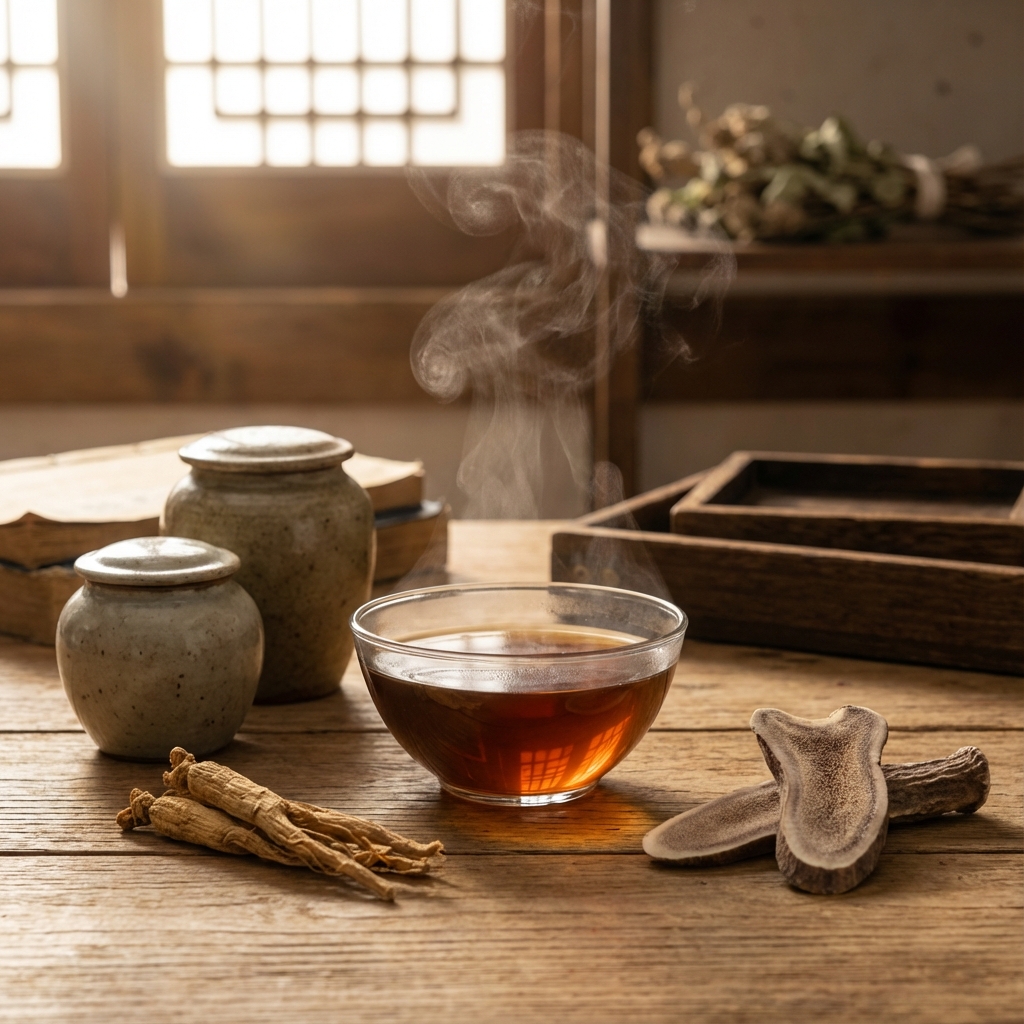
Sipjeondaebo-tang
Sipjeondaebotang
A signature tonic that replenishes both Qi and Blood together, restoring a weakened body.
# Possibility / Realistic Goals (2)
Q What's the difference between Sipjeondaebo-tang extract sold online and a prescription from a Korean medicine clinic?
A. Commercial extracts are manufactured with a standardized composition, identical for everyone. A clinic prescription is customized, based on pulse diagnosis of current condition, with the herbal composition and ratios adjusted to fit the individual constitution.
View details →Q My father in his 60s is always low on energy and has a pale complexion — would Sipjeondaebo-tang suit him?
A. Low energy and a pale complexion are typical symptoms of Qi-Blood deficiency. Sipjeondaebo-tang often suits Qi-Blood deficiency in people in their 60s, but it's recommended to first check for anemia or chronic disease.
View details →# Comorbidities (1)
# Lifestyle Management (2)
Q Can I exercise while taking Sipjeondaebo-tang?
A. Light aerobic exercise (walking, swimming) helps circulate Qi and Blood and enhances the effect of Sipjeondaebo-tang. However, in the early stage when Qi and Blood are severely deficient, avoid strenuous exercise, and gradually increase intensity as your condition improves.
View details →Q How many times a day and when should I take Sipjeondaebo-tang for the best effect?
A. Generally taken 2-3 times a day, either 30 minutes before meals or between meals. A regular dosing schedule enhances the effect, and those with weak digestion may also take it after meals.
View details →# Safety (2)
Q Could taking Sipjeondaebo-tang actually cause fever or not suit my body?
A. If you have excess-heat pattern constitution or currently have a cold or inflammation, taking Sipjeondaebo-tang may cause heat sensations or headaches. It must always be taken after pulse diagnosis confirms a deficiency pattern.
View details →Q Can elderly people or children take Sipjeondaebo-tang?
A. Sipjeondaebo-tang suits Qi-Blood deficiency and weak constitution common in the elderly. For children, the herbal composition and dosage must be adjusted according to age and constitution, and prescription should always follow pulse diagnosis.
View details →# Drug Combination / Interactions (1)
# Prognosis / Recovery (2)
Q My recovery after surgery has been slow. How long should I take Sipjeondaebo-tang before my strength returns?
A. It depends on the extent of surgery and current condition, but appetite and energy improvements are usually felt after 2 to 4 weeks. Taking it steadily for 3 months restores an overall foundation of physical strength.
View details →Q I've had chronic fatigue for years — can Sipjeondaebo-tang fundamentally help?
A. If Qi-Blood deficiency is the underlying cause, Sipjeondaebo-tang is effective. However, if Liver Qi stagnation (from stress or overwork) is the main cause, Gongjindan may be more suitable, so identifying the cause through pulse diagnosis comes first.
View details →# Causes Explained (2)
Q I've only heard the name Sipjeondaebo-tang — what kind of tonic is it and who is it for?
A. Sipjeondaebo-tang is a signature tonic that replenishes both Qi and Blood in people with combined Qi-Blood deficiency. It suits those with a pale complexion, shortness of breath, cold hands and feet, and frequent fatigue.
View details →Q The term "Qi-Blood deficiency" is unfamiliar to me — what symptoms indicate it?
A. Qi-Blood deficiency means both energy and blood are insufficient. Typical signs include easy fatigue, shortness of breath, a pale or sallow complexion, along with dizziness, palpitations, and cold hands and feet.
View details →# Food / Triggers (1)
# Treatment Schedule (2)
Q What happens when I go to get a Sipjeondaebo-tang prescription?
A. At the first visit, pulse diagnosis and consultation assess your Qi-Blood deficiency/excess status, and the prescription is composed to fit your constitution. It is prescribed as a decoction or pills, with a follow-up visit every 3 months to check progress.
View details →Q I'm looking for a Korean medicine clinic in Incheon Dong-gu that prescribes Sipjeondaebo-tang.
A. Dongjedang Korean Medicine Clinic is located near Dongincheon Station in Incheon Dong-gu. For a consultation on a customized tonic including Sipjeondaebo-tang, please book a first visit through our website or by phone and come in.
View details →# Treatment Stages (1)
# Effectiveness (2)
Q I heard Sipjeondaebo-tang can help during chemotherapy — is that true?
A. Multiple studies have confirmed effects such as immune cell activation, improved blood cell production, and reduced chemotherapy side effects. However, taking it during cancer treatment must always be decided in consultation with your treating physician.
View details →Q My body became very weak after giving birth — is Sipjeondaebo-tang effective for postpartum recovery?
A. Sipjeondaebo-tang is a leading postpartum tonic that quickly replenishes the Qi and Blood depleted by childbirth. It also helps with anemia, lochia discharge, uterine recovery, and breastfeeding support.
View details →Sipjeondaebo-tang is not just a simple symptom
Korean medicine that considers both your constitution and lifestyle rhythm treats the root cause.
From consultation to precise treatment, we provide personalized care.
Prescriptions tailored to your constitution and symptoms treat the root cause
The director personally sees you from first to follow-up visits
We identify the essence through Sasang constitution, pulse and abdominal diagnosis
Treatment based on long clinical experience and evidence
Was this helpful? If you need accurate care for your condition, please contact us below.