
Rotator Cuff Tear
Rotator Cuff Tear
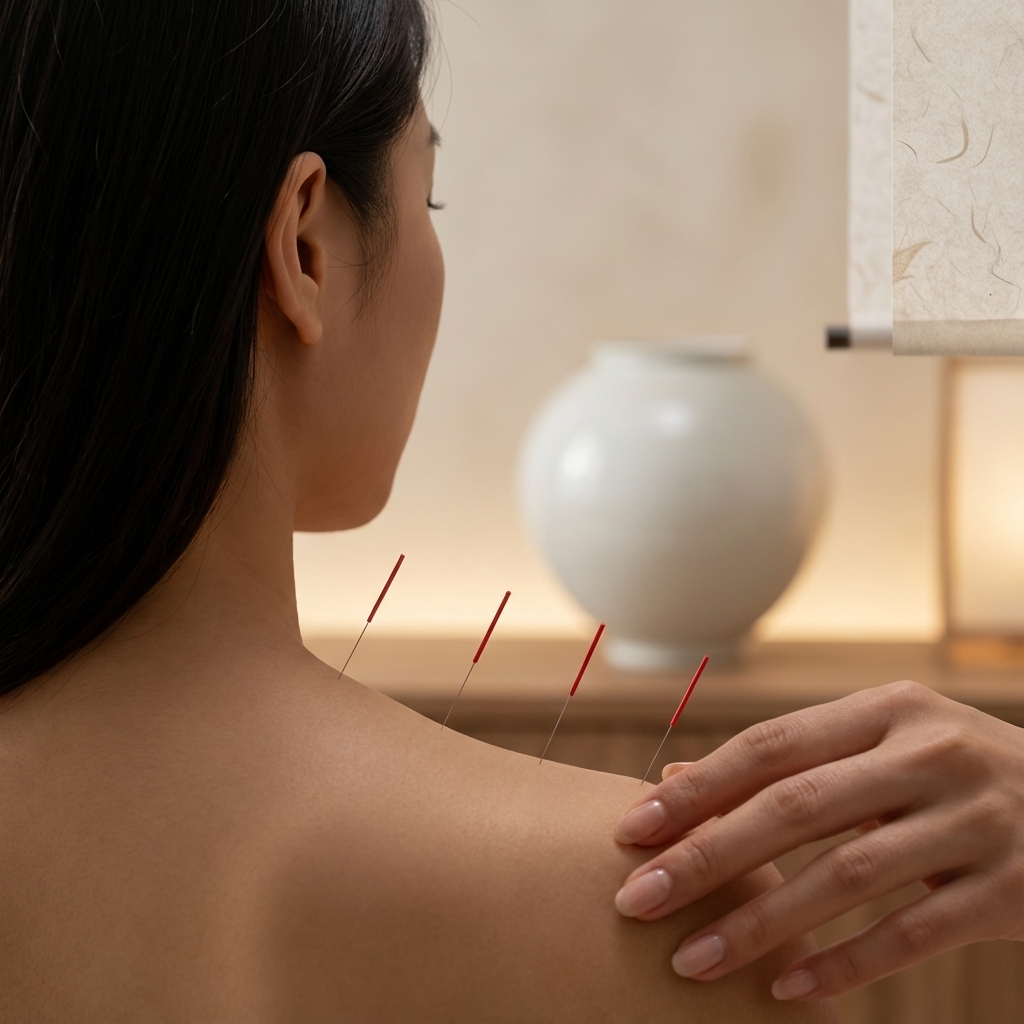
Shoulder rotator cuff injury characterized by weakness and pain when raising the arm
# Possibility / Realistic Goals (2)
Q I am a 59-year-old construction site manager. I was advised to have surgery at the hospital. Is it really true that there is no other option besides surgery? Is it possible to avoid surgery through traditional Korean medicine treatment?
A. It depends on the size and type of the rupture. Partial ruptures and small to medium full-thickness ruptures often improve sufficiently with conservative treatment, so the standard practice is to try non-surgical treatment for 3 to 6 months first. However, in cases of acute traumatic full-thickness ruptures, extensive ruptures, or significant muscle weakness, it is crucial not to miss the timing for surgery, so the decision must be made based on accurate imaging evaluation.
View details →Q I am a 50-year-old housewife. I underwent rotator cuff repair surgery last year, but I still feel stiffness and my strength hasn't fully returned. Is Korean traditional medicine treatment meaningful even after surgery?
A. Residual pain and muscle weakness after surgery are common issues, and this is precisely the period when Korean traditional medicine can play a role. The approach involves using acupuncture and pharmacopuncture to release hardened fascia and adhesions around the surgical site, and herbal medicine to boost recovery power and improve the efficiency of rehabilitation. We also address the restoration of shoulder balance to prevent re-rupture.
View details →# Comorbidities (1)
# Lifestyle Management (2)
Q I am a 51-year-old nurse. I wake up two or three times every night due to shoulder pain. Is there a good sleeping position for a patient with a rotator cuff tear?
A. Lying on the opposite side with the painful shoulder facing upward, and placing a pillow or cushion under the painful arm to keep it slightly elevated in front of the body, reduces tendon compression. When lying on your back, place a thin cushion under the painful elbow. Lying on the painful side is the position you should avoid the most.
View details →Q I am a 43-year-old member of a badminton club. I stopped all exercise after being diagnosed with a partial tear, but my shoulder feels like it is actually getting stiffer. Which exercises are acceptable, and which are not?
A. Complete rest actually causes the shoulder to stiffen. Pendulum exercises within a pain-free range, scapular adduction exercises, and light isometric exercises are recommended. On the other hand, smashing motions (swinging the arms overhead) and lifting heavy objects overhead should be avoided until recovery is complete. Please decide whether to return to exercise after a stage assessment.
View details →# Safety (1)
# Drug Combination / Interactions (1)
# Prognosis / Recovery (2)
Q I am a 47-year-old childcare teacher. I have been diagnosed with a partial rotator cuff tear. If I undergo treatment, how long does it usually take to recover enough to be able to lift children?
A. Conservative treatment for a partial tear is generally considered to take 3 to 6 months per cycle. Night pain and daily pain begin to subside as early as 4 to 8 weeks, and the ability to lift heavy objects recovers gradually thereafter. However, since there is significant individual variation depending on the size of the tear, age, and adherence to treatment, adjustments are made through intermediate evaluations.
View details →Q I am a 66-year-old retiree. The pain is bearable, so I have just been leaving it alone, but what happens if a rotator cuff tear is not treated?
A. It is reported that if a partial tear is left untreated, about half of them will enlarge within a few years. As the tear grows, the tendon retracts inward, and fatty degeneration occurs in the muscle, which can eventually lead to a condition where suturing becomes difficult even with surgery. Even if the pain is mild, regular follow-up and active management are necessary.
View details →# Causes Explained (2)
Q I am a 52-year-old housewife. I have never injured my shoulder, but I have been told that my rotator cuff is torn. I have never fallen or bumped into anything, so how can it rupture?
A. More than half of rotator cuff tears are degenerative tears that occur without trauma. After the age of 40, if repetitive use of the arm accumulates while blood flow to the tendons decreases and elasticity declines, the tendons can gradually wear down and tear even without a specific accident. This is particularly common in the supraspinatus tendon, which frequently rubs against the bone beneath the acromion.
View details →Q I am a 58-year-old taxi driver. The pain is so severe that I cannot sleep if I lie on the affected side at night. How can I distinguish between frozen shoulder and a rotator cuff tear?
A. Both cause nocturnal pain, but frozen shoulder involves the stiffness of the joint itself, where the arm cannot be lifted even with assistance. In contrast, a rotator cuff tear allows the arm to be lifted by someone else, but is characterized by weakness when lifting the arm independently or pain at specific angles. An ultrasound or MRI examination is necessary for accurate differentiation.
View details →# 음식 / 발 요인 (1)
# Food / Triggers (1)
# Treatment Schedule (1)
# Treatment Stages (2)
Q I am a 48-year-old office worker. If I am being treated for a rotator cuff tear at a Korean medicine clinic, in what order is the procedure performed? Is moxibustion performed from the very beginning?
A. Moxibustion is not performed from the start. Typically, after an ultrasound evaluation, inflammation and pain are first managed using acupuncture and pharmacopuncture. Once the pain is under control, moxibustion is applied to areas of adhesion, and fire acupuncture and thread embedding are applied in stages to tissues that are slow to heal. Throughout the entire process, herbal medicine tailored to the patient's constitution is administered concurrently to support the body's recovery.
View details →Q I am a 54-year-old electrician. I have heard that Korean medicine clinics also perform procedures while monitoring with ultrasound. How is this different from simply inserting acupuncture needles?
A. Ultrasound-guided procedures are a method where the location of ruptures, adhesions, and bursitis is directly visualized on a screen, allowing for the precise application of needles or pharmacopuncture to those specific points. Compared to relying solely on fingertip sensation, this method offers a higher hit rate on the lesion and increases safety by avoiding blood vessels and nerves. Another advantage is the ability to track and compare treatment progress using ultrasound.
View details →# Effectiveness (2)
Q I am a 45-year-old logistics center employee. My tendon is already torn; will getting acupuncture really heal the tear? Honestly, I doubt it is effective.
A. Partial tears often improve with conservative treatment without surgery, and acupuncture helps reduce pain and restore surrounding muscle function. Although the torn tendon is not directly sutured, the goal is to help the shoulder function properly by reducing inflammation and muscle tension around the tear. Surgical consultation may be necessary for full-thickness or extensive tears.
View details →Q I am a 60-year-old self-employed individual. I received two steroid injections at an orthopedic clinic, but the relief was only temporary, and the pain returns. How are needle acupuncture and pharmacopuncture at a Korean medicine clinic different from injections?
A. Steroid injections strongly suppress inflammation to quickly reduce pain, but repeated injections can weaken tendons, so there are limits on the number of times they can be administered. Needle acupuncture physically loosens adhered tissues, while pharmacopuncture and bee venom acupuncture aim to reduce inflammation and aid tissue recovery; thus, their approaches are fundamentally different. These treatments create an environment for recovery rather than simply suppressing pain.
View details →Rotator Cuff Tear is not just a simple symptom
Korean medicine that considers both your constitution and lifestyle rhythm treats the root cause.
From consultation to precise treatment, we provide personalized care.
Prescriptions tailored to your constitution and symptoms treat the root cause
The director personally sees you from first to follow-up visits
We identify the essence through Sasang constitution, pulse and abdominal diagnosis
Treatment based on long clinical experience and evidence
Was this helpful? If you need accurate care for your condition, please contact us below.