
Q I would like to know the entire process of how meniscal tears are treated at a Korean medicine clinic, in what order.
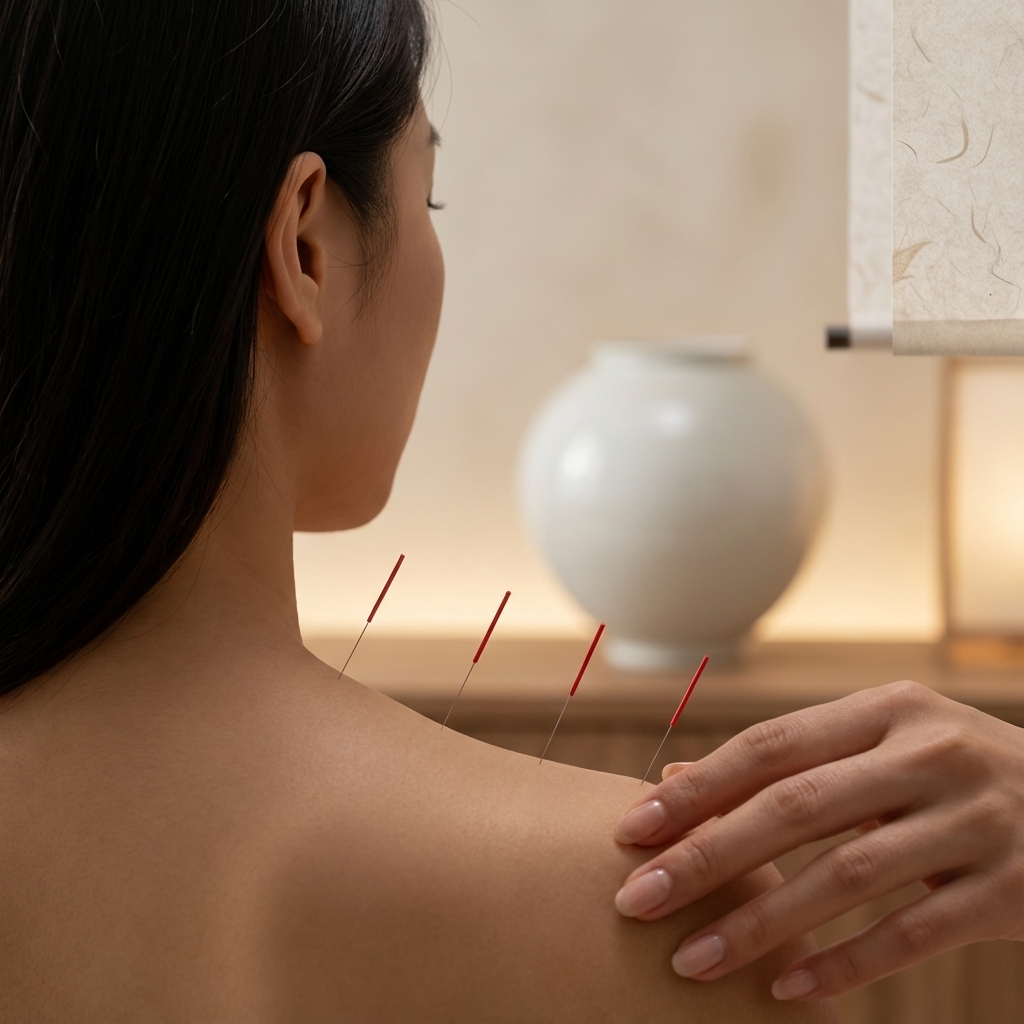
A Stage 1 involves controlling acute inflammation and edema (acupuncture and pharmacopuncture); Stage 2 involves removing adhesions and stimulating tissue regeneration (smoke needles, fire needles, and thread embedding); Stage 3 involves muscle strength recovery and joint stabilization; and Stage 4 involves maintenance management to prevent recurrence. Each stage is evaluated every 2 to 4 weeks and adjusted according to the individual's condition.
Detailed Answer
Treatment Protocol by Stage: Stage 1 (Acute Phase) — Reduction of intra-articular effusion and suppression of pain gates using fine needles and pharmacopuncture (anti-inflammatory components). Precision is enhanced with ultrasound-guided needles if necessary. Stage 2 (Subacute Phase) — Detachment of adhesions and fibrotic tissues around the joint using fine needles, and promotion of cell regeneration using fire needles. Thread embedding creates an environment for collagen synthesis through continuous stimulation for approximately 2 to 4 weeks. Stage 3 (Recovery Phase) — Combined acupuncture and Chuna manual therapy, prescribed strength training exercises (VMO, strengthening of hip abductors). Stage 4 (Maintenance Phase) — Check-ups 1–2 times a month, early management based on seasonal and activity level changes.
Korean Medicine Clinic Perspective
The principle of Korean medical treatment is to first address outwardly manifested symptoms and then address the root cause. Treating external symptoms involves first removing pathological products such as stagnant blood and waste products, while the fundamental treatment involves replenishing weakened kidney energy and deficient liver blood. At Dongjedang, we adhere to this sequence while combining procedural treatments (acupuncture, moxibustion, pharmacopuncture, thread embedding) with oral treatments (constitutional herbal medicine). In particular, moxibustion separates local adhesions while restoring circulatory flow, opening the way for nutrients to be supplied to the joints again.
Related FAQs
-
Q
I am a man in my 60s, and MRI results indicate significant wear on my meniscus. Is it actually possible to see improvement with Korean traditional medicine treatment at this age?
#Possibility / Realistic Goals
-
Q
I am an athlete in my 20s who wants to undergo meniscal repair surgery, but I am afraid of the operation. Is it possible to return to sports with only Korean traditional medicine treatment?
#Possibility / Realistic Goals
-
Q
It is said that knee osteoarthritis can occur along with meniscal tears. Can both be treated together?
#Comorbidities
-
Q
I am currently undergoing treatment for a meniscus tear. Is it okay to continue exercising? I would like to know which exercises are good and bad for my knees.
#Lifestyle Management
-
Q
Since my meniscus injury, my knee feels unstable and heavy. I am curious about lifestyle habits that can protect my knee in daily life.
#Lifestyle Management