
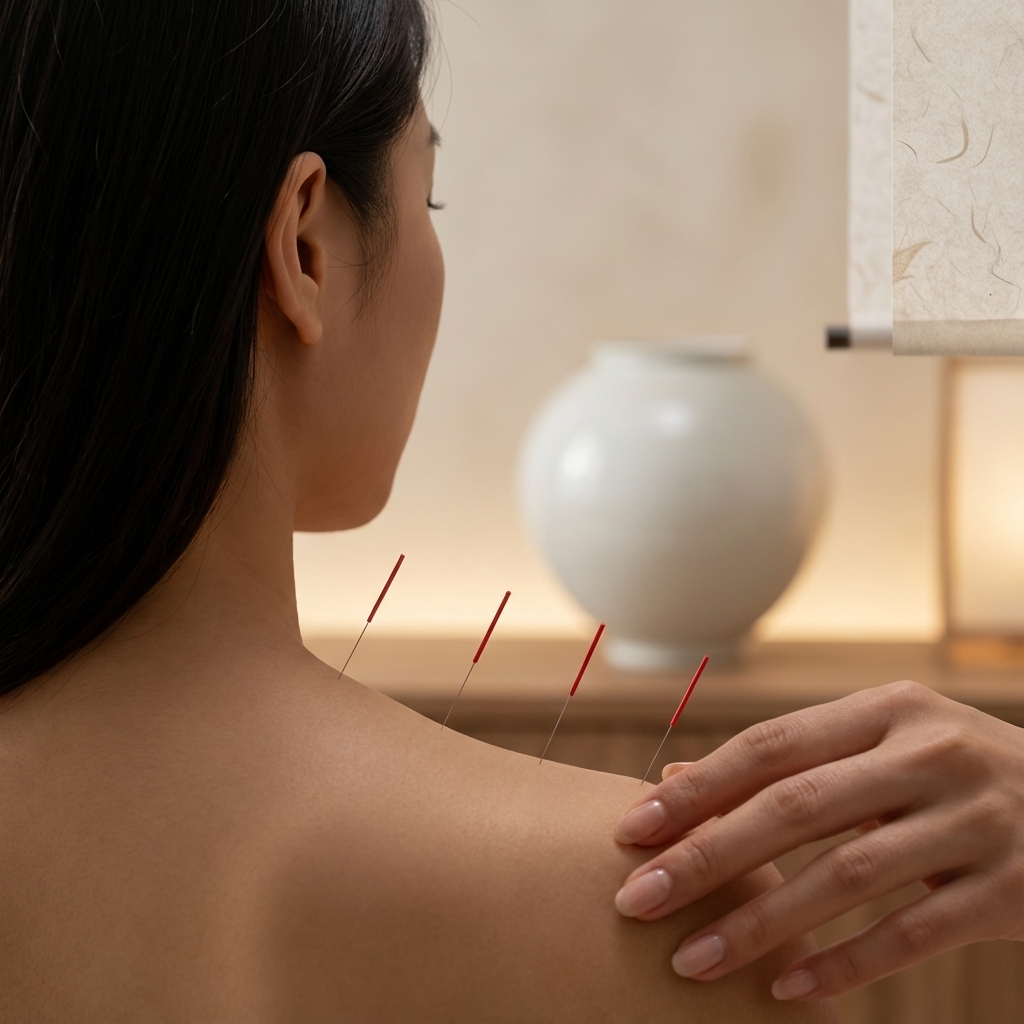
Q Is the Dochim procedure scary and painful? Are there any side effects?
A Dochim is a small instrument with a thickness of approximately 0.5 to 1 mm; although it is thicker than a standard needle, it can often be performed without anesthesia. Bruising or soreness may occur at the treatment site for a few days, but this is temporary, and the risk of nerve or blood vessel damage can be significantly reduced with ultrasound guidance. It is safe to receive treatment from a skilled Korean medicine doctor.
Detailed Answer
The Dochim (Small Needle Knife) is a needle with a blade 0.5 to 1.0 mm in diameter, used to separate adhesions. Common reactions: Local pain, swelling, and bruising (subcutaneous hemorrhage) 1 to 3 days after the procedure. Rare side effects: Infection, nerve irritation (temporary numbness), hematoma. The risk of damage to vital structures can be minimized when the procedure is performed under real-time ultrasound guidance. Prior notification is mandatory if you are taking anticoagulants or have platelet abnormalities.
Korean Medicine Clinic Perspective
Dochim is a treatment method that directly opens adhesions where Qi and blood are blocked. According to the principles of Korean medicine, a temporary reaction (Healing Crisis) may occur after the separation of blood stasis. This is a process in which Qi and blood flow anew as blocked meridians open, and it resolves naturally within 2 to 3 days. At Dongjedang, we perform the procedure under ultrasound guidance to precisely identify Gallbladder Meridian acupoints, and we prioritize safety by checking the coagulation status and medication intake before the procedure. If you are very apprehensive, you can start with general acupuncture or pharmacopuncture for the first session and proceed step by step.
Related FAQs
-
Q
Do I have to give up running completely? Do you have a realistic goal to run marathons again?
#Possibility / Realistic Goals
-
Q
I am 55 years old. Is treatment effective at this age? Aren't there limitations due to aging?
#Possibility / Realistic Goals
-
Q
Can knee cartilage or other joints be damaged along with iliotibial band syndrome?
#Comorbidities
-
Q
Can I continue exercising during treatment? Which exercises are okay, and which should be avoided?
#Lifestyle Management
-
Q
I am in my 30s and active in a marathon club in Dong-gu, Incheon. Are there any management methods I can do at home besides foam rollers and stretching?
#Lifestyle Management