
Frozen Shoulder
Frozen Shoulder
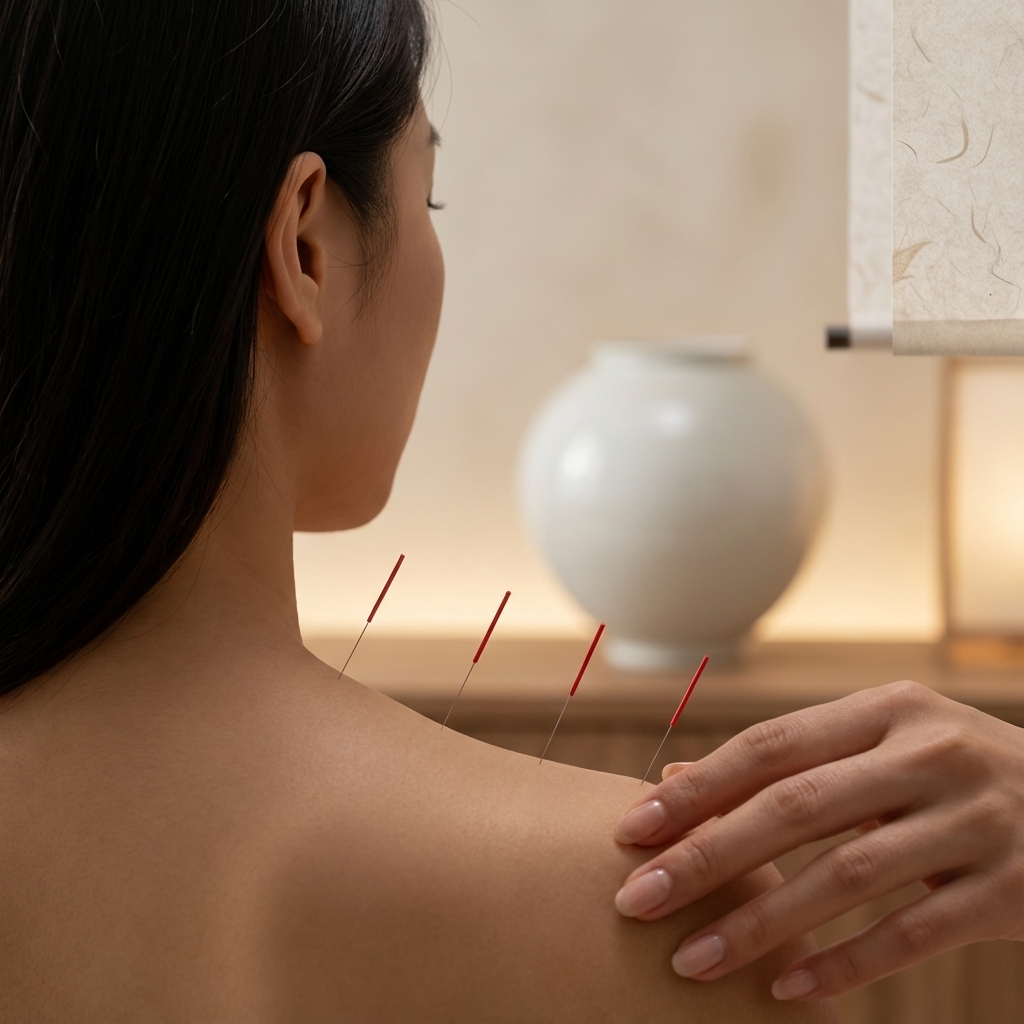
Adhesive capsulitis characterized by stiff shoulder, difficulty lifting the arm, and severe nocturnal pain
# Possibility / Realistic Goals (2)
Q I am a 62-year-old male. I have heard that if the condition does not resolve at the orthopedic clinic, it may lead to surgery (arthroscopic capsular release). Is it realistically possible to recover without surgery through Korean medicine treatment?
A. Frozen shoulder is a condition that mostly recovers with non-surgical treatment, and cases requiring surgery are rare. The general procedure is to consider surgery only when severe stiffness persists despite faithfully undergoing stepwise Korean medicine treatment, including moxibustion, and exercise therapy for more than six months.
View details →Q I am 67 years old. It has been over two years since my shoulder became stiff. Is it possible to get better if I start treatment now? I am wondering if I should give up because of my age.
A. There is a possibility of improvement even for chronic frozen shoulder that has lasted for more than two years. While old adhesions may release slowly, there are many cases where the range of motion improves after dissection using methods such as acupuncture needles. Recovery is determined more by the severity of the adhesions and accompanying conditions than by age.
View details →# Comorbidities (1)
# Lifestyle Management (2)
Q I am a 54-year-old office worker. I cannot sleep at night because my shoulder feels like it is stabbing when I turn over onto the painful side. What position should I sleep in?
A. Lie on your side away from the painful shoulder to prevent pressure, and place a pillow or cushion under the painful arm and in front of your chest to keep your arm slightly away from your torso. When lying on your back, placing a thin pillow under the painful elbow will reduce nighttime pain.
View details →Q I am a 61-year-old retiree. I have been told to do shoulder exercises at home, but I do not know what exercises to do, how much to do, or if I should endure the pain and continue.
A. The basics are pendulum exercises (drawing a circle with your arm hanging down), finger wall climbing, and stretching using a towel. Doing only up to a slight pulling sensation, 2 to 3 times a day for 5 to 10 minutes at a time, is sufficient; doing so while enduring stabbing pain is actually a factor that worsens the condition.
View details →# Safety (1)
# Drug Combination / Interactions (1)
# Prognosis / Recovery (2)
Q I am a 50-year-old bank employee. I heard that frozen shoulder heals on its own within two years even if left alone. Can't I just endure it and wait?
A. There are studies showing that the natural course of frozen shoulder is long, ranging from 1 to 3 years, and that about half of patients still experience pain or limited range of motion years later. Since the goal of treatment is to shorten this long course and reduce residual stiffness, waiting indefinitely is not recommended.
View details →Q I am a 47-year-old daycare teacher. I need to recover quickly because I have to hold the children. How long does it usually take to get better with Oriental medicine treatment?
A. While it varies depending on the stage of the disease, pain usually decreases noticeably after 4 to 8 weeks of treatment, and it is realistic to expect about 3 to 6 months for the stiff range of motion to recover. The duration increases with the depth of the freezing phase and the presence of diabetes.
View details →# Causes Explained (2)
Q I am a 52-year-old housewife. I have never been injured, but my shoulder has been gradually stiffening over the past few months, and now I can't even lift my arm sideways. Why can I develop frozen shoulder when I haven't even bumped into anything?
A. Frozen shoulder (adhesive capsulitis) occurs when the joint capsule surrounding the shoulder joint becomes inflamed, thickened, and adheres, even without trauma. It is more common in people around the age of 50, women, and those with diabetes, and more than half of cases are idiopathic, meaning they begin without a clear cause.
View details →Q I am a 58-year-old who runs a small restaurant in Dong-gu, Incheon. My shoulder hurts, and people around me say it is a rotator cuff tear, while others say it is frozen shoulder. What is the difference between the two?
A. Frozen shoulder is a condition where joint movement in all directions becomes stiff, whereas a rotator cuff tear is a condition where the tendons are torn, causing a loss of strength during specific movements. With frozen shoulder, the arm does not go up even when someone else lifts it, whereas with a rotator cuff tear, the arm often goes up when someone else lifts it.
View details →# Food / Triggers (2)
Q I am a 60-year-old working in the early morning seafood industry in Dongincheon. I feel like my shoulder stiffens more when I work in the cold wind. Does the cold really worsen frozen shoulder?
A. Yes, cold temperatures can worsen pain and stiffness by constricting muscles and joint capsules and reducing blood flow. It is helpful to keep your shoulder warm to prevent direct exposure to the cold early morning air, and to perform light warm compresses and warm-up exercises before starting work.
View details →Q I am a 57-year-old diabetic patient. My doctor mentioned that diabetes makes one prone to frozen shoulder; does dietary management affect shoulder recovery?
A. Yes, the incidence of frozen shoulder in diabetic patients is 2 to 4 times higher than in the general population, and recovery is slower. Since high blood sugar levels cause glycated degeneration in the collagen of the joint capsule, leading to tissue hardening, blood sugar management itself is part of shoulder treatment.
View details →# Treatment Schedule (1)
# Treatment Stages (2)
Q I am a 51-year-old delivery driver. Since my job requires me to constantly use my shoulder, I am curious about the treatment plan. In what order is frozen shoulder treated in Korean traditional medicine?
A. There are broadly three stages. Stage 1 involves controlling inflammation and nocturnal pain using acupuncture, bee venom acupuncture, and pharmacopuncture. Stage 2 involves separating hardened joint capsules and adhesions using ultrasound-guided needles. Stage 3 involves using fire acupuncture and thread embedding to aid tissue regeneration and solidify the recovered range of motion. Throughout all stages, herbal medicine tailored to the individual's constitution is administered in parallel.
View details →Q I am a 48-year-old Pilates instructor. My pain has subsided, but my shoulder still feels loose. At what stage are fire acupuncture and thread lifting performed, and why?
A. Fire acupuncture and thread lifting are treatments designed to promote tissue regeneration during the recovery phase after pain has subsided. Fire acupuncture uses heated needles to apply thermal stimulation to deep tissues, boosting blood flow and the recovery response. Thread lifting involves implanting dissolvable threads to provide continuous regenerative stimulation for several weeks, thereby strengthening weakened ligaments and joint capsules.
View details →# Effectiveness (2)
Q I am a 49-year-old male office worker. My shoulder throbs every night, causing me to have trouble sleeping. Honestly, I am skeptical that a few acupuncture sessions will loosen up my stiff shoulder, but is traditional Korean medicine really effective for frozen shoulder?
A. Clinical studies have reported that acupuncture treatment is effective in reducing pain and improving the range of motion in frozen shoulder. In particular, a stepwise approach is possible, focusing on pain relief and inflammation reduction during the painful phase, and directly releasing adhesions using needles during the freezing phase.
View details →Q I am a 55-year-old hairdresser. My job requires me to lift my arms, so I cannot take time off work. I have heard that acupuncture can release adhesions; is this actually possible compared to injections or surgery?
A. Dochim is a treatment using a needle with a flat, blade-like tip that microscopically incises and separates thickened joint capsules and adhered soft tissues. Since it is performed without incisions, patients can return to their daily activities quickly, and ultrasound guidance allows for precise targeting of the affected area.
View details →Frozen Shoulder is not just a simple symptom
Korean medicine that considers both your constitution and lifestyle rhythm treats the root cause.
From consultation to precise treatment, we provide personalized care.
Prescriptions tailored to your constitution and symptoms treat the root cause
The director personally sees you from first to follow-up visits
We identify the essence through Sasang constitution, pulse and abdominal diagnosis
Treatment based on long clinical experience and evidence
Was this helpful? If you need accurate care for your condition, please contact us below.