
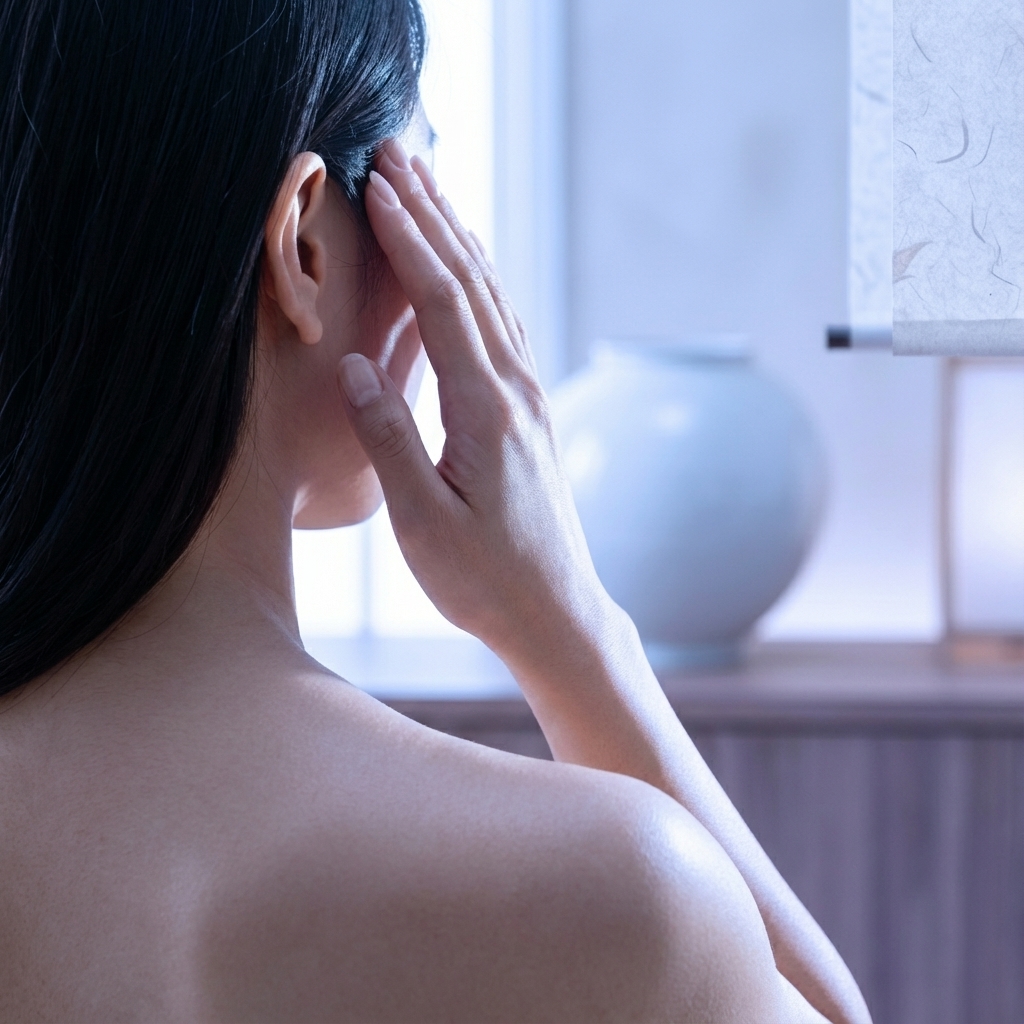
Tension Headache
Tension-type Headache
Dull pressing headache from muscle tension around the head

# Possibility / Realistic Goals (1)
# Comorbidities (2)
Q Whenever I have a tension headache, neck and shoulder pain always come with it. Do they all get better with the same treatment?
A. Yes, tension headache, neck pain, and shoulder pain are co-occurring conditions arising from the same cervical muscle tension and structural imbalance. Correcting the cervical structure with Chuna manual therapy improves the headache and the neck and shoulder pain together.
View details →Q I have insomnia and anxiety along with tension headaches. Are they related? Can they be treated together with traditional Korean medicine?
A. Tension headaches, insomnia, and anxiety share a common root: autonomic nervous system hypertonicity and sympathetic nervous system hyperactivity. In many cases, stabilizing the autonomic nervous system with herbal medicine or acupuncture leads to the simultaneous improvement of all three conditions.
View details →# Lifestyle Management (2)
Q Are there stretches or posture corrections I can do at home to reduce tension headaches?
A. Doing cervical side-bending stretches, chin tucks, and thoracic extension 3 to 5 times a day relaxes the pericranial muscles and can reduce headache frequency.
View details →Q How important are sleep and stress management for tension headaches? Please tell me specific methods.
A. Keeping a regular 7 to 8 hours of sleep and doing 10 minutes of abdominal breathing a day can greatly reduce tension headache frequency. Cutting off your phone before sleep and a consistent wake-up time are key.
View details →# Safety (2)
Q Are Chuna manual therapy and pharmacopuncture safe? Are there any side effects?
A. Chuna manual therapy and pharmacopuncture, both covered by Korea's national health insurance, are safe treatments performed by Korean medicine doctors. Very rarely, temporary muscle soreness or bruising may occur after the procedure, but it usually resolves within 1 to 2 days.
View details →Q With what kind of headache symptoms should I go to the emergency room instead of a Korean medicine clinic?
A. Thunderclap headache, high fever with neck stiffness and headache, one-sided paralysis or speech difficulty with headache, headache after head trauma, and visual disturbance with headache all require an immediate trip to the emergency room. A tension headache without these warning signs is suitable for Korean medicine treatment.
View details →# Drug Combination / Interactions (1)
# Prognosis / Recovery (2)
Q I get a tension headache every day. If it becomes chronic, is it hard to cure?
A. Chronic tension headache (15 or more days per month, lasting over 3 months) requires treatment, but if the causes (cervical structure, medication overuse) are corrected early, it can revert to the episodic form. The longer it is left untreated, the more entrenched the chronic state becomes.
View details →Q How long does Korean medicine treatment for tension headache take? When will I start to feel the effect?
A. Most people notice a reduction in the frequency and intensity of pain within 2 to 4 weeks. Complete treatment including structural correction is based on 8 to 12 weeks, and it can take longer if the condition has become chronic.
View details →# Causes Explained (2)
Q I keep getting a headache that feels like a band tightening around my head. Why does this happen?
A. When the muscles around the neck and shoulders stay continuously tense, blood flow to the brain decreases, producing a bilateral pressing headache. Stress, poor posture, and lack of sleep are the main causes.
View details →Q I hear that forward head posture and stress cause tension headaches. What is the mechanism behind this?
A. Forward head posture increases the load on the cervical spine by up to three times or more, causing muscle fatigue, while stress activates the sympathetic nervous system and reflexively contracts the neck and shoulder muscles. When these two factors overlap, headaches become far more frequent.
View details →# Food / Triggers (2)
Q Sometimes coffee gives me a headache, and other times it makes my headache go away. How does caffeine affect tension headaches?
A. In small, regular amounts, caffeine temporarily relieves headaches through blood vessel constriction, but excessive intake (over 200 mg per day) or sudden withdrawal can actually trigger headaches.
View details →Q My headache seems to get worse when I skip meals or drink too little water. Is there a connection?
A. Yes, dehydration and an empty stomach are classic triggers for tension headaches. Low blood sugar and blood concentration constrict the cranial vessels and add to muscle fatigue.
View details →# Treatment Schedule (1)
# Treatment Stages (2)
Q What is the treatment sequence for tension headaches at Dongjedang Korean Medicine Clinic?
A. The process proceeds in the following order: Diagnosis and Differential Diagnosis → Acute Pain Relief (Chuna Manual Therapy + Pharmacopuncture) → Cervical Spine Structure Correction + Herbal Medicine → Maintenance. The stages are adjusted according to the patient's condition.
View details →Q What types of herbal medicine are prescribed for tension headaches? How do they work?
A. Depending on the differential diagnosis type, the Cheongsangsan, Galgeuntang, and Soyosan series are primarily used. For the pattern of upper heat and lower cold, Cheongsang medicines that reduce heat in the head are prescribed; for Qi stagnation and blood stasis, medicines that circulate Qi and blood are prescribed; and for liver Qi stagnation, medicines that relieve liver Qi are prescribed.
View details →# Effectiveness (1)
Tension Headache is not just a simple symptom
Korean medicine that considers both your constitution and lifestyle rhythm treats the root cause.
From consultation to precise treatment, we provide personalized care.
Prescriptions tailored to your constitution and symptoms treat the root cause
The director personally sees you from first to follow-up visits
We identify the essence through Sasang constitution, pulse and abdominal diagnosis
Treatment based on long clinical experience and evidence
Was this helpful? If you need accurate care for your condition, please contact us below.