
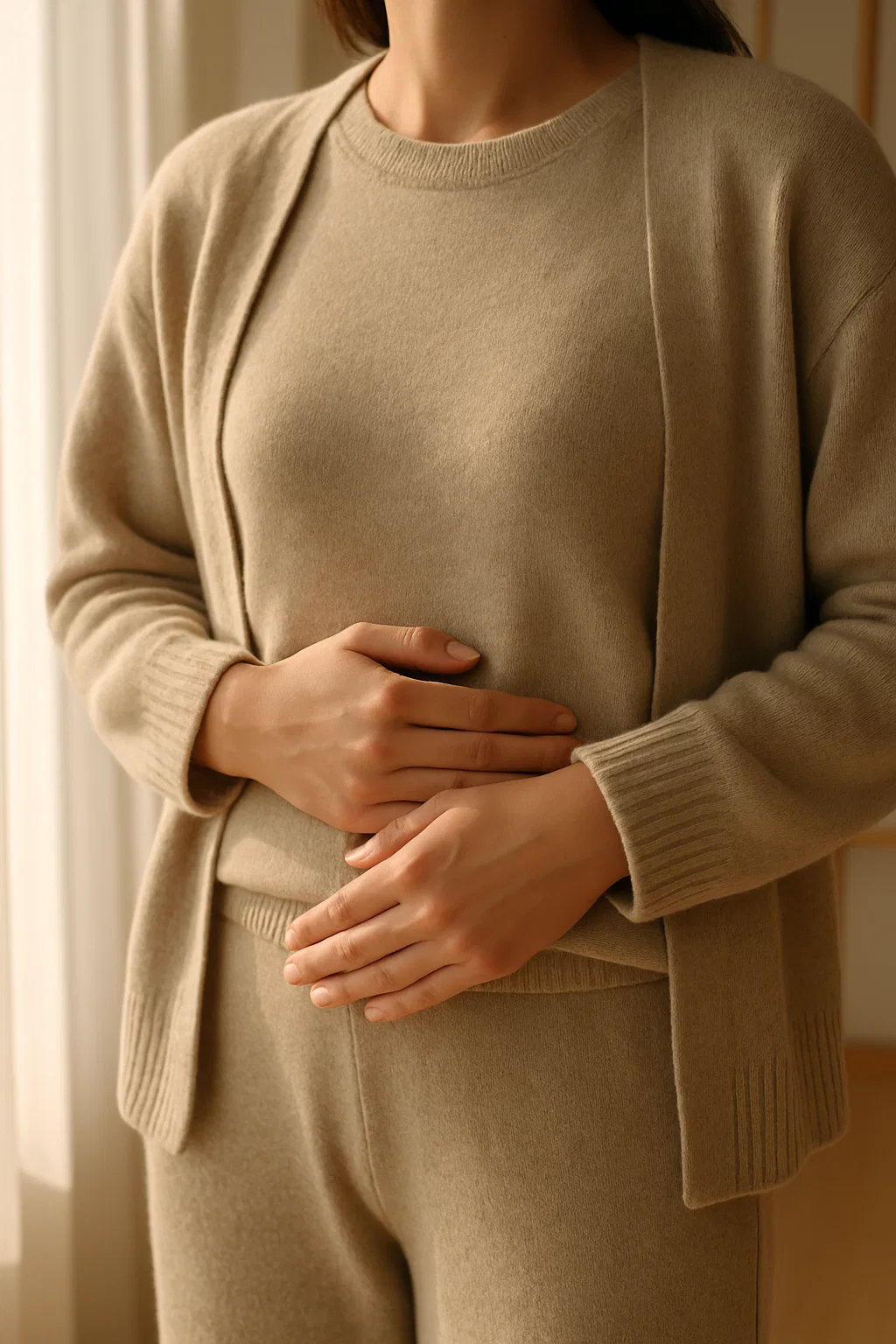

Q How is abdominal pain treated in Korean traditional medicine? I would like to know the steps involved.
A After identifying the type of cause (Qi stagnation, blood stasis, cold, or food stagnation) through examination, herbal medicine prescriptions are combined with acupuncture and moxibustion treatments. The process proceeds in the following order: symptom relief for the first 2–4 weeks, recovery of gastrointestinal function for the next 1–2 months, and finally, maintenance care.
Detailed Answer
Stage 1 (Diagnosis & Prescription): The type of abdominal pain is identified through pulse diagnosis, abdominal palpation, and questioning, and herbal medicine tailored to the cause is prescribed. Stage 2 (Symptom Relief · 2–4 weeks): Acupuncture and moxibustion treatments rapidly reduce cramps and pain, while herbal medicine stabilizes gastrointestinal motility. Stage 3 (Functional Recovery · 1–2 months): The balance between the stomach and the autonomic nervous system is restored to prevent recurrence. Step 4 (Maintenance): We increase the interval between visits and establish lifestyle improvements.
Korean Medicine Clinic Perspective
Based on herbal medicines that relieve blocked energy for the Qi type, prescriptions that improve blood circulation for the Blood Stasis type, herbal medicines that warm the internal body for the Cold type, and prescriptions that aid digestion for the Food Stagnation type, we combine these according to the individual's constitution.
Related FAQs
-
Q
I was diagnosed with irritable bowel syndrome. Does Korean medicine treatment actually help?
#Possibility / Realistic Goals
-
Q
What exactly is the Detox Pill (Haedok-hwan)? Is it different from ordinary laxatives?
#Possibility / Realistic Goals
-
Q
Along with abdominal pain, my stomach is bloated and I have recurring diarrhea. Are these the same problem?
#Comorbidities
-
Q
I have an elderly mother in the Dongincheon area who suffers from digestive problems. Is Korean medicine treatment possible for her?
#Comorbidities
-
Q
I get abdominal pain frequently. How should I manage it in daily life?
#Lifestyle Management